Japanese chisels

Joined
3 Sep 2006
Messages
41,222
Reaction score
7,112
Location
West Mids
Country
United Kingdom
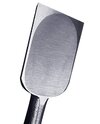
Is anyone using Japanese wood chisels?

I've been looking at trying some out, and seeing what everyone is raving about, but one thing that bothers me is the apparent small scope for resharpening.

The backs are hollow ground, so it occurs to me that after a few sharpenings, there is no flat edge left to form the bevel.

Is there something I'm missing?
 

Attachments

  • AISelect_20250606_111632_Chrome.jpg
    AISelect_20250606_111632_Chrome.jpg
    145.8 KB · Views: 74
I have never owned one. I abuse mine to much to justify the massive premium.

I do own a very limited number of Japanese hand tools (pry bars, squares and saws). The quality is well worth the premium (IMO).

I think that @GhostIntMachine might be able to shed more light on the matter.
 
It looks like you eventually need to grind the back of the chisel as time progresses

 
The backs are hollow ground, so it occurs to me that after a few sharpenings, there is no flat edge left to form the bevel.

Is there something I'm missing?
Yes, there may be. I did try a small set of Japanese chisels back in the early 1980s when Roger's were the only people importing them (remember them, pre-Sarjents of Reading and Axminster?). Amazingly sharp (when properly sharpened - but it requires the right stones), but liable to chip far too easily on hardwoods such as oak and maple IMHO.

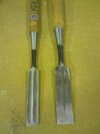
To maintain them you are supposed to flatten the back every time you sharpen them, in which case the hollows will retreat up the back, thus (image found on the 'net):
DSC00053.jpg

That hollow is called Ura or Urasaki (I've just had to look that up as I just couldn't remember the exact word) and is created by hammer forging. From a couple of books I read on the subject at the time, I recall that if you do grind the back flat you should either get an anvil and a hammer and reforge the Ura or send the chisels back to the maker to have them reforged - supposedly every 5 to 10 years in Japan... (like that was ever going to happen with mine)

I found I couldn't live with them at the time because:

- you need a set of 4 or 5 waterstones or more (including a flattening stone, and plus a nagura stone) to maintain the edges. Having to soak my waterstones for 20 minutes before use and then keep them wet in a bucket of water was hell on a cold winter morning and forever flattening the waterstones (because they get hollow very, very quickly against western oil stones) was a PIA. I can honestly say that the modern glass-backed Shapton water stones are far quicker and easier to use, just splash on some water and you are ready to go, however, they still go hollow and need flattening periodically. Against that diamond plates have made sharpening a lot faster for western chisels

- the chisels I bought needed the hoops fitting because I use hammers. Apparently this is the norm on reasonable quality chisels

- the edge chipping, When they are sharp and used on mild timbers they are superb, but on hardwoods like oak and hard maple they were less than ideal - that 25 degree (approx) single bevel (never a double bevel - although David Charlesworth used to recommend just that :confused:) is too thin and brittle I found. My problem is I don't often have the luxury of knot-free mild timbers, but saying that on knot-free pine, poplar, etc they were exceptional

- I found them a bit more rust prone than western chisels (even using the right oil). Not brilliant if they live in the van or a damp shed for stretches of time (my western chisels are bad enough in that environment)

- the short backs make the standard chisels less than useful for mortising - you can get Japanese mortise chisels, but I can mortise with a standard set of western bevel edge firmer chisels without the need to carry a second chisel roll with me

- I find most Japanese chisels are just too thick to pare out dovetails, etc

- those hollow backs (Uri) can make them difficult to steer along the length of narrow materials

- I'm not a fan of the handle offset, either. Western chisels are designed so that the handle is in line with blade. The Japanese chisels I had had handles offset a few degrees from the blade which I find uncomfortable. I have tried a couple or three other peoples' chisels and it seems to be a fairly consistent thing with them in my limited experience

How do you find them in use? Do yours hold an edge for long enough? They didn't work for me, but what's your take?

Against all that I do like the Japanese pull saws (and I have quite a few), although again they have limited appeal to me as site tools

 
Last edited:
Oh I see. Seems like it's a case of not just a lot of sharpening but a lot of work on the bottom edge too. I think that would put be right off unless there was a massive difference in performance to offset this.
 
How do you find them in use?
I don't have any. I've been looking at some for several years but I've not been convinced enough on any advantages to spend the high prices. I've been looking again recently and though about getting one or two to try, but now I not so sure.

I do use the jap saws though and have done so for quite a few years now. Brilliant saws.

I have a couple which I use most which are folding and so are not only good to use, but great for the tool tote too. One thing I found out by chance is that on refurb work, with timbers in-situ it seems that invariably its easier to use a pull saw than a push saw.
 
I have a couple which I use most which are folding and so are not only good to use, but great for the tool tote too. One thing I found out by chance is that on refurb work, with timbers in-situ it seems that invariably its easier to use a pull saw than a push saw.
Like you I have a few Japanese saws - mainly Z-Saw brand, ryobas and katabas, but with a couple of other makes. I haven't yet tried any of the back saws or folding saws, do you have any particular recommendations about suitable folding saws for cutting out in softwoods or hardwoods? One thing I do know is that I won't be trying to sharpen my own anytime in the near future!
 
My main users are a 200mm folding z-saw which fits nicely in the rule pocket of work trousers so is very easy to have on me most times.
Also a 265mm folding "Shogun" Hassunme Saw - which is exactly like a z-saw (probably rebranded?). For each the blades can be general purpose so will cut plastic and engineered board with little impact on the blade

The other good thing with the folders is that the blade angel can be adjusted for when cutting close to surfaces.

I tend to keep my fixed blade saws for home or second fix on jobs.

I too have probably more saw blades than I have years left :cautious:. I picked up various blades in sales and what-have-you initially (like I used to do with traditional Jack saws), not realising that the blades last an unbelievably long time - they seem to stay sharp forever.

And my tip is to always carry a traditional saw as a loaner for when someone wants to "borrow a saw for a minute". I learnt that lesson early on.
 
One thing I found out by chance is that on refurb work, with timbers in-situ it seems that invariably its easier to use a pull saw than a push saw.
We find a battery recip saw armed with a Bosch bow saw blade (rip-outs) does it for us.
 
Last edited:
Is anyone using Japanese wood chisels?
The trouble with any nicely sharpened chisel, is you have to use it. I've just switched an internal door around and fitted it to a new (slightly bouncy) casing. It was impossible to arrange either of the upright legs without the hinge cut-outs clashing with a knot or two. Crap casing I know, but they come wrapped up. It was a struggle, even with my keen chisels and they soon dulled after striking the b'jezuz out of them on the tough knots.

The keener the end the sooner they dull. I would be heartbroken if I spent much dollar on a quality chisel, only to have a poor quality re-sharpening. You'd need to have a Japanese craftsman follow you around when you are cutting in those oak doors and casings. (y)
 
The trouble with any nicely sharpened chisel, is you have to use it. I've just switched an internal door around and fitted it to a new (slightly bouncy) casing. It was impossible to arrange either of the upright legs without the hinge cut-outs clashing with a knot or two. Crap casing I know, but they come wrapped up. It was a struggle, even with my keen chisels and they soon dulled after striking the b'jezuz out of them on the tough knots.

The keener the end the sooner they dull. I would be heartbroken if I spent much dollar on a quality chisel, only to have a poor quality re-sharpening. You'd need to have a Japanese craftsman follow you around when you are cutting in those oak doors and casings. (y)
I do have some psychological hangups about using chisels that I've spent some time sharpening. And using expensive tools too for that matter, at risk of damaging them. :rolleyes:

I have some chisels which I use for site work and 1st and 2nd fix, and a few "for best" that tend to stay at home for my bench work or go to site only for something non-standard. If I got any Japanese chisels, they would likely be reserved for premium work.
 
I have some chisels which I use for site work and 1st and 2nd fix, and a few "for best" that tend to stay at home for my bench work or go to site only for something non-standard.
Glad to hear it's not just me that has a "no 1 set" and a "no 2 set", plus a couple of rolls of gouges, a mortise chisel roll, etc. And to think 'er indoors reckons I have a problem!
 
Used Japanese chisel from Axminster back in the day. The hardened steel made it very difficult to sharpen although iirc it did stay sharper longer. This video from Robin Clevet shows the kind of intricate joints that they are used on.
 

If you need to find a tradesperson to get your job done, please try our local search below, or if you are doing it yourself you can find suppliers local to you.

Select the supplier or trade you require, enter your location to begin your search.


Are you a trade or supplier? You can create your listing free at DIYnot Local

 
Back
Top