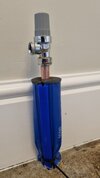
New radiator not getting hot

Just tried opening the TRV again and nothing but a slow drip. The pipe is also still cold. Maybe this could be an indicator that the valve is not fully opening?

Also, maybe the water on the lockshield side became hot because this is residual heat in the return pipe that made it's way back and out of the lockshield valve when it was opened?

Also tried opening the TRV while the lockshield was open but didn't make any difference, water still drips slowly out of the TRV.

I then played around with the TRV pin to try to "release" it i.e. pushed it closed and open a few times. The drip did indeed appear to increase and I felt some mild warmth appear in the pipe.

This suggests to me the issue is the TRV valve so I will go ahead and replace this after lunch and fingers crossed that will resolve the issue.

I can confirm the boiler pressure is still okay, at 1.4 bar while the boiler and pump are on.
 
Can you try the TRV side again with the boiler/circ pump off, the flow from ech side then should be almost the same except that the flow side should be ~ 10 to 15C hotter than the return side., if both flows fairly equal, run the pump but only on speed1 and repeat the test, if OK try speed2, if still OK try speed3.
It doesn't matter which side the TRV ic attached to (if bi directional), all mine are on the return.
 
I've now used the pipe freezing kit to replace the TRV.
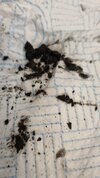
When I removed the old TRV there was a lot of iron fillings in the top of the pipe so I scooped it it with a screwdriver. This is obviously what is reducing the flow.

Having fitted the new TV I opened the valve (radiator still not on) and caught the gushes of water in a bucket. This was very black and contained more iron fillings. It spluttered to a stop and the water then only trickled out of the valve.

Opening and closing the valve managed to allow more gunk to escape, but after turning up the circulation pump there is now only a slow flow of water out of the valve. I'm guessing the iron fillings have built up again and blocked the flow.

So, although slightly better, I'm still not getting a full flow through this TRV it would seem.

Any thoughts on what I could do next?
 

Attachments

  • 20260215_124334.jpg
    20260215_124334.jpg
    301.1 KB · Views: 10
  • 20260215_115505.jpg
    20260215_115505.jpg
    277.9 KB · Views: 10
I take it the ice plug has fully melted? Sounds like a blockage still. Maybe a flush, or use a magnet on the pipework and trace where’s it could be?
 
Yes, the ice plug has definitely fully melted now. I'm currently getting a slow flow of clear water from the TRV when I open it and the pipe and water gets hot.

I have another can of freeze spray, so could remove the new valve to see if there's another blockage in the pipe and if so remove it.

I'm beginning to think this leg of the CH has an issue causing the flow to be poor, however all the pipes run under the house so it would be very difficult to fix.

Given the flow is better than it was, it may just be good enough to heat up the radiator.

I have a large project planned for the Summer when I will need to drain down the CH, so potentially could try flushing these pipes with the valve off when that happens.
 
A rad running at its rated T50 output requires 1.43LPM/kW, flow/return 75C/65C but you will get 50% output at a flowrate of 0.34LPM with flow/return temps of 60C/39C, might be worth measuring the flow through the outlet of the disconncted TRV but remember the flowrate will be a good bit less once its connected back in to the rad due to the back pressure from the return side.
 
Yes, the poor flow to this radiator is definitely affecting its performance and while all other downstairs radiators get vey hot across their whole surface, this one, which I believe is the last in the loop, is only getting hot (not very hot) at the top and the supply pipe is very hot, but the return pipe is barely warm.

When I tested the flow from both valves, the return flow seemed normal, but even after freezing the pipe, removing the TRV and extracting as much "sludge" as I could, using a magnet and a magnetised screwdriver, the flow from the TRV side is very poor, although better than it was before I changed the TRV.

I've done as much as I have time to do now as we have carpet fitters arriving this week so need to finish putting the underlay down.

At some point, probably in the Summer, I intend to drain down the whole system as a result of some work that needs to be done, including replacing and moving some radiators. I will then remove the TRV again, connect a hose pipe to the supply pipe and attempt to give it a flush.

It would appear this last leg of the downstairs CH run has an issue that has arisen in the last 28 years!!!

Just for my understanding, am I correct in saying that the last radiator on a run will NOT have the pipes "tee'd" but will be fed directly with the supply and connected directly to the return, as shown in the following diagram:

1771233056654.png


So, if by the last radiator, the pressure from the supply pipe is lower than it should be, maybe because it's a long run, this may result in a lower differential pressure between the supply and return, therefore allowing sediment to accumulate in the supply pipe and eventually building up such that it also has an impact on the supply pressure?

I'm just trying to understand why lack of flow might have happened to this particular radiator. It's seems relevant that it is the last and furthest from the boiler on the downstairs loop.
 

If you need to find a tradesperson to get your job done, please try our local search below, or if you are doing it yourself you can find suppliers local to you.

Select the supplier or trade you require, enter your location to begin your search.


Are you a trade or supplier? You can create your listing free at DIYnot Local

 
Back
Top