Ofgen appliance use costs.

You’re going to be using the appliances regardless. As long as there’s not unneeded guzzlers such as fan heaters being plugged in or 1hr instant showers that does me.

I can see what’s going on day to day from the new smart plan and an alert if there’s excessive usage on a day
 
Can any of us actually realise what it must have been like to live without any freely available electric appliances?
Not really that long ago most people did not have electrics on hand to make that choice.

Would we be comfortable to any days, weeks or months without the abillity to choose?
 
On the Falklands the farms would only run the generator twice a day, that was enough to keep chest freezers frozen, the morning run allowed vacuum cleaning and evening run lights and radio, there was no TV.

They would have a battery to run the ham radio, which was their phone, and heating was by burning peat. No central heating.

And I think that is the main thing we would notice without electric, no way to control the heating in our homes, and if I think back, in the 50s/60s the fire in the room would heat the room far hotter than required, and we would only realise how hot, after leaving the room and returning.

So electric resulted in being able to control the home's temperature automatically. However, even today, many homes work with near enough heating. Likely the heating system is the biggest waste of energy in the home.

OK in an old peoples home, we want every room at say 20°C 24/7. But in most homes we have unused rooms, and little used rooms, and the way to reduce cost, it to only heat when required, but this does not line up with heat pumps, heating with gas, oil, or even solid fuel, the availability and cost does not change throughout the day, so at midnight we are likely maintaining the bedrooms at quite a low temperature of say 16°C all other rooms at around 5°C to stop freezing, and in real terms that means the other rooms are not heated.

In the morning, we want the bathroom warm, and it depends on the household as to if kitchen, dinning room or living room is required before we go out, then again back to 5°C, and as home time approaches, we likely need the rooms re-heating in sequence, possibly kitchen first, then dinning room, and finally living room.

However, one the rooms don't cool to 5°C even if that is the setting, and also it takes time to reheat, so likely we use 16°C instead, so it can reheat to 20°C faster, once we settle down for the night likely want room at 22°C, however to do all this, we need programmable TRV heads, and multi methods to fire the boiler.

So we look at the available controls, and the likes of EvoHome and Wiser seem ideal, however the central heating was installed in the 80s, before double glazing when for some reason I have never really got my head around, we put radiators under the window, may be as no furniture in the way?

So the TRV is cooled by the outside wall, and turns on the heating too soon, OK there is a way around this, we fit linked sensors on the inside walls, so it is controlling room temperature not the outside wall temperature, but the cost to do all this, is silly.

We know what we should do, but still control the boiler by one wall thermostat in the hall. And we still have non-programmable TRV heads, which stop the room getting to a silly heat, but the *123456 on the dial does not really relate to the heat of the room, and we still waste loads on heating, because if I take wiser as an example a programmable TRV at window and wall thermostat on opposite wall, £40 + £65 so over a £100 per room, and that does not include the hub at another £60, so this house (not flat) would cost at least £1000 just for the controls. That's more than it costs for a tank of oil, so no one is likely to do the whole house. And even if they did, in the main the boiler would be far too big to run just two radiators at a time.

Our central heating is so inefficient a heat pump can be fitted, and we are hood winked into thinking it is better, because they have fitted better controls, and also downsized it to a more appropriate size.

This house 7 rooms, and each could be heated with a 2 kW fan heater, so 14 kW maximum, so why was a 20 kW boiler fitted? It is reasonable to expect only half the house will need heating at any point in time, so the sum of radiator sizes should be at least twice the size of the boiler, but that is not the case, when fitted, in the 80s with single glazing the boiler may have been the right size, but today we waste so much because no one thought oh homes don't need half the heat to what they did in the 80s, so the boiler can be half the size.

But once fitted, that's it, it would cost too much to change my 20 kW boiler for a 15 kW, so we keep going with old outdated central heating.
 
Not so much now without the modern essentials

Cooking Refrigeration Lighting Heating Washing

There’s a vast amount of stuff in use that can be done without

The massive amount of gadgetry that fill the shelves of Aldi Lidl and the Amazon website

And a whole raft of all the smart tec can easily be done without
 
Last edited:
On the Falklands the farms would only run the generator twice a day, that was enough to keep chest freezers frozen, the morning run allowed vacuum cleaning and evening run lights and radio, there was no TV.

They would have a battery to run the ham radio, which was their phone, and heating was by burning peat. No central heating.

Yes, but the Falkland Islanders are mad.
 
And a whole raft of all the smart tec can easily be done without
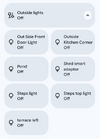
Does the smart tec help or hinder? I come home at night, and 1788174403200.pngI can select which outside lights I want, or click on all, and come home to a lit drive, once inside the house, hey google turn off outside lights turns them all off again. Before I had PIR lamps which seemed to have a mind of their own, switching off at most inopportune moments, and turning on when the wind shakes the trees.
It clearly uses some power to work them, but amount of times the PIR ones turned on when not required, I would guess on the whole I gain.

In the house, no more turning on lights with your elbo while carrying two cups of coffee. And spilling coffee. And so easy to turn lights off.
 
I know you’ve said it a 1000 times :giggle:

You’ve got this new smart tech that allows you to manually turn on your lights with a phone

Me i walk up to a pir controlled light at front door and when I get inside the walkways are illuminated by flush pirs in ceiling all done automatically
 
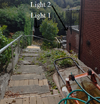
Main reason for smart switching of outside lights, is the PIR switching was rather dangerous. 1788261259015.png Two lights, one on shed, and one on corner of house, light the way from my car, 19-7-26 garden 2 - 19-7-26 garden 5-3.jpg looking in other direction, and between the two the steps are well enough lit, but if they turn off before I reach the flat paved area, I am left with arms full of shopping, not sure where I can put it down, and so even with a phone in my pocket, I can't get it out with shopping in my hands and with first picture to the right is a 5-foot drop.
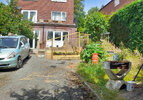
Lights not working is safer than lights failing halfway up. There are more lights by the front door, but the steps cast a shadow so until on the flat not much help, and before fitting the carriage lamp I have now, there was a 300 watt quartz halogen lamp, just on the corner, and I got caught out more than once, where the PIR timed out.

The door seen goes into the flat under main house, with no internal route between the two.

As to landing light, why the switch is at the official front door, never used, rather than at the bottom of the stairs, not a clue, but it was a case of, run a load of new wiring, or use a smart relay.

Same when dinning room used as a bedroom, either new wiring, or a smart switch, and the smart switch/relay/bulb/adaptor wins every time.

But as to reducing electric use, I will admit I am lazy, printers, computers, fridges, freezers, even a water pump for cats drinking water. I must have half a dozen plug in units which can measure energy used, and I have at some point measured most items.

The surprise one was sky box on stand-by, that used a lot more than expected.

The main consideration is when, the inverter is 5 kW, so if I can, want total home use under 5 kW, and to be frank, it rarely does exceed 5 kW, the other is after 3 pm, depending on the day, but solar starts to reduce, by 7:30 pm nearly nothing, but even by 5 pm it is dropping off, so the battery will not likely get recharged, so the big three, dishwasher, washing machine, and tumble drier really need to have finished their cycle by 5 pm, so don't want to start after 3 pm.

Summer, 99% of the time, the battery will not run out, but winter, specially December, it is likely to run out, so the big three, dishwasher, washing machine, and tumble drier better run at night.

But unless solar, batteries, or off-peak, time of day does not really matter, and if dishes need washing they need washing, so knowing how much it uses, is really of no help.

Comparing handwashing cost to dishwasher cost, may change what we handwash, but the draining board is small, compared with the dishwasher trays, so looking at multi handwashing cost compared with dishwasher cost, the tablets are not cheap, so tend to always fill it. But need to include all costs, marigold gloves included. So would expect to handwash at least 4 times to each dishwasher use. And each wash fill the bowl at least twice, or leave tap running to rinse. So likely the dishwasher uses a ¼ of the water, and no losses in the pipe work. And it does a better job, only time I would handwash is if we run out of knives or something like that.

I do not remember in my 75 years, clothes washed totally by hand, always been a twin tub or similar.

The dryer, well yes have used a line, and a washing line under the car port worked well, but a dryer is far cheaper to a car port, and no way would I build a car port just to dry clothes.
 
I suppose a lot depends upon if you want lights to turn on or off automatically whenever you or someone else appear into an area or if you or someone else speak to your phone app or similar to command on or off or you flick a switch on or off.
 
Main reason for smart switching of outside lights, is the PIR switching was rather dangerous. View attachment 421491 Two lights, one on shed, and one on corner of house, light the way from my car, View attachment 421492 looking in other direction, and between the two the steps are well enough lit, but if they turn off before I reach the flat paved area, I am left with arms full of shopping, not sure where I can put it down, and so even with a phone in my pocket, I can't get it out with shopping in my hands and with first picture to the right is a 5-foot drop.

Lights not working is safer than lights failing halfway up. There are more lights by the front door, but the steps cast a shadow so until on the flat not much help, and before fitting the carriage lamp I have now, there was a 300 watt quartz halogen lamp, just on the corner, and I got caught out more than once, where the PIR timed out.

The door seen goes into the flat under main house, with no internal route between the two.

As to landing light, why the switch is at the official front door, never used, rather than at the bottom of the stairs, not a clue, but it was a case of, run a load of new wiring, or use a smart relay.

Same when dinning room used as a bedroom, either new wiring, or a smart switch, and the smart switch/relay/bulb/adaptor wins every time.

But as to reducing electric use, I will admit I am lazy, printers, computers, fridges, freezers, even a water pump for cats drinking water. I must have half a dozen plug in units which can measure energy used, and I have at some point measured most items.

The surprise one was sky box on stand-by, that used a lot more than expected.

The main consideration is when, the inverter is 5 kW, so if I can, want total home use under 5 kW, and to be frank, it rarely does exceed 5 kW, the other is after 3 pm, depending on the day, but solar starts to reduce, by 7:30 pm nearly nothing, but even by 5 pm it is dropping off, so the battery will not likely get recharged, so the big three, dishwasher, washing machine, and tumble drier really need to have finished their cycle by 5 pm, so don't want to start after 3 pm.

Summer, 99% of the time, the battery will not run out, but winter, specially December, it is likely to run out, so the big three, dishwasher, washing machine, and tumble drier better run at night.

But unless solar, batteries, or off-peak, time of day does not really matter, and if dishes need washing they need washing, so knowing how much it uses, is really of no help.

Comparing handwashing cost to dishwasher cost, may change what we handwash, but the draining board is small, compared with the dishwasher trays, so looking at multi handwashing cost compared with dishwasher cost, the tablets are not cheap, so tend to always fill it. But need to include all costs, marigold gloves included. So would expect to handwash at least 4 times to each dishwasher use. And each wash fill the bowl at least twice, or leave tap running to rinse. So likely the dishwasher uses a ¼ of the water, and no losses in the pipe work. And it does a better job, only time I would handwash is if we run out of knives or something like that.

I do not remember in my 75 years, clothes washed totally by hand, always been a twin tub or similar.

The dryer, well yes have used a line, and a washing line under the car port worked well, but a dryer is far cheaper to a car port, and no way would I build a car port just to dry clothes.
On the matter of lights turning off before you reach …

Surely thats a simple matter of setting more than adequate on-time ?
 
Surely thats a simple matter of setting more than adequate on-time ?
Yes my thoughts too, unless there is a very good reason I have always set times to a minimum of required extra time for what I perceive to be the slowest likely user, plus , for instance, drop keys on floor andd stop to pick them up again sort of thingy to ensure covering nearly all credible scenarios (added reason if its tungsten halogen/filament/fluorescent too in order to achieve a longer lamp life, I do not think that most LEDs suffer as much from this feature though), I`d rather give a few seconds/minutes over than risk not enough!

Some models of TH tube PIR floods had a "High/Low" feature - constantly the tube is partially warmed at a fraction of mains voltage in order to avoid some of the physical stress of rapid temperature rise, you wouls see a warm glow until it detected then a brighter light once detected, no idea if it ever actually helped with lamp life but was noticed as a gimmick feature as a likely selling point "hey where did you get those?" .
 

If you need to find a tradesperson to get your job done, please try our local search below, or if you are doing it yourself you can find suppliers local to you.

Select the supplier or trade you require, enter your location to begin your search.


Are you a trade or supplier? You can create your listing free at DIYnot Local

 
Back
Top
