• Looking for a smarter way to manage your heating this winter? We’ve been testing the new Aqara Radiator Thermostat W600 to see how quiet, accurate and easy it is to use around the home. Click here read our review.

Planning for spring. Hardwood floor and glue removal

Joined
2 Jun 2010
Messages
91
Reaction score
2
Location
London
Country
United Kingdom
Had hardwood floor laid when extension was built in 2023 and planks started to form deform/warp in 6 months or so. So decided to get rid of it, remove the glue and lay tiles instead (dont want to risk with wood again).
Any advice on glue removal ? Tools ? Chemicals ? Or how much could be for someone with proper tools to remove it ?
Thx

P.S. contact installer is no go.
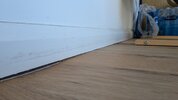
 

Attachments

  • PXL_20251202_115539318.MP.jpg
    PXL_20251202_115539318.MP.jpg
    117.6 KB · Views: 16
Unlikely to be an issue with the wood flooring, almost certainly an issue with the floor prep and/or moisture issues if the subfloor was not correctly dries out before the flooring issue.

Was the wood flooring floated on an underlay or fully bonded to the subfloor? Is the subfloor wood or Concrete?

The floor will come up with a pryer. You'll likely need to remove and re-use or replace the skirtings.
 
Unlikely to be an issue with the wood flooring, almost certainly an issue with the floor prep and/or moisture issues if the subfloor was not correctly dries out before the flooring issue.

Was the wood flooring floated on an underlay or fully bonded to the subfloor? Is the subfloor wood or Concrete?

The floor will come up with a pryer. You'll likely need to remove and re-use or replace the skirtings.
Glue applied to the concrete and then planks on top. Removing floor wont be a problem.
Was told glue will have to come off for tiles to be installed, thats my concern and looking for solution to be ready for spring ;)
Will defo replace skirting ...
 
Glue applied to the concrete and then planks on top. Removing floor wont be a problem.
Was told glue will have to come off for tiles to be installed, thats my concern and looking for solution to be ready for spring ;)
Will defo replace skirting ...

Assuming it’s not a Calcium Suplhate or Anhydrite floor that hasn’t been ground, get the wood up, moisture tolerant screed the floor to neutralise the old adhesive and fit what you need, however, the wood floor has failed because of bad prep or bad install or both, unlikely anything to do with product.
 
I doubt anything like that was used. A truck came with a big hose, which went in through the window and was just poured it, then it was levelled and left to dry ... Smth like that
Floor was laid late november i think, so yeah, defo moisture played part in all this.
So far doesnt sound like a too complivated job (although ill do the removal bit only) ;)
 
Last edited:
I doubt anything like that was used. A truck came with a big hose, which went in through the window and was just poured it, then it was levelled and left to dry ... Smth like that
Floor was laid late november i think, so yeah, defo moisture played part in all this.
So far doesnt sound like a too complivated job (although ill do the removal bit only) ;)
Calcium Sulphate and Anhydrite Screeds are usually pumped in! If it is one of these screeds, they dry with a latence on the surface that needs to be mechanically ground off a week or two after they are pumped. They then need to be allowed to dry until the floor reaches 74% Relative Humidity and only then can you self level (with a suitable self levelling screed) and the floor can be fitted. You can’t direct stick wood to Calcium Sulphite/Anhydrite!

Find out what that pumped screed was before taking any steps to replace the floor. Loads of builders spec these screeds because they are ‘fast drying’ without realising that ‘fast drying’ to install a Kitchen for example, is very different to the specs required to make it suitable to install flooring, be it Wood, LVT etc.
 
Oh, but it is still ok to put tiles in after i remove the floor ? Dont want to risk it with wood again.
Ill check the photos of installation, might have a photo of the truck that delivered what was used.

P.S. thx for the advices !
 
Oh, but it is still ok to put tiles in after i remove the floor ? Dont want to risk it with wood again.
Ill check the photos of installation, might have a photo of the truck that delivered what was used.

P.S. thx for the advices !

You'll need to look at the tile adhesive specs before you will know what surface it can be used directly too, and of course the screed that was pumped in.
 
You'll need to look at the tile adhesive specs before you will know what surface it can be used directly too, and of course the screed that was pumped in.
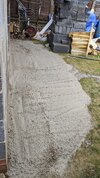
Found these photos. Dont know if it would be any help to determine the type of screed that was used ...
 

Attachments

  • IMG-20231117-WA0011.jpg
    IMG-20231117-WA0011.jpg
    268.9 KB · Views: 4
  • PXL_20231013_102859938.MP.jpg
    PXL_20231013_102859938.MP.jpg
    473.7 KB · Views: 4
  • IMG-20230921-WA0012.jpg
    IMG-20230921-WA0012.jpg
    290.7 KB · Views: 4
That just looks like normal sand cement screed to me. What was the time gap between screed an flooring?
 

If you need to find a tradesperson to get your job done, please try our local search below, or if you are doing it yourself you can find suppliers local to you.

Select the supplier or trade you require, enter your location to begin your search.


Are you a trade or supplier? You can create your listing free at DIYnot Local

 
Back
Top