• Looking for a smarter way to manage your heating this winter? We’ve been testing the new Aqara Radiator Thermostat W600 to see how quiet, accurate and easy it is to use around the home. Click here read our review.

RCD tripping with EV charger..Question.

Joined
25 Mar 2019
Messages
40
Reaction score
1
Country
United Kingdom
I have 2 CUs in my house, box one covering lights/ cooker/ machine etc. The other box 2 is for sockets, garage and a few other things. several days ago, the RCD for box 2 tripped. After spending quite a time checking all the cabling in the box I tried to isolate which MCB the issue might be coming from, but with all MCBs off and the RCD on, any MCD I switched on tripped the RCD so I couldnt isolate the issue. I bought a new identical Wylex RCD, but same issue.

I then went to the garage, as I suspected the issue might be in the CU thats installed there. The is covered by the RCD in the house, so only has a mains isolator at the garage CU. Again any MCD that was switched on in isolation tripped the RCD in the house.
SO I stripped all the wiring back from the 5 MCD's and the mains isolator, presuming that the problem electrical item was somehow "polluting" the whole CU causing an issue when any MCD was turned on. One by one, I connected back the MCDs for lights, sockets and EV charger. Ultimately I isolated the problem to the cable from the EV charger . I again disconnected all the MCBs and all the negative and earth cables from the CU, and just connected the EV charger to the Mains Isolator, earth and negative. Again the RCD in the house CU tripped. The EV Charger has been running flawlessly for 3 years with no issues until now. I opened the EV charger, disconnected and reconnected the mains in wiring, the wiring to the charger cable, and all LED connectors etc. It was still tripping the RCD in the house.
I then bypassed the RCD in the house with the EV charger connected directly to supply. It started up as normal, was fully functional and on connection to the car, charged it as normal for 4 hours whilst I watched closely for any issues and checked the cabling periodically.
I know RCDs detect various faults like earth leakage etc, but the charger seems to be working quite normal without the RCD. Now, before the inevitable comments, I am not going to run the charger without the RCD in place as there is an obvious fault. I cant figure it out so will be getting a spark in. But given the information, and just for my curiosity, what could be causing this and why does the charger function normally when it receives a direct electric supply with no obvious ill effects? Many thanks.
 
I was under the impression that an EV can't be on the same RCD as other things in the house. So it seems there is a fault in the way the charger has been wired.

Neutral earth faults are the common cause of trips which are hard to isolate as the cause, neutral and earth with no load should be the same voltage, and with a TN-C-S the earth is supplied with the same wire as neutral, so they are very close to each other voltage wise. However, with a TT system, one is permitted 50 volts, so the reading with TN-C-S and TT can be very different.

However, the main problem with any item used outside the equal potential zone, (which is an area where all earth wires are common) is with loss of PEN, two earths can have a lot more than 50 volts difference, charging an EV in a building, like a garage is very different to charging it outside, so when charged outside if the supply is TN-C-S there has to be some way to detect loss of PEN, there are a number of ways this can be done.

So with an EV there are things we tend not to see with other items.
1) Loss of PEN detection
2) Bi-directional RCD
3) When type A RCD is used, 6 mA DC detection
4) Non-sharing of RCD
The list goes on, and it is clear you have a wiring fault, and the EV should not be charged at home until fixed.
 
Thanks for that. But why would it have worked flawlessly for the last 3 years under the current configuration and not now?
 
Could you post a photo of the garage CU as it sounds like a diy job

This all sounds like a bit of a lash up
 
All there is to see is a mains isolator, and 5 MCBs, 2 for lights, 2 for sockets and one for the EV charger. This is fed by an underground armoured cable from the house CU via an RCD switch. As I said, there have been no issues or even trips over the last 3 years and the EV has always charged to approx 6.6kw at 32A according to the charger app.
 
Neutral (not negative) to earth faults are not removed/isolated by switching off MCBs.

An N-E fault on any circuit might cause the RCD to operate when a high current like your charger uses is being drawn.

Therefore you will have to find the fault by testing the circuits.
 
Now, before the inevitable comments, I am not going to run the charger without the RCD in place as there is an obvious fault. I cant figure it out so will be getting a spark in. But given the information, and just for my curiosity, what could be causing this and why does the charger function normally when it receives a direct electric supply with no obvious ill effects? Many thanks.

If only the EV charger causes the RCD to trip, when connected via the RCD, then either the cable between consumer unit and EV charger has developed a fault, or likely the mains filtering on the input side of the EV charger, has too much leakage current. An insulation tester (meggar), will be needed to determine which.
 
Thankyou. I dont think the cable between the garage CU and the charger has developed a fault. Ive inspected the terminals and they are fine, and there are no kinks, rubs or breaks in the outer sheath. It hasnt been moved at all either in the 3 years to cause any sort of breakage. The armoured cable from the house to the garage CU is fine also, as there are no issues supplying the sockets and lights from the garage CU. So I agree, it sounds like an issue with the charger. I think rather than calling out a spark, I will just get a new 32a charger, they have come down in price substantially. At the charger end, its literally just a live, neutral and earth connection and an easy swap out. Our EV is due to go back in 9 months and I havent decided to stick with EV's so a budget new charger will suffice for a few months.
 
So I agree, it sounds like an issue with the charger. I think rather than calling out a spark, I will just get a new 32a charger, they have come down in price substantially. At the charger end, its literally just a live, neutral and earth connection and an easy swap out.

You could eliminate the supply cable as being at fault, by disconnecting the cable at the charger, and inserting the bare cable ends into a suitable connector to safely insulate the L, N, E from each other. If you then, power it back up with the RCD in circuit, and it trips - it is a cable fault. If not, it's the charger.
 
If only the EV charger causes the RCD to trip, when connected via the RCD, then either the cable between consumer unit and EV charger has developed a fault, or likely the mains filtering on the input side of the EV charger, has too much leakage current. An insulation tester (meggar), will be needed to determine which.

Not sure i agree with this

Because the RCD serves a number of circuits it could just be accumulated earth leakage
 
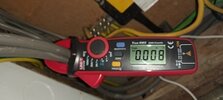
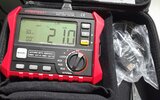
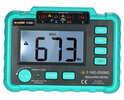
As an electrician, the only way I can find out for sure is to test, Diffrence line neutral 8 Feb 24 reduced.jpgRCD tester ramp.jpgVC60B.jpg the three testers I use, cost me around £150, and then you need to know how to use them. We have four common things found in a consumer unit.
PartID_CU.jpg
The MCB does not isolate, some RCBOs do, but most don't most RCD do, a few don't, so the regulations have said since 2008 "Every installation shall be divided into circuits, as necessary, to: (iv) reduce the possibility of unwanted tripping of RCDs due to excessive protective conductor currents produced by equipment in normal operation" and splitting with MCB's clearly does not help, so we should split with RCBOs, but they cost, not supper expensive, around £20 each, but 14 in my consumer unit so that's £280 without the rest of the stuff, so there were people who wanted it all done on the cheap, so just 2 RCD's for whole house, and to be fair, many have got away with it, but if you take a chance, you have got to accept, sometimes, it does not work.

So it can happen to us all, and in my house the supply to kitchen sockets tripped, since all RCBO, lost kitchen, dinning room, and two bedrooms, and 5 kitchen sockets still working, which included the freezer supply, so I could leave it until the morning.

So first is to try and unplug things, not switch off, as many switches are only single pole, I had to move so much stuff to reach the sockets, and then remembered where the dishwasher plugged in, so did the last few, and then all worked. So the meter came out, and started to test dishwasher etc, no faults found, plugged all back in, and all worked, used the clamp on meter, and well within spec, same with the insulation tester, and the RCBO tripped at the expected leakage, so what ever it was, cleared its self.

Your problem is your installation does not comply, and likely never has, so an electrician is left having to do so much, just to make it comply to start with, if I was to find what you describe, I would not want to get involved, as to follow the rules will be expensive, the normal is to put the potential customer off. Long wait, or high price, as clearly you don't think there's much wrong, and with EV charging points, there is little chance of getting away with non-compliant, as one has so many people doing a potential check.

I would seem needs a new consumer unit and the EV charging point re-wiring.
 
Thing is it’s not clear from the description how the sub main to the garage is protected
 

If you need to find a tradesperson to get your job done, please try our local search below, or if you are doing it yourself you can find suppliers local to you.

Select the supplier or trade you require, enter your location to begin your search.


Are you a trade or supplier? You can create your listing free at DIYnot Local

 
Back
Top