• Looking for a smarter way to manage your heating this winter? We’ve been testing the new Aqara Radiator Thermostat W600 to see how quiet, accurate and easy it is to use around the home. Click here read our review.

Replacing a door

Joined
9 Jun 2010
Messages
371
Reaction score
69
Country
United Kingdom
Hi all,

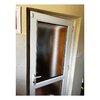
I need to replace a door which is external grade albeit it is all internal- it separates the kitchen from an unheated utility area. I was going to replace it with something a bit nicer looking, wooden etc.

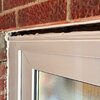
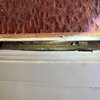
I've removed some of the upvc trim pieces to help measure up, and accepting I need a bit of tolerance I just wanted to check a couple of things. On the kitchen side there is what I assume is the concealed lintel albeit where the door actually is, there's just single skin brick and nothing supporting it underneath as such. Does this look right?

Secondly there's an 18mm gap between the bottom of these bricks and the top of the existing door which I assume shouldn't necessarily be there and I can just size it as per the size of the opening (measuring from 'outside' dimensions where there's no plasterboard) and then just take away the recommended tolerance?

Thanks in advance for any pointers/advice.
 

Attachments

  • 27E6DB40-D028-4829-B1AB-9C496D77C04E.jpeg
    27E6DB40-D028-4829-B1AB-9C496D77C04E.jpeg
    187.1 KB · Views: 53
  • 897617BC-2187-473A-894D-62125EA71691.jpeg
    897617BC-2187-473A-894D-62125EA71691.jpeg
    265.8 KB · Views: 50
  • A3537CF3-EA83-41D4-BC7C-24C448F359ED.jpeg
    A3537CF3-EA83-41D4-BC7C-24C448F359ED.jpeg
    364.2 KB · Views: 50
The outer skin may not have a lintel, particularly if it’s a 60s era house. Inner skin should, and there will be ties between them, but I’d add an outer skin lintel as part of the work.
Other possibility is there is a catnic-type/eaves lintel set really far back, can’t really tell from pic
 
Get in with a torch, if it's just plasterboard then you have the option of raising it. If you want the plaster work for an inch of extra height. Otherwise your new door opening may end up behind the edge of the plasterboard.

Best guess is the door was ordered before the floor was done, so they left themselves loads of margin.
 
As you say it appears to be a single skin with no lintel so presumably not a load bearing wall but you would have to tell us what is above it to be certain. My guess would be that at one time there was an internal door and frame there which has been replaced with a UPVC or aluminium external door for some unknown reason. The old wood frame wood have supported the brickwork but it must be sound after the door was replaced because there does not appear to be any sign of it dropping. Have you thought about just replacing the glass panels with something more decorative or even just painting the casing. Seems like you may be creating a lot of unnecasary work by replacing the door and frame.
 
The bricks look quite modern. Use a strong magnet to test if there is a steel lintel that we can't see.
 
Thanks all for the assistance- much appreciated.

So...past that outer brickwork and where the door frame currently is, I can see a wooden beam running across, and then plasterboard. I've attached a photo of what is behind.

This wall is the old external cavity wall and would have potentially led to an attached garage, or possibly not an opening at all. I don't know whether the old garage ran all the way across the gable end. The previous owners extended above the garage and added a utility room on the back (ground floor) which is where the door currently leads to. The house was built in 1970. Extension done in the 90s I think.

I've fished around with a magnet in the gap and this course of bricks and can't find any indication of metal anywhere....

Regarding the door itself- we're redoing the kitchen and thus just want to replace it with a nice wooden one.

I'm getting the impression this might be one for the builders then if the advice is that generally we need to consider a retro lintel fit before I replace the door?
 

Attachments

  • E1EA4A9A-6362-4AF0-B83B-0AE96D1F2F60.jpeg
    E1EA4A9A-6362-4AF0-B83B-0AE96D1F2F60.jpeg
    385.1 KB · Views: 32
Depending on the age of the house, it may well have been built by placing a wooden frame, and building the wall around and above it.

These often come to light when wooden doors and windows are replaced with plastic, and the brickwork above is not adequately supported, eventually cracking or sagging.

If your brickwork is still sound you could probably wiggle a steel support into place, packed round with stiff mortar. Try to do it before you start building work as hammering and banging may trigger movement.
 
That wood may be a bit of packing to bring it lower down, with a lintel above it or (more likely) it's the bottom edge of a taller wooden lintel that's holding up the wall above.

Perhaps drill a few easily filled shallow holes on the plaster side, see what's beneath. If there's no lintel at all then you need some work doing.

If there's a lintel on the plastered side only then it's not ideal but debatable whether that's an issue. That inner wall holds the roof and any floors or ceilings above, the outer wall only holds itself up. It would have originally been better supported by a wooden door but it's probably not a major issue.
 
That wood may be a bit of packing to bring it lower down, with a lintel above it or (more likely) it's the bottom edge of a taller wooden lintel that's holding up the wall above.

Perhaps drill a few easily filled shallow holes on the plaster side, see what's beneath. If there's no lintel at all then you need some work doing.

If there's a lintel on the plastered side only then it's not ideal but debatable whether that's an issue. That inner wall holds the roof and any floors or ceilings above, the outer wall only holds itself up. It would have originally been better supported by a wooden door but it's probably not a major issue.
Thanks- I'll do some investigating on the other side as suggested.
 
Hi again all,

I have now checked and there is a lintel, so all good there. I've ordered my replacement door which has arrived (solid hardwood door and frame). The frame size is pretty much dead on to the aperture, giving a little wiggle room obviously.

I am reasonably happy (I think) with what I am doing but just thought I'd check....

I've got some wooden wedges to get it in the right position whilst fixing it, will make sure level etc. In terms of fixings, I've used these screws for various applications before and like them (plus have loads spare), and google seems to suggest they would be ideal- assume no issues with these, or are there any better options?

https://www.screwfix.com/p/easydriv...g-concrete-screws-7-5mm-x-70mm-100-pack/9643h

Any other pointers/advice welcome. Expanding foam in any gaps; anything else?
 
Expanding foam is very good for holding a doorframe firm, preventing vibration and blocking sound.

I use the pink fire foam, though if you are bound by fire regulations you have do do more, reducing and blocking the gap as well.
 
Those screws look very short, half of their length would be through the frame.

Think about the sort of stress an opened door puts sideways on the frame when it's dangling by its hinges in the air.
 

If you need to find a tradesperson to get your job done, please try our local search below, or if you are doing it yourself you can find suppliers local to you.

Select the supplier or trade you require, enter your location to begin your search.


Are you a trade or supplier? You can create your listing free at DIYnot Local

 
Back
Top