I'm about to embark on the replacement of the fascias and soffits on the back of mine and our elderly neighbours semi detached houses (if the scaffolder turns up lol).
I've done a lot of research but want to clarify a few things before i get going on it - i'd like it to be done properly this time!
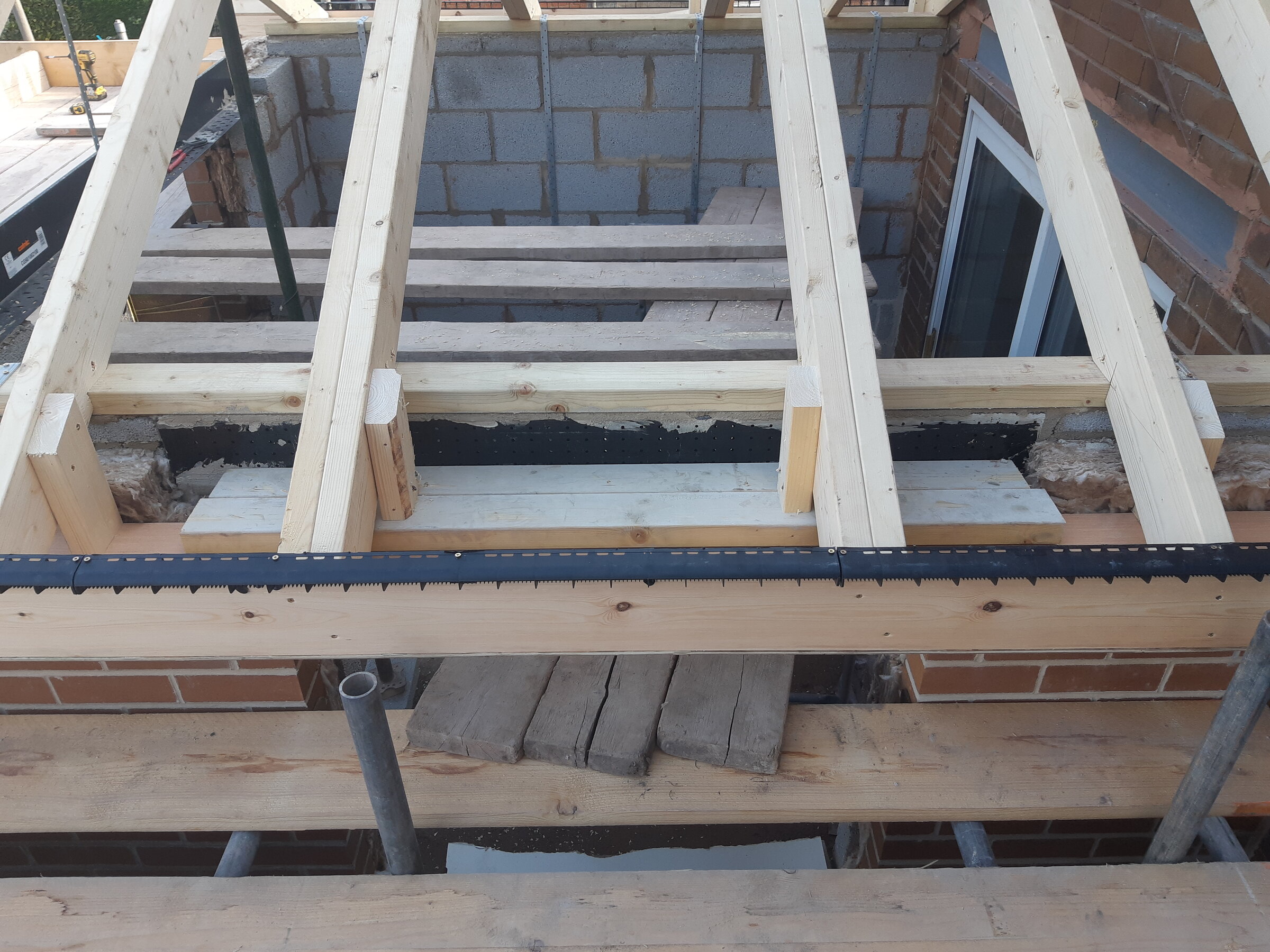
To give some background - the house is a 1968 brick house with concrete interlocking tiles, cold roof. about 20 years ago, the neighbour arranged for the old wooden fascias and soffits to be replaced with UPVC fascia and hollow soffits. these are pretty horrednously done; they've only used 10mm fascia capping but still removed all the old wood underneath; and nailed with a single nail per rafter - the fascia has twisted outwards at the bottom in a number of places, which in turn has made the gutters rise and fall a lot and causing blockages. it appears they tried to hide this by adding what looks like several tubes of silicone between the fascia and the hollow soffit sections - which just appear to rest loosely on the leg of the fascia, and have added a few screws every couple of metres into the wall fixed original batten. things came to a head earlier this year in the wind and rain, when a crash was heard and the soffits had come loose and were flapping in the wind - they are currently held in place by a strateigically place wrap of fishing line which is tensioned up to the rafters in the attic!
I am replacing with 18mm square leg fascia board, and 300mm hollow soffit. I have got some J-trim, with the intention of securing this to the wall fixed batten and secureing the soffit into that and screwing to the rafters or hangers from them. I originally planned to install the hollow soffit parallel to the fascias/walls, but am now veering towards how it's currently done - in perpendicular lengths slotted together; i guess this may add some more strength as well as adding the option to add further fixing screws along the 12m run. I have also purchased Manthorpe 3-in-1 10mm fascia board vents/felt tray/bird guards to fix to the top of the fascia board as currently the only ventilation in there appears to be the poorly fitted soffits flapping around!
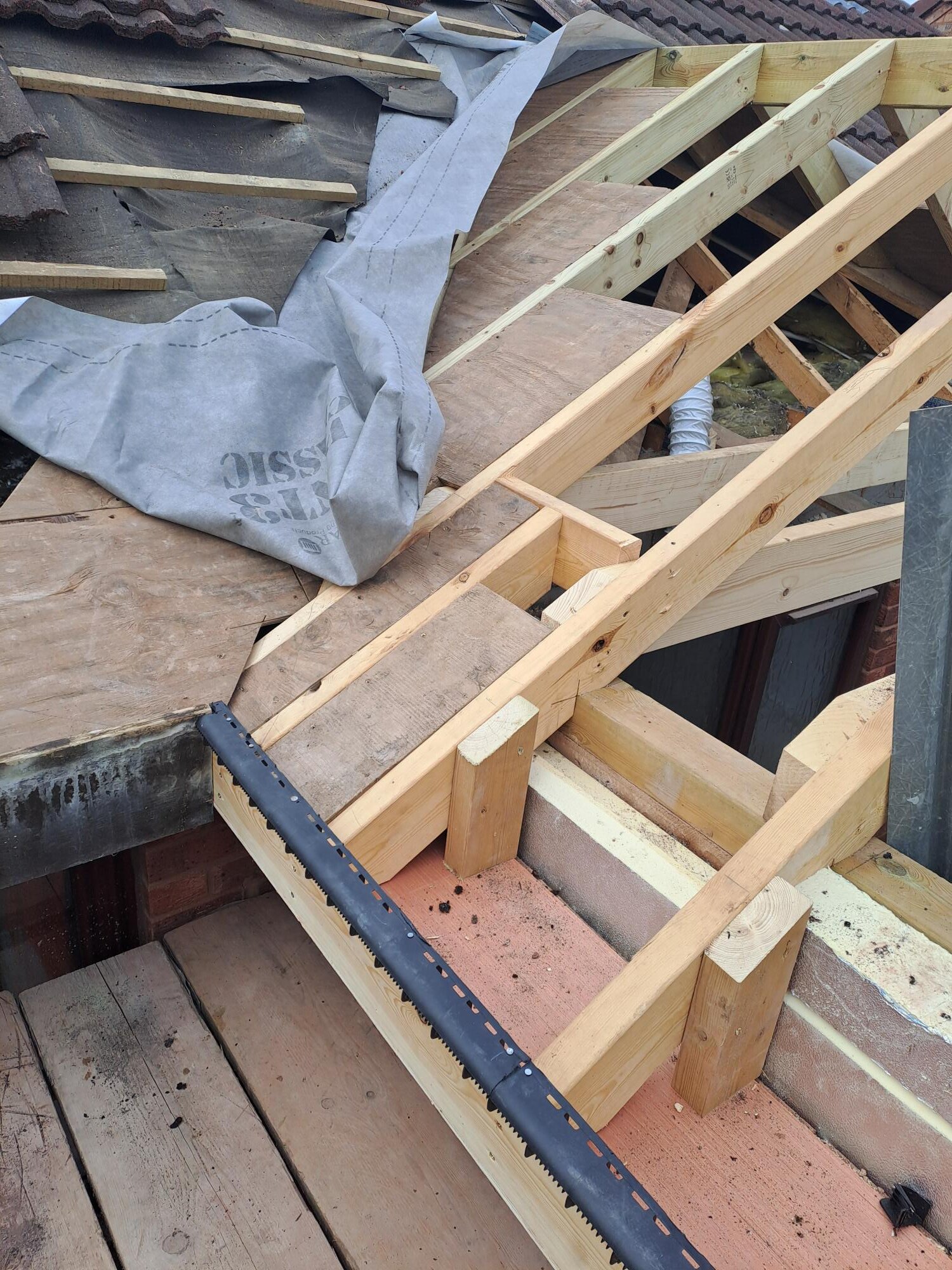
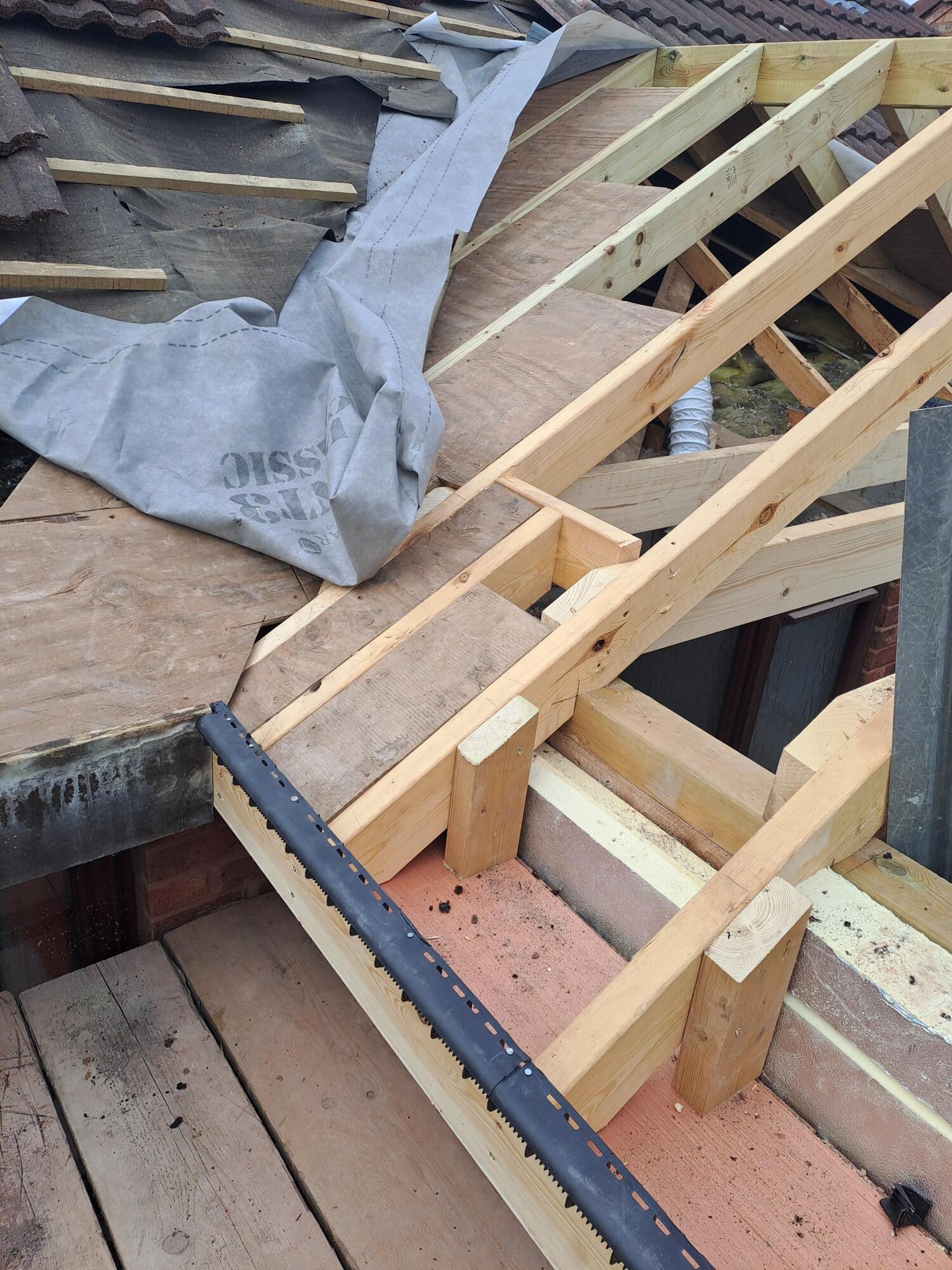
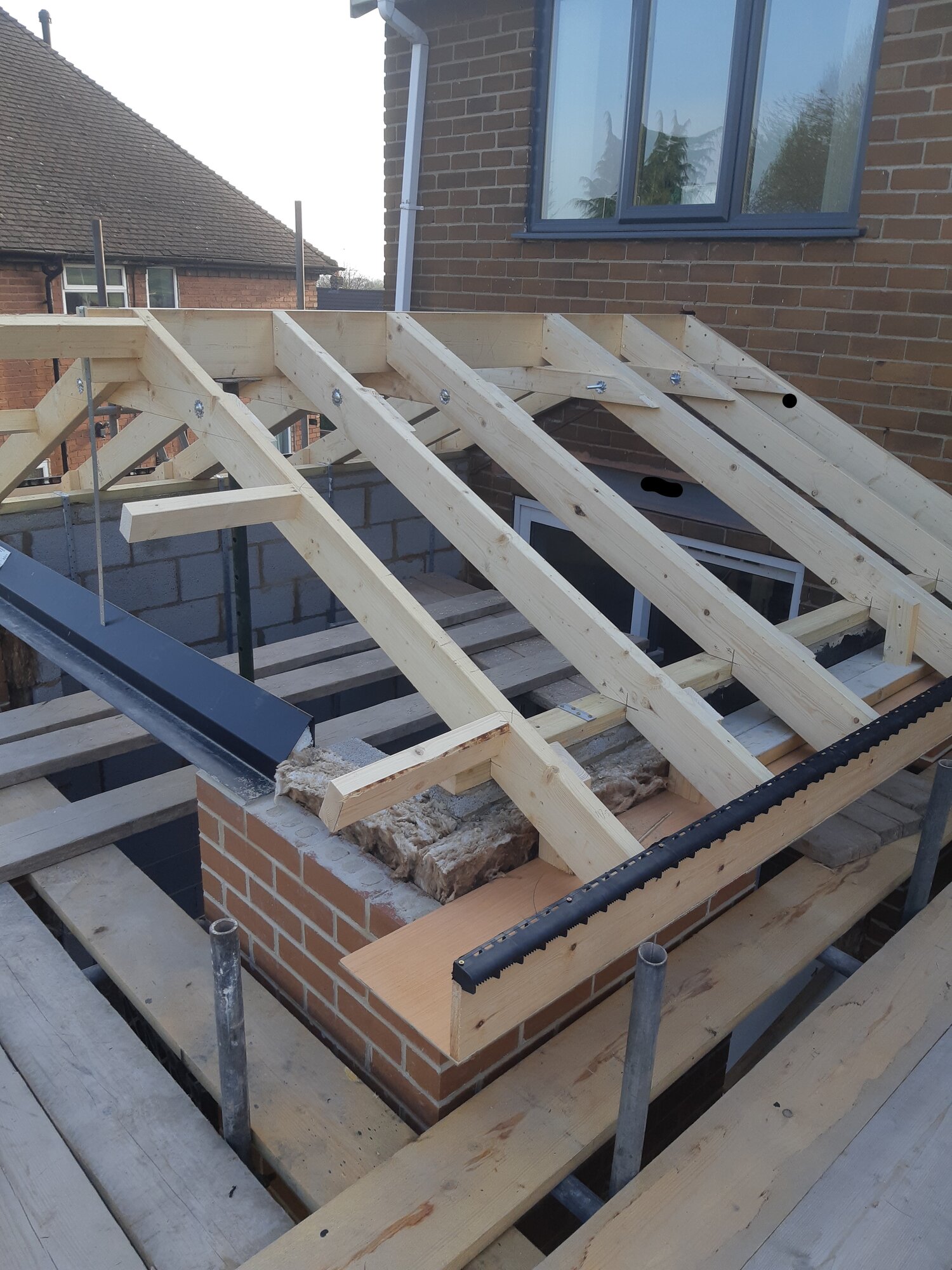
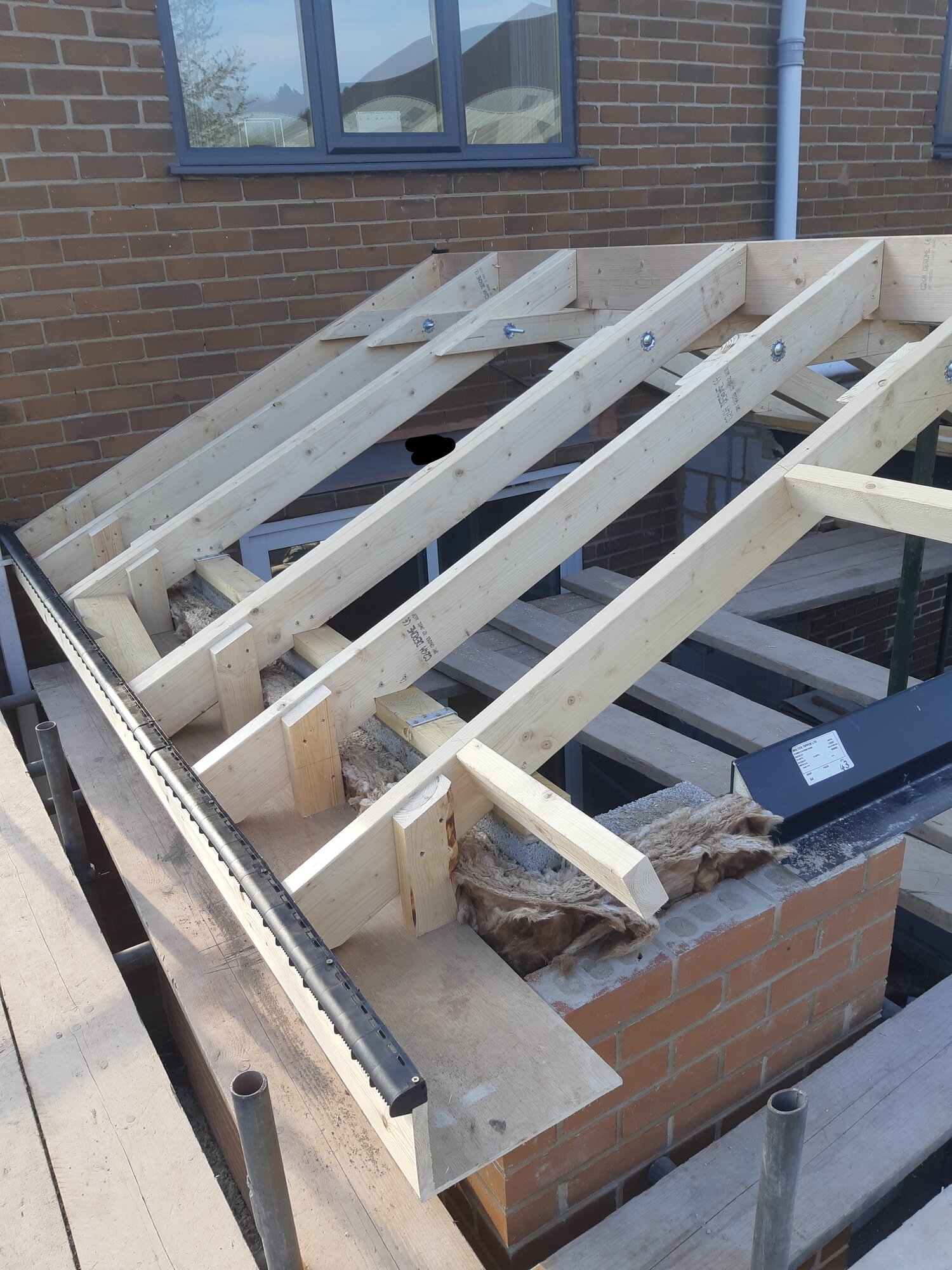
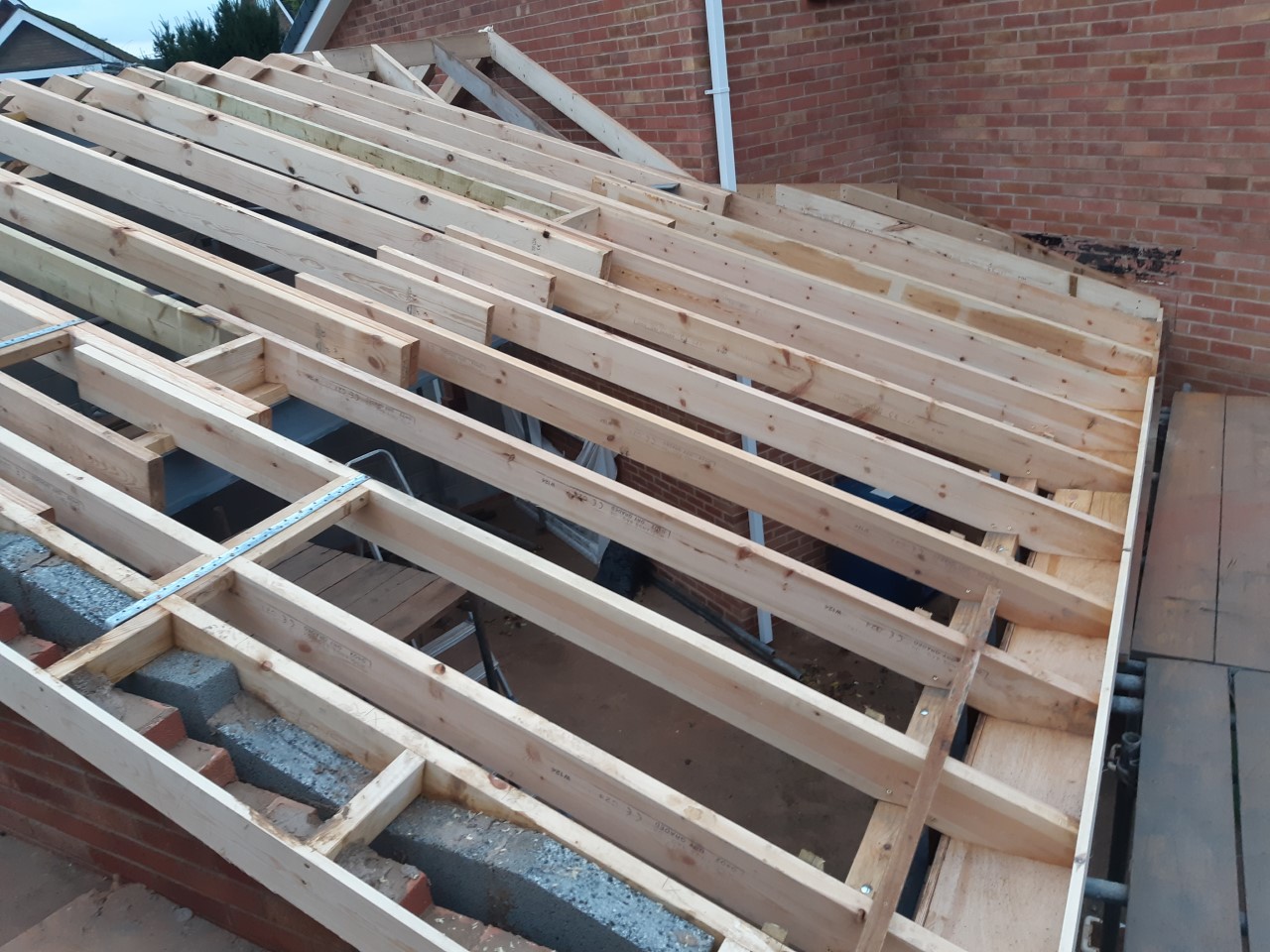
My uncertainty comes with how best to secure the fascia boards and soffits to the existing rafters. from sticking a camera into the soffits, it's looks like the rafters are cut relatively small at the end (tbc when i pull the facia off!) - they have only used a single nail in the current stuff; and it looks like there isn't enough space to add a further fixing - also as i'm adding fascia mounting top vents, i need to drop the fascia board a little further than currently, so will likely need some additional mounting for the soffit. i'm also hoping that additional hangers will ensure an easier ride evening out the fascia board fixings.
From all the info online I've seen, there appears to be different methods of doing this - swish and a few roofing stores guides indicate using offcuts of fascia board screwed to the rafters to even out the ends and provide soffit support - they appear to nail directly into the UPVC hangers to secure the fascia, and screw/nail the soffits into it underneath. other guides say never to do this because it's not structural and will never hold fascia boards (but ok to soffits). in these cases they indicate either using treated timber flat planks secured to rafters, or batten lengths to form a secure fixing for the back only. My initial plan was to use the existing fascia im removing as the hangers - but now i know it's only 10mm board, i don't thing it would be strong enough - and frankly 18mm fascia board of large sizes it apallingly expensive nowadays - current fascia is 150mm, so with upstand and a 300mm soffit width, i'd probably need a 5m run of 300mm board to cut up! However UPVC = no rotting and would probably be easier to use as hangers. what is the correct/preferred way to handling this?
the second question I have is about the need for "Sprockets/Fillet/Kicker Plates" on top of the rafters to level up to the fascia board. i've watched endless guide on installing this stuff and some show rafters with fillets on top, others don't - but only 2 or 3 actually say you need to add them. in one article, it mentioned having to install them under felt support trays to stop them sagging and allowing water in - although all the 16-18mm fascia board i've seen, the specs say it doesn't need fillets and can support the weight of tiles on it's own. if they are needed, i guess that then brings me back to the first point - i guess fascia board would be easier to install and provide some extra support instead of a wooden fillet.
Finally - i've done this before - but last time was replacing wooden fascias around a flat roof garage; this is the first time doing an apex roof. Any advice, tips etc would really be appreciated!
I've done a lot of research but want to clarify a few things before i get going on it - i'd like it to be done properly this time!
To give some background - the house is a 1968 brick house with concrete interlocking tiles, cold roof. about 20 years ago, the neighbour arranged for the old wooden fascias and soffits to be replaced with UPVC fascia and hollow soffits. these are pretty horrednously done; they've only used 10mm fascia capping but still removed all the old wood underneath; and nailed with a single nail per rafter - the fascia has twisted outwards at the bottom in a number of places, which in turn has made the gutters rise and fall a lot and causing blockages. it appears they tried to hide this by adding what looks like several tubes of silicone between the fascia and the hollow soffit sections - which just appear to rest loosely on the leg of the fascia, and have added a few screws every couple of metres into the wall fixed original batten. things came to a head earlier this year in the wind and rain, when a crash was heard and the soffits had come loose and were flapping in the wind - they are currently held in place by a strateigically place wrap of fishing line which is tensioned up to the rafters in the attic!
I am replacing with 18mm square leg fascia board, and 300mm hollow soffit. I have got some J-trim, with the intention of securing this to the wall fixed batten and secureing the soffit into that and screwing to the rafters or hangers from them. I originally planned to install the hollow soffit parallel to the fascias/walls, but am now veering towards how it's currently done - in perpendicular lengths slotted together; i guess this may add some more strength as well as adding the option to add further fixing screws along the 12m run. I have also purchased Manthorpe 3-in-1 10mm fascia board vents/felt tray/bird guards to fix to the top of the fascia board as currently the only ventilation in there appears to be the poorly fitted soffits flapping around!
My uncertainty comes with how best to secure the fascia boards and soffits to the existing rafters. from sticking a camera into the soffits, it's looks like the rafters are cut relatively small at the end (tbc when i pull the facia off!) - they have only used a single nail in the current stuff; and it looks like there isn't enough space to add a further fixing - also as i'm adding fascia mounting top vents, i need to drop the fascia board a little further than currently, so will likely need some additional mounting for the soffit. i'm also hoping that additional hangers will ensure an easier ride evening out the fascia board fixings.
From all the info online I've seen, there appears to be different methods of doing this - swish and a few roofing stores guides indicate using offcuts of fascia board screwed to the rafters to even out the ends and provide soffit support - they appear to nail directly into the UPVC hangers to secure the fascia, and screw/nail the soffits into it underneath. other guides say never to do this because it's not structural and will never hold fascia boards (but ok to soffits). in these cases they indicate either using treated timber flat planks secured to rafters, or batten lengths to form a secure fixing for the back only. My initial plan was to use the existing fascia im removing as the hangers - but now i know it's only 10mm board, i don't thing it would be strong enough - and frankly 18mm fascia board of large sizes it apallingly expensive nowadays - current fascia is 150mm, so with upstand and a 300mm soffit width, i'd probably need a 5m run of 300mm board to cut up! However UPVC = no rotting and would probably be easier to use as hangers. what is the correct/preferred way to handling this?
the second question I have is about the need for "Sprockets/Fillet/Kicker Plates" on top of the rafters to level up to the fascia board. i've watched endless guide on installing this stuff and some show rafters with fillets on top, others don't - but only 2 or 3 actually say you need to add them. in one article, it mentioned having to install them under felt support trays to stop them sagging and allowing water in - although all the 16-18mm fascia board i've seen, the specs say it doesn't need fillets and can support the weight of tiles on it's own. if they are needed, i guess that then brings me back to the first point - i guess fascia board would be easier to install and provide some extra support instead of a wooden fillet.
Finally - i've done this before - but last time was replacing wooden fascias around a flat roof garage; this is the first time doing an apex roof. Any advice, tips etc would really be appreciated!