• Looking for a smarter way to manage your heating this winter? We’ve been testing the new Aqara Radiator Thermostat W600 to see how quiet, accurate and easy it is to use around the home. Click here read our review.

Solar panels and hot water

during the day when you panels are generating power turn your immersion heater on
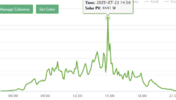
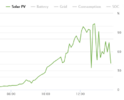
Solar panels don't work like that. If you look at yesterday, for example 1753354471906.png the solar exceeded 3 kW for a very short time, and I have panels rated at 6 kW, so the likes of the iboost+ have a CT coil that monitors how much is being supplied to the grid, and it controls how much power goes into the water to match how much is being generated, so it may be only using 200 watt to heat the water at times, it does not need the export to hit 3 kW before is switches on.

The likes of the iboost+ were designed when export was assumed, rather than measured, and still can be useful for people who are not paid for export, or paid very little for export. But I get 15p/kWh for export, and pay 8.5p/kWh for off-peak, so I would be better off with a simple time switch, that heats the DHW with off-peak to the complex iboost+ I have fitted. However, the gain is not enough to be worth changing it.

Some tariffs there still is a slight gain using solar rather than off-peak, but it would also depend on time of the day, Oct Flux end April.jpg the rates shown here can't be programmed into my iboost+ but there are some other makes, which can be programmed, but at these prices
1753355632910.png
one has to ask if it is worth it? The EDDi does seem to be a better unit, however some bits do not come as standard with it, the iboost+ comes with a wireless CT coil, it is extra with the EDDi.

If my iboost+ were to fail, I would not replace it, but would use a simple time switch instead. However, unless you have a smart meter, you can't have a split tariff, only those who had Economy 7 before the smart meter came out, can continue to have a time clock to change rates, and to be frank the Economy 7 and Economy 10 rates were not that good, it seems if you have enough money to buy an EV car you can have some very good rates, but if you're stuck with the old storage heaters, tough, they already have you're custom, you can pay extra for your power.
 
Thanks for the responses.

If the roof is sloping (my roof is) will it support the hot water cylinder? I have heard some people change the roof to accommodate for one (flat roof) I cannot imagine a hot water cylinder on top of a sloping gable roof.
 
The hot water cylinder is inside the house, only the panels are on the roof, but with direct water, can't see how it can switch the flow on/off fast enough not to cool water already heated, my PV solar 1753447764000.png is up/down like a yo-yo, also the area is quite large, 14 panels, total 6 kW, my father-in-law had two, water solar panels, either side of the roof, so at best likely to produce 600 watt, and that for rather a short time. I use 14 kWh per week on DHW, so it will need 2 kWh per day, so need an output of around 300 watt for 8 hours, and that seems unlikely.

Typical I get around 15 kWh from 14 solar panels, so the panels were simply not big enough for them to heat the domestic hot water, the hope is the solar takes the chill off the water, and something else finishes off the job. So if you're lucky you may get 7 kWh per week from solar, I pay 8.5p/kWh for off-peak, so 60p per week from solar it would take rather a long time to get pay back with water system.

I do look at people with 4 solar panels, so around 1.7 kW and likely getting 1.5 kW, and still need an inverter and battery which can deliver 3.5 kW, or it can never supply any energy hungry equipment, so the panels are really doing very little, most of the saving is down to charging batteries with off-peak and using it at peak times, one wonders if there was really any point in so few panels.
 
Thanks for the responses.

If the roof is sloping (my roof is) will it support the hot water cylinder? I have heard some people change the roof to accommodate for one (flat roof) I cannot imagine a hot water cylinder on top of a sloping gable roof.
I've only seen roof top tanks abroad
 
In the UK we need some sort of one way valve, so water can heat up with solar, but not cool down. The PV panel and immersion heater does just this. But the pipework from tank to roof for direct sun heating water, can lose as much heat as the solar produces, and clearly the circulation pumps also use power.

It is hard to work out how much energy is used to maintain the cylinder temperature, and how much is used, it would need a weeks holiday to see how much used to maintain the cylinder, and with a 9" immersion heater I was using around 5 kWh per week, and with a 27" around 15 kWh per week, but whole reason for changing was I found I was running out of hot water, I tried extra insulation, and all it did was reduce it by 3 kWh per week, still using 12 kWh per week.

Only 2 of us, and we only use the bath to store my wife's e-bike in, and showers are instant electric, so around 2 kWh required to maintain DHW and as you add more area to gain heat, you also add more to lose heat, so it is unlikely to work in the North of this country.
 
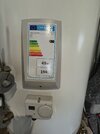
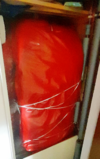
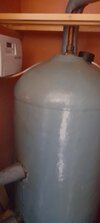
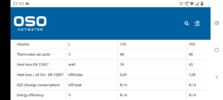
I have a 200L UV cylinder with a heat loss of 43watts. It take around 5kw to cover our daily usage and maintain tank temperature, just now it was putting 2.6kw into the tank which would otherwise be exported
 

Attachments

  • IMG_20250726_143333345_HDR.jpg
    IMG_20250726_143333345_HDR.jpg
    161.7 KB · Views: 28
  • IMG_20250726_143321924_HDR.jpg
    IMG_20250726_143321924_HDR.jpg
    139.9 KB · Views: 19
  • IMG_20250726_143345513_HDR.jpg
    IMG_20250726_143345513_HDR.jpg
    149.8 KB · Views: 22
I have solar panels ,I must admit abroad .Today I am making 4.9KW house is using 1,54 KW rest is going back to grid, If I turn on my emersion house is using 3.35KW rest is going back to grid
So still heating water for free
 
No, the heat loss is 43 watts. Also known as 43 joules per second.

In one day or 24 hours, the total energy loss is stated there as 1.03kWh, as 43 watts x 24 hours is 1032 watt hours, or 1.032 kWh.
 
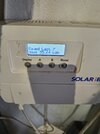
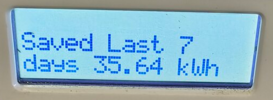
My mistake, should have known better, wrap on the knurls for me. So 43 watts for 7 days, as that is what has been read from the iboost+ = 7.224 kWh so since 35.64 recorded, it would seem 28.416 kWh actually used as hot water.

Back to original question, with that tank, you need a kWh to maintain DHW at some undisclosed temperature over 24 hours, I would assume 65ºC as want to ensure no legionnaires which are killed at 60ºC I believe, this was the problem with my DHW heated with oil, there was no tank thermostat, so we used just time, we found that 4 burns at ½ hour per burn per week kept the water warm enough to wash hands, but no idea how hot the tank was, and if we could get legionnaires incubating in the tank.

The same problem with solar, will it get the tank hot enough, this has also been a problem heating DHW with a heat pump, to hit that temperature they are not running efficiently, so done for limited time only.

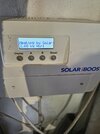
My iboost+ reports that the thermostat has opened, says "Tank Hot" so I can see the water has got hot enough, but with my fathers-in-law DHW only panels, did not report as it if tank had ever reached full heat, in fact the circulation pipes at best were warm to the hand.
 

If you need to find a tradesperson to get your job done, please try our local search below, or if you are doing it yourself you can find suppliers local to you.

Select the supplier or trade you require, enter your location to begin your search.


Are you a trade or supplier? You can create your listing free at DIYnot Local

 
Back
Top