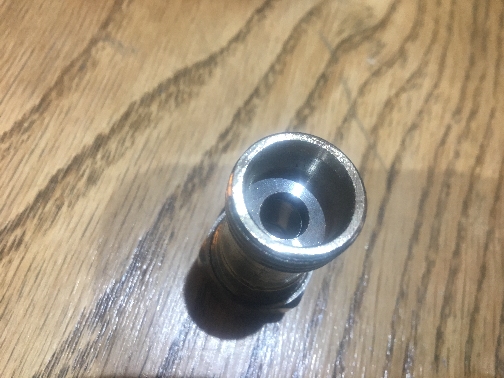
Solder fail

Given it's thicker brass it probably didn't get hot enough before the yorkie's solder ran and the brass then wasn't hot enough to take it. If it had been end feed then it could have been heated that little bit more, brass will always take more heat than copper before the solder will take to it.

I would have been inclined to first tin the brass part fully, in the area, then try assembling with heat, and extra flux and solder.
 

That's what I do, being brass it's dead soft, seconds with a flat file.
Obliviously you have the time practised skill to do it with a file but for novices they may have more control if they put a low grit wet and dry sandpaper on a flat surface and rub the fitting on that - turning as you do.
 
TBH a flat file is usually wide enough to take the whole end of the fitting so it doesn't take long to flatten it out with a 90deg turn half way through. If the DIY'er has the skills to attempt plumbing then TBH running a fitting down a flat file shouldn't tax them too much.

Some sandpaper on a flat surface would do just as well though, for sure.
 
I w
TBH a flat file is usually wide enough to take the whole end of the fitting so it doesn't take long to flatten it out with a 90deg turn half way through. If the DIY'er has the skills to attempt plumbing then TBH running a fitting down a flat file shouldn't tax them too much.

Some sandpaper on a flat surface would do just as well though, for sure.
as speaking from my own experience :ROFLMAO:
 
TBH a flat file is usually wide enough to take the whole end of the fitting so it doesn't take long to flatten it out with a 90deg turn half way through. If the DIY'er has the skills to attempt plumbing then TBH running a fitting down a flat file shouldn't tax them too much.

Some sandpaper on a flat surface would do just as well though, for sure.
Nowt like a decent hand-held belt sander for speed and oxide removal (y)
 
Getting the right amount of heat can be difficult especially when not doing plumbing soldering regularly. May suggest you try the following :-
take all the copper pipework away from the plastic, (should be obvious but we all make mistakes especially when in a Hurry),
Clean up the brass element, (meth's, wire wool and or abrasive paper) you want it all to be clean and shiny,
If the existing copper to copper joints are still pressure water tight leave them alone,
Clean up the inside of the 'T' fitting where the brass element will go,
Flux all the joint faces,
Hold the brass element with something that doesn't conduct heat,
Apply heat to the brass element - when it gets hot apply a little more flux - when that bubbles than offer it up to the copper still applying heat,
When the brass fitting slides fully into the 'T' then apply plumbers solder to the joint edge and check it runs all the way around the fitting.
When cold re-assemble and then check for water (air) tightness.

A lifetime spent soldering and now, going by above, have been doing it wrong
 

If you need to find a tradesperson to get your job done, please try our local search below, or if you are doing it yourself you can find suppliers local to you.

Select the supplier or trade you require, enter your location to begin your search.


Are you a trade or supplier? You can create your listing free at DIYnot Local

 
Back
Top