Stairwell lighting went off, needing advice

How are you 'seeing the current'?

My earlier assumption was wrong about that black fuse carrier - it is preceded by a company, cut-out fuse. It goes -
cut-out, black fuse, MEM fuse, then to the lights.
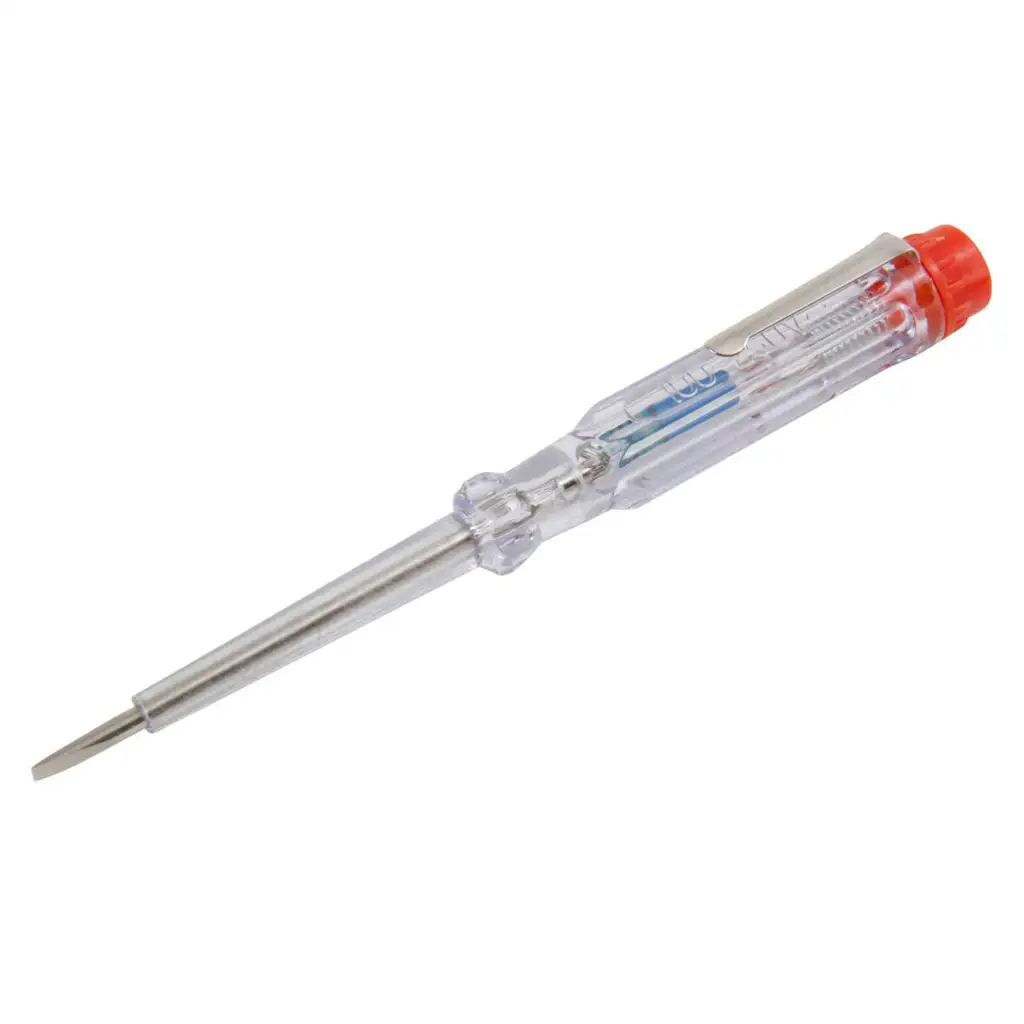
With one of these
niglon_ntp1_a.webp
 
With one of these

Not very reliable, but...

With the power on and that Royce Thompson unit, set to TEST - Can you check if the live input, and output, are live?

Now check the neutral with your tester, to see if they show as live.

Report back, with the results..
 
In the meantime I connected the terminals of the mem switch fuse with a bridge wire
DO NOT DO THAT EVER.
It was fortunate that this time nothing happened.

Had power been available, that bridge wire could have taken out the main supply fuse or caused a fire.


I am at a loss here.
It's way past the time to get a professional to investigate and repair.
 
DO NOT DO THAT EVER.
It was fortunate that this time nothing happened.

Had power been available, that bridge wire could have taken out the main supply fuse or caused a fire.


It's way past the time to get a professional to investigate and repair.
Appreciate your concern here.
I will probably call a sparky, but I really can not see what the issue is here and that drives me nuts.
I will test the circuit from MEM switch to each lightfitting and between the lights with multy meter and with the main fuse removed.
If there is not connectivity this might indicate cable melted somewhere in the wall.
 
How can both fuses be blown, one 16A should have been blown and that is it. How the 20A got blown? And if they can both be blown, can anything else on the circuit be fried also? The cable itself?
The problem started after a very weird event. It was very cold here for a week - 0C. The stairwell is external so all the walls were at 0C. All of a sudden temperature went to 13C in a day, and it was very humid. I saw so much water condensed on the walls and ceiling that it was dripping on the floor. So my theory is that it might have gone to the light fixture connection terminals. Not sure what's going on. :mad:

A fuse doesn't limit the current, all it does is destroy itself when sufficiently overloaded.

A sudden total short circuit may have been in the order of hundreds or even thousands of amps and both fuses are likely to blow.

I think this incident is unlikely to simply be water ingress.
 
How can both fuses be blown, one 16A should have been blown and that is it. How the 20A got blown? And if they can both be blown, can anything else on the circuit be fried also? The cable itself?
The problem started after a very weird event. It was very cold here for a week - 0C. The stairwell is external so all the walls were at 0C. All of a sudden temperature went to 13C in a day, and it was very humid. I saw so much water condensed on the walls and ceiling that it was dripping on the floor. So my theory is that it might have gone to the light fixture connection terminals. Not sure what's going on. :mad:

A fuse doesn't limit the current, all it does is destroy itself when sufficiently overloaded.

A sudden total short circuit may have been in the order of hundreds or even thousands of amps and both fuses are likely to blow.

I think this incident is unlikely to simply be water ingress.
 

If you need to find a tradesperson to get your job done, please try our local search below, or if you are doing it yourself you can find suppliers local to you.

Select the supplier or trade you require, enter your location to begin your search.


Are you a trade or supplier? You can create your listing free at DIYnot Local

 
Back
Top