Very baffling damp problem - Help!!

Joined
24 Oct 2007
Messages
10
Reaction score
0
Country
United Kingdom
Hi guys,

I have a damp problem which has been totally baffling me for a while and would appreciate some help.

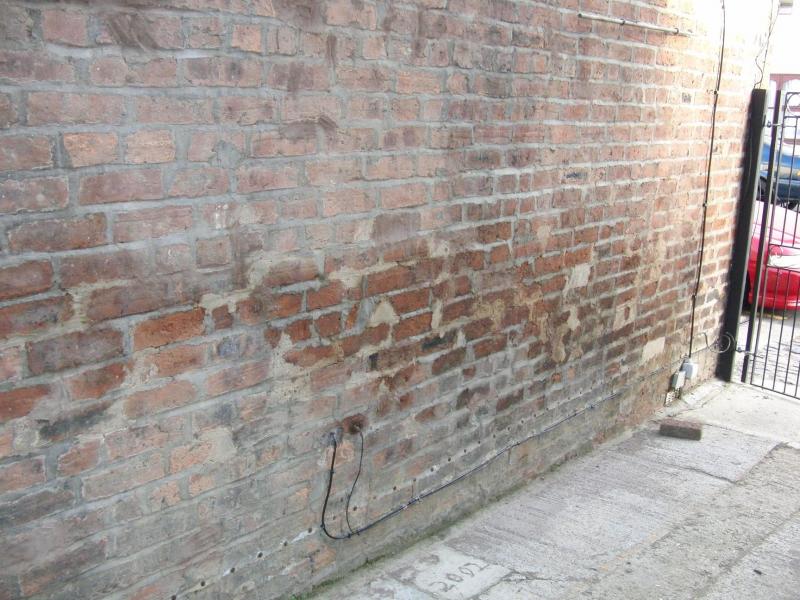
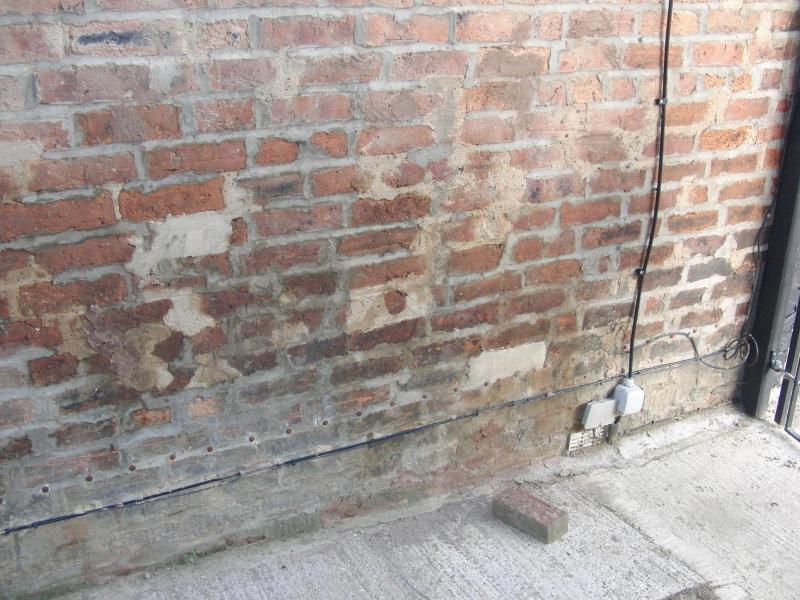
Basically I have a damp patch at the bottom of the gable wall of my end terrace house, and I just can't work out where it is coming from. (See pictures).

A little bit of background information...
- There are no water pipes or gutters anywhere near it (above or behind the wall)
- The house has had a damp proof course (injected) about 3 years ago.
- There are two chimney breasts behind the wall (one in each downstairs room)
- One chimney is still operational (but not been used for at least 2 years), the other has been plasterboarded over and ventilated at the bottom. Totally ventilated at the top, there are no cowls.
- The house doesn't suffer from any condensation problems that I know of (no condensation on windows etc).
- The damp seems to get worse in the mornings after night time (picture shown is about as dry as it gets).
- Not much difference if it rains or if it is totally dry. (It has been like this for as long as I can remember, even in the height of the summer).
- The pointing is generally ok, its a scruffy wall, but there aren't any sandy joints or blown bricks.

I think thats everything I can remember :shock: please help out, because I really don't know what it can be, I don't think its rising damp.

Thanks in advance for any help! :D
Jon

 
If it doesn't change summer or winter rain or shine are you sure its damp? is it damp to the touch?

Could it be that someone has power washed or cleaned with acid or something just that particular spot to remove graffiti etc.

A boarded over fireplace should as you have mentioned a vent at the base but it should also be covered but vented at the top with an elephants foot cowl. Simply leaving it open lets too much rain in.

Is this showing signs of damp on the inside?
 
IF that`s a public access alley- then it`s been ****ed against :lol:
 
Its my driveway, so no drunken p***ing up the wall I hope!! :lol:

It doesn't have any type of cowl on the chimey, do you think it could be too much rain getting in from there? It has three large chimney pots on top, so there is plenty of room for rain to get down I guess. But wouldn't that cause damp further up the wall as well, where the chimney bends, splitting into the two breasts?

There are definately signs of damp around the chimney breasts on the ground floor internally (directly behind the damp outside), even though its been damp proofed. The plaster shows signs of salts coming through and there is light bubbling, even though it was only plastered last year.

I seem to remember when it hailed a year or two ago, I was sitting eating my dinner and hail stones where landing in the fireplace, so I guess if that can happen, water could find its way down too!! :shock:

Jon
 
any unused flues should be capped with vented cowls. That's certainly the place to start.
 
and vented inside aswell,
is it a cavity in that area?if so it might be silted up with crud and tracking inside?
 
Hi

Your chemical dpc is being breached by rising damp just about where the brick is shown in your pictures damp patch initiates at around 3 bricks wide.
Also, you have what looks like an air brick/vent sited below the aerial point which is far too long and will be encouraging rainwater to enter the building and saturate the ground - air vent should be just below chemical dpc or at least 1 if not 2 bricks above ground level.

Regards
 
Do you have a solid inside floor? Or is the v. low air brick venting a sub-area?

Why was DPC installed 2yrs ago?

What is the relation in height of your internal floor to the extrnal injection line?

DPC should be injected in the brickwork not the bed. Was a DPC injected internally.

What kind of "plaster" or render was used inside?

Redundant flues should be swept and vented and capped - perhaps sulpherisation is taking place?

The brickwork looks like soft bricks ie absorbent. The pointiong is a smeaaring likewise the spelching
 
you have looked for leaking gutters, downpipes, drains and boiler pipes?

if there is a fireplace behind that wall, there might be odd mineral deposits soaked into the wall. Coal fire acid condensation used to attack the mortar and make it swell. Does the mortar or pointing seem different in that area?

p.s. what's "spelching"?
 
The inside floor is suspended floor boards, the low vent is venting the cellar. The dpc was done because of signs of damp inside the house.

I'll have to check the dpc level inside, but I believe the dpc level outside is the equivelent of about 2 bricks height inside the house.

The bricks outside do appear to be quite absorbant, so possibly penetrating damp?

There are definately no pipes or gutters in the area. Is there anything that can be put on the bricks to prevent water absorbtion, I have read that it's not always a good idea to seal the bricks?

If it is rising damp, could it be caused by the concrete driveway butting upto the house and surface water penetrating? This came up in my research.

Seems to be lots of suggestions, problem is I'm not sure which one is best to start at! Thanks for all your help so far!

Jon
 
the concrete drive should preferably have a slight slope on it to take the water away from the house. But as you have a cellar I would expect any water to show up much worse in there.

If you are having any treatment on the wall, clean it off and have it re-pointed properly first.

Are there any signs of whiskery or crystalline mineral efflorescence on the wall, inside, out, or in the cellar?

If it was penetrating damp, and you have no gutter or other source, it would need to be a wall that had quite a bit of driving rain on it. In my coastal area, water pours off the roof at the gable end in storms (the west side is slate-hung so impervious but breathable)

I certainly can't see a certain cause, and I think I am not alone :wink:
 
Looks similar to:
http://www.heritage-house.org/assets/images/damp/dampwall.jpg

IF you want to believe http://www.heritage-house.org/damp.html then they might blame a mixture of condensation and your new (gypsum?) plaster.

Probably a good idea to get cowls on unused chimney pots.

I've seen mention of using radiant heat inside the house to warm the damp wall and prevent condensation. It might be worth trying before spending more on building. At least it might help identify if it is condensation. You might try a hygrometer on the wall inside above the skirting board to measure relative humidity at the wall.

Also have a look at http://www.diynot.com/forums/viewtopic.php?t=110195
 
I just had a look at the driveway and just where the air brick in the photo is, there is a different patch of concrete which actually slopes to the house, which I suspect may cause puddling of water (but I have never really noticed) - i'll check next time it rains (probably tonight!! :D )

JohnD - The cellar does suffer heavily from damp (the old floor is always wet, and there are sometimes small puddles (it is the original brick floor so is very uneven). I had the drains checked with a CCTV a year ago, and they were ok, so maybe it is surface water getting in.

There are also signs of the efflorescence you mention on the plaster inside the house. And also on the cellar ceiling, which I had plastered earlier this year (but only on the join with the wall)

Ajrobb - thanks for the links, its funny you link those because I came across them yesterday when searching the net... some great information on there directed at fixing the routes of the problems rather than chucking money at damp proofing, sounds like they really poopoo the idea of damp proofing!

The house is very warm inside, has a full modern central heating system, and doesn't appear to suffer from any condensation. But I do have plans to add a ventilation system in the cellar, because it is very humid and damp on the floor, the air bricks don't seem to circulate the air enough.
 
Spelching, perhaps a local name, for degrading brick face, similar to blowing.

Your inside and outside lines of injection should be at the same level. By and large, injection is a waste of time - it does form a barrier of sorts for what it's worth.

Inside render should be sand lime and cement and inhibitor. Carlite plaster attracts salts. probe your skirtings for fungal damage.
What's the relation in height of the pathway to the internal floor?

Do any joist tails run into the wall in question?

The low vent req's re-positioning higher up the wall, you can get various vents to go from high to low.

At some stage you should replace all damaged bricks and rake out all mortar joints to a depth of 20mm and re-point. 20mm rake-out is a must.

All in all, i should imagine that you have mostly penetrating damp with some rising damp. Capillary action ( how moisture penetrates) will move up, down or sideways. Your brickwork is porous and below GL sodden.
 

If you need to find a tradesperson to get your job done, please try our local search below, or if you are doing it yourself you can find suppliers local to you.

Select the supplier or trade you require, enter your location to begin your search.


Are you a trade or supplier? You can create your listing free at DIYnot Local

 
Back
Top