• Looking for a smarter way to manage your heating this winter? We’ve been testing the new Aqara Radiator Thermostat W600 to see how quiet, accurate and easy it is to use around the home. Click here read our review.

Weep Joints Issue

Joined
28 Sep 2023
Messages
24
Reaction score
0
Country
United Kingdom
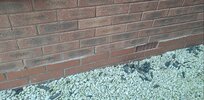
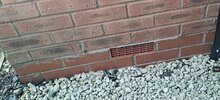
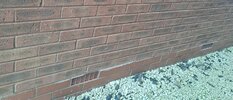
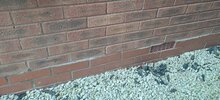
Buying a 4 year old house and noticed that on the right flanking wall some issues with the mortar
above the DPC and the WEEP JOINTS, which have been filled with mortar. [No idea whether it was done by the original
builders or previous owners.]
Any advice on the best way to correct this problem (can I just 'drill' into weep holes?)?
 

Attachments

  • weep joints 1.jpg
    weep joints 1.jpg
    324.7 KB · Views: 72
  • weep joints 2.jpg
    weep joints 2.jpg
    382.9 KB · Views: 66
  • weep joints 3.jpg
    weep joints 3.jpg
    508.2 KB · Views: 66
  • weep joints 4.jpg
    weep joints 4.jpg
    377.9 KB · Views: 66
Buying a 4 year old house and noticed that on the right flanking wall some issues with the mortar
above the DPC and the WEEP JOINTS, which have been filled with mortar. [No idea whether it was done by the original
builders or previous owners.]
Any advice on the best way to correct this problem (can I just 'drill' into weep holes?)?
Of all the things I'd look at regards structural issues with a house - weep vent blockages is nowhere on that list.
 
Of all the things I'd look at regards structural issues with a house - weep vent blockages is nowhere on that list.
okay, understood, not a major issue. But would still like to repair/correct. I though to just 'drill into' the holes, but then thought I might damage the DPC. Any suggestions what to do?
 
I've got to agree. There's not really a problem. Don't fix what's not broke. One weep hole looks fake tho
Honestly as long as the cavity trays are good then you're OK
 
OP,
The small circular weep vents are presumably sitting on the DPC. For what purpose?
Why would they be sitting on a cavity tray? Why would a cavity tray be installed 150mm above ground level?
Some kind of repair or remedial work has previously been sort of attempted in the DPC mortar bed - but for what purpose?
OP, you could pull the weep vents out & insert a Boroscope to examine the cavity if you wanted to?

As above, why bother unless this issue has been red flagged in conjunction with some larger defect?
Is there any damp inside the house?
Your weep vents have nothing to do with flood issues.
 
Last edited:
OP,
The small circular weep vents are presumably sitting on the DPC. For what purpose?
Why would they be sitting on a cavity tray? Why would a cavity tray be installed 150mm above ground level?
Some kind of repair or remedial work has previously been sort of attempted in the DPC mortar bed - but for what purpose?
OP, you could pull the weep vents out & insert a Boroscope to examine the cavity if you wanted to?

As above, why bother unless this issue has been red flagged in conjunction with some larger defect?
Is there any damp inside the house?
Your weep vents have nothing to do with flood issues.
Why now have cavity trays all round the bottom of the building. This is why you see weep holes above the dpc at the bottom. Also weep holes are put in to let built up moisture out.
 
OP,
The small circular weep vents are presumably sitting on the DPC. For what purpose?
Why would they be sitting on a cavity tray? Why would a cavity tray be installed 150mm above ground level?
Some kind of repair or remedial work has previously been sort of attempted in the DPC mortar bed - but for what purpose?
There are several reasons to include a tray at DPC level, one of those being say a continuous (across the cavity) Radon barrier. Or it could be part of a B&B floor design. Fairly typical.
 
Poster #8,
Using a B&B radon barrier is a good example for an across the cavity barrier continuity:
The B&B & cavity walls are treated like a one piece concrete slab - the barrier runs flat across the B&B from the outside face of the outside skin to the outer face of the opposite outside skin.
It crosses both cavity walls, & the cavity itself.
No cavity tray is needed.

Where a "drop" in height occurs from inner to outer skin then the continuous barrier is simply stretched over the cavity to rest on the DPC line of the outer skin. No cavity tray is required.

There are other variations due to occasional varieties of Bldg. detail.
 
Timber frame house is the most common reason.

Weep holes are not used to vent radon.
 
Some kind of repair or remedial work has previously been sort of attempted in the DPC mortar bed - but for what purpose?
Thanks, yes, I noticed some of the mortar above the DPC has been 'repaired'. Can't think why, as house is only 4 years old. Perhaps they forgot to place weep joints during construction and were inserted later. Hard to say really...
 
I've got to agree. There's not really a problem. Don't fix what's not broke. One weep hole looks fake tho
Honestly as long as the cavity trays are good then you're OK
yeah, see what you mean. Didn't think of that. Maybe that explains why the mortar above the DPC looks like it has had some 'repairs' to it, to add in weep joints missed during construction. Actually looks like the new mortar is around the air bricks...(??)
 

If you need to find a tradesperson to get your job done, please try our local search below, or if you are doing it yourself you can find suppliers local to you.

Select the supplier or trade you require, enter your location to begin your search.


Are you a trade or supplier? You can create your listing free at DIYnot Local

 
Back
Top