
You are using an out of date browser. It may not display this or other websites correctly.
You should upgrade or use an alternative browser.
You should upgrade or use an alternative browser.
What are these in every room
- Thread starter iTRYer
- Start date
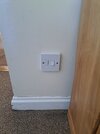

Depends what they are for.?

Switched fused connection units (FCUs). Do you or did you have electric heaters/storage heater or anything similar? Is there any indication in you consumer units (CU) of circuits for something like that?
If you post a photo of your CU with the flap open it might give us a clue.
If you post a photo of your CU with the flap open it might give us a clue.
Thats it just been in house a month and not sure, rads are oil boiler...no electric heaters, there is even one in toilet wall...dont know to leave them on or not. I thought they would be isolation points for overloads and they blow instead of main fuse?
They are generally used to supply an item of fixed equipment. The questions are which circuit in your CU are they fed from and what are they supplying. You could turn them off in turn and see what stops working.Thats it just been in house a month and not sure, rads are oil boiler...no electric heaters, there is even one in toilet wall...dont know to leave them on or not. I thought they would be isolation points for overloads and they blow instead of main fuse?

and a second pic of the general area showing all of the CU, company fuse, meter etcSwitched fused connection units (FCUs). Do you or did you have electric heaters/storage heater or anything similar? Is there any indication in you consumer units (CU) of circuits for something like that?
If you post a photo of your CU with the flap open it might give us a clue.

- Joined
- 27 Jan 2008
- Messages
- 29,412
- Reaction score
- 3,615
- Location
- Llanfair Caereinion, Nr Welshpool
- Country

I have one built into my clamp on so never used these 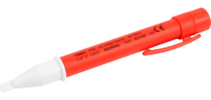 but they are cheap enough (£8 Toolstation) and you can work out what they are fed from and also likely what they feed using that simple tester.
The FCU (fuse connection unit) is used for all sorts, from adding extra sockets on a ring final as fused spurs, supply to boiler, supply to immersion heater, supply to storage radiators, they could even supply some damp removal device although unlikely.
but they are cheap enough (£8 Toolstation) and you can work out what they are fed from and also likely what they feed using that simple tester.The FCU (fuse connection unit) is used for all sorts, from adding extra sockets on a ring final as fused spurs, supply to boiler, supply to immersion heater, supply to storage radiators, they could even supply some damp removal device although unlikely.
I presume that's what he/she is askingDepends what they are for.?

Turn them all off and see what’s stopped working . May be lighting .Thats it just been in house a month and not sure, rads are oil boiler...no electric heaters, there is even one in toilet wall...dont know to leave them on or not. I thought they would be isolation points for overloads and they blow instead of main fuse?

The one in the picture is already off, so that’s not going to work!!Turn them all off and see what’s stopped working . May be lighting .
@iTRYer need you to (carefully) unscrew one of the plates and photo the connections within.
Maybe there’s nothing connected to the output side of the switch!
Don’t se why not .The one in the picture is already off, so that’s not going to work!!
@iTRYer need you to (carefully) unscrew one of the plates and photo the connections within.
Maybe there’s nothing connected to the output side of the switch!
your strategy is to turn the FCU off to discover what then does not work. If the FCU is already off then you won’t be able see what doesn’t work because they were off in the first place..Don’t se why not .
If all off why can’t you see what’s not working, please explain ?your strategy is to turn the FCU off to discover what then does not work. If the FCU is already off then you won’t be able see what doesn’t work because they were off in the first place..
Fused connection units (FCU for short) are used for a number of applications including but not limited to.
If not then I would look for any equipment, sockets or flex outlets in the vicinity. Especially sockets that are in unusual locations (high up, under a counter etc) and test if those sockets are controlled by the FCU.
If you feel confident in doing so then removing the FCU from the wall (with the power off of course) and looking at what type and size of cable (if any) is connected to the load terminals may give more clues. Looking at the fuse may also give a clue, a 13A fuse likely means sockets or a high power appliance, a 3A or 5A fuse likely means lighting or a low (electrical) power appliance.
- Providing over-current protection for a spur that serves multiple sockets or is wired in smaller cable than is allowed for non-fused spurs.
- Allowing a spur to be switched on and off.
- Providing over-current protection and/or switching for fixed appliances.
- Providing over-current protection for lighting that is fed from a socket circuit.
If not then I would look for any equipment, sockets or flex outlets in the vicinity. Especially sockets that are in unusual locations (high up, under a counter etc) and test if those sockets are controlled by the FCU.
If you feel confident in doing so then removing the FCU from the wall (with the power off of course) and looking at what type and size of cable (if any) is connected to the load terminals may give more clues. Looking at the fuse may also give a clue, a 13A fuse likely means sockets or a high power appliance, a 3A or 5A fuse likely means lighting or a low (electrical) power appliance.

DIYnot Local
Staff member
If you need to find a tradesperson to get your job done, please try our local search below, or if you are doing it yourself you can find suppliers local to you.
Select the supplier or trade you require, enter your location to begin your search.
Please select a service and enter a location to continue...
Are you a trade or supplier? You can create your listing free at DIYnot Local


