What bulbs are what, and how to tell?

Lots of products will have FCC IDs because they are also sold on the US market but the FCC has no regulatory significance on this side of the pond.
I got the impression that gman's point was around "the presence of an FCC ID indicates the device performs some form of communication" which would indicate smart characteristics

Perhaps same for a MAC address, if it's WiFi
 
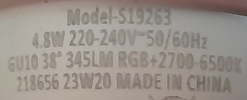
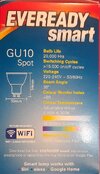
1766495027551.png This is a smart bulb, not yet fitted, where is the FCC ID? Since it says RGB it is clearly a smart bulb, since new also have the packet, Smart bulb GU10 packet.jpg which does give all the details, but once a bulb has been in for a few years, not so easy, if it was not colour changing it would not say RGB, and there are dimmable bulbs made with a variable colour temperature, so the 2700 - 6500K does not show it is smart. The 4.8 watts and 345 Lumen do point to being smart, but in the main we simply don't know.
 
This is a smart bulb, not yet fitted, where is the FCC ID? Since it says RGB it is clearly a smart bulb, since new also have the packet, which does give all the details, but once a bulb has been in for a few years, not so easy,....
As I've implied before, what surely matters ins not what the bulb "is" but, rather, what you are "using it as" - and, as I've said, you surely must know whether or not you have been using it as a 'smart' bulb?

If you have been using it as a 'smart' bulb and it no longer works as such, you presumably need to replace it with a new 'smart' bulb. On the other hand, if you have not been using it as a 'smart' bulb, then you presumably can replace it with a non-'smart'one, even if the present one is (or was!) 'smart'?
 
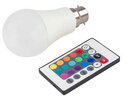
OK may be unusual as my flat under main house, not used that much, and used in the main by my daughter when she stops over, and she may well swap bulbs if one fails, so noted bulb failed and got new, about to drop old one in the bin, then thought is this simply a smart bulb turned off, in the main smart bulbs will if power switched off and on, auto switch on, but the one I had used in the flat was an odd one out, Lampandremote.jpgit did not connect to internet or phone, but came with a remote control, as wanted a light which visitors could turn on/off when in bed. Should not have been in kitchen, but as said daughter could have swapped bulbs around.
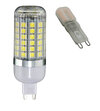
I expected to look at the bulb, and simply read what it was, but seems this is not the case. I have had problems with G9 bulbs, the small one G9-comp.jpg complies with British rules, and gives wattage and lumen, but will not work with my smart switch, and is like a tocH candle, the big one works great, except covers will not fit, but does not have a single marking on the bulb, so only way to get them is from the internet, as lack of markings means they don't comply. But I like to support local shops, so where I can, I buy local, bad enough when wife uses these people who leave parcels all around the house, without me doing it too.
But if local bought bulbs don't tell you what they are, may as well use these delivery services.

 
I got the impression that gman's point was around "the presence of an FCC ID indicates the device performs some form of communication"
Many electronics that don't do any "communication" get a FCC ID, though I'm not sure what the precise criteria are.

This is a smart bulb, not yet fitted, where is the FCC ID?
As I said, the FCC is a US agency, if the product is not intended for sale in the US, there would be no need to involve the FCC.
 
I do sometimes wonder about USA wording on products, spelling of colour, shows if designed for the USA or Europe, but seen so many extra low voltage items labelled low voltage, which would only be correct in the USA. ISO calls them extra low voltage.

I have lost bulbs, I look at the list on the app, it shows a bulb named "Christmas tree", and clearly one year it was used in a Christmas light, but not this year, and likely been moved to some other device, and I have failed to relabel it.

When I first started with LED I made notes as to when each one was fitted, to see how long they lasted, but given up on that now.
 

If you need to find a tradesperson to get your job done, please try our local search below, or if you are doing it yourself you can find suppliers local to you.

Select the supplier or trade you require, enter your location to begin your search.


Are you a trade or supplier? You can create your listing free at DIYnot Local

 
Back
Top