What is an AA cell capacity?

I see standard, 70%, 100%, 150% and 200% extra, but what is the base line?

I think the baseline is the old zinc-carbon batteries that nobody uses any more.

It's disappointing that rechargeable batteries are marked with their capacity, and alkaline aren't

Though from my use in low-current devices, alkaline seem to last about four times as long.

The rechargeable are economical, but I have to change them much more often.

Which do comparative tests from time to time, and the Lidl and Aldi alkaline usually give most hours per pound.

Lithium are most expensive, but give the most power in a high demand device like a camera flash.
 
Last edited:
I see standard, 70%, 100%, 150% and 200% extra, but what is the base line?
there can't really be a baseline ( a mAh capacity) for alkaline batteries as they are very load dependant, half the load and the same battery may last 3 or 4x longer.
Look up Peukerts Law, its particularly relevant to alkalines

I have seen ratings for them such as AAA 720 -> 1400 mAh as a guide, but if it was a tiny drain it may give 2000mAh

I once swapped a AAA for a D Cell on something that ran the battery down every couple of months - I have just went and cheked, that was nearly 4 years ago and it is still showing 1.31v
 
The Leclanché Cell was originally a wet cell, it was adapted into a dry cell, and like the lead acid, there is nothing to stop it having a Ah assigned where we have the 10 hour rate or 20 hour rate, but it will without any use, slowly degrade, so it would need to have a use by date, to assign a Ah rate.

We call them an alkaline cell, which is a bit pointless as all versions are alkaline cells, but the chemicals have been changed, and lithium is used in the higher output cells.

There were some 1.5 volt versions of AA rechargeable cells, but these seem to have vanished, main problem was they needed a special charger, so in the main rechargeable are 1.2 volt, with old CB radios one had two shorting bars, so 8 x 1.5 volt, or 10 x 1.2 volt, but most items even if it could have 5 cells with rechargeable (secondary) and 4 cells with primary cells, this option is normally not given.

Since a cat flap is often fitted in a door, they don't seem to have the option of using a mains powered transformer, at least not this one. in my case door rarely used by us, so it could have been mains powered.

However, it does not matter, TRV, wall thermostat, cat flap, light switches we to decide, how much to spend on them, and we have a whole host of batteries with no real way to compare.

I tend to use expensive versions mainly to ensure they don't leak, but put them in a draw as not used whole pack, and a date of 03/35 on batteries bought today, means in real terms, we could be using 8 year old batteries which are still in date, but likely well past their best.

The problem is the more expensive cells, do not move in the retailers as fast, so they could be older.

5 volt USB is same voltage as 4 cells at 1.25 volts each, old cells 1.18 each, new 1.68 volts. So it would seem the flap could be USB powered, but to use rechargeable they would be rather fast become under voltage.

The flashing red 1793057476626.pngwas too late, by time it was flashing, it would not let the cats in.
 
Funnily enough my new wall clock a few years back was losing time and when I checked it advised zinc carbon only. Started using them and it hasn't missed a beat.

Funnily enough, as you’re probably aware, zinc batteries behave poorly in battery operated thermostats
 
We have a number of clocks in the house using AA's and the first call for a replacement is always a Zinc due to their longer life. Added to them often being 12-16 for the same price as 8 Alkalines it makes perfect sense to me.

However It's increasingly difficult to find them for sale, Home bargains and Lidl have stopped the Kodaks and JCB's some time ago
 
I had a temperature corrected pendulum clock that would drift with small batteries, but kept good time with large batteries, but most of my clocks, did not seem to mind what type used.

Main reason for expensive batteries was so they don't leak, the odd one out was camera flash, if the battery was too good, it could burn out the SCR, as when it fired it shorted out the battery for a very short time. Also had to be careful as some used a high voltage on the hot shoe, and could damage a DSLR camera.

I am sure the claims on 70%, 100%, 150% and 200% extra are correct under set use, but today there does not seem to be a standard battery, I know I use to buy them on the street market, but where I live now, no street market.

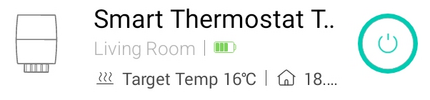
In the main the app shows battery level 1793070074611.png
But the icon
1793070127688.png
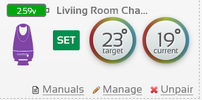
is rather small, and as to ¼, ½, ¾, or full, I would think it is looking at voltage, which can change battery to battery, this one 1793070358518.png actually shows battery voltage, but I have no idea as to how long a pair of cells will last when showing 2.59 volts, they will need changing soon, and that make needs a screwdriver to change them.

Even the Nest Gen 3 shows battery voltage
1793070794006.png
not sure why, as a rechargeable battery fitted and always on charge from the hub.
 
We have a number of clocks in the house using AA's and the first call for a replacement is always a Zinc due to their longer life. Added to them often being 12-16 for the same price as 8 Alkalines it makes perfect sense to me.

However It's increasingly difficult to find them for sale, Home bargains and Lidl have stopped the Kodaks and JCB's some time ago
Poundland also do Kodak zinc batteries - not sure if zinc-carbon or zinc-chloride
 
I sometimes see them in street markets, because they are so cheap, punters think they're a bargain.
 
It is not only primary cells, we get this wind farm will supply 1000 homes, or a bulb has 60 watt in large letters, then 12 watt in smaller letters, it is a 12 watt bulb, but would have given out same light as a 60 watt tungsten, and that was even done when it replaced a fluorescent lamp.

And I see kWh rather than MJ for energy. Really confusing as the seconds cancel out the hours, so even with hour in the name, it has nothing to do with time.

The cells failed on my room thermostat, so hunted in the draw and found a pair of cells, unopened with the date 10-2027 on them, they say Alkaline "Tianqiu Battery is manufactured by Guangdong Tianqiu Electronics Technology Co., Ltd., a Chinese company founded in 1994 that specializes in producing over 100 types of primary and rechargeable batteries." they lasted around 2 weeks, they show 1.024 volts, LR6 which it seems means L stands for alkaline (zinc–manganese dioxide), R stands for round/cylindrical, 6 designates the AA size class. Which is more than what is printed on a Duracell Optimum. MN1500 battery = Alkaline-manganese dioxide, so that tells us nothing.

I have an AAA battery in my hand marked NiMH 600 mAh rechargeable, why are primary cells not marked the same?

It is pure guess work, as to how long a battery will last, in that thermostat the cells should have even lowest quality have lasted three months, the 10-2027 date, likely means at least 8 years old, but if the self life is not going to last until 2027 then don't print on that date.

• Duracell Plus / Standard Alkaline (AA, AAA, C, D, 9V): Guaranteed for up to 10 years in ambient storage thanks to Duralock power-preserve technology.
• Duracell Coppertop / Industrial / Procell: Guaranteed for up to 12 years in storage.
So the cells bought yesterday are likely already 18 months old (03/35).
 

If you need to find a tradesperson to get your job done, please try our local search below, or if you are doing it yourself you can find suppliers local to you.

Select the supplier or trade you require, enter your location to begin your search.


Are you a trade or supplier? You can create your listing free at DIYnot Local

 
Back
Top