
What to do with floor cavity between 2 slabs

Joined
20 Apr 2026
Messages
4
Reaction score
0
Country
United Kingdom
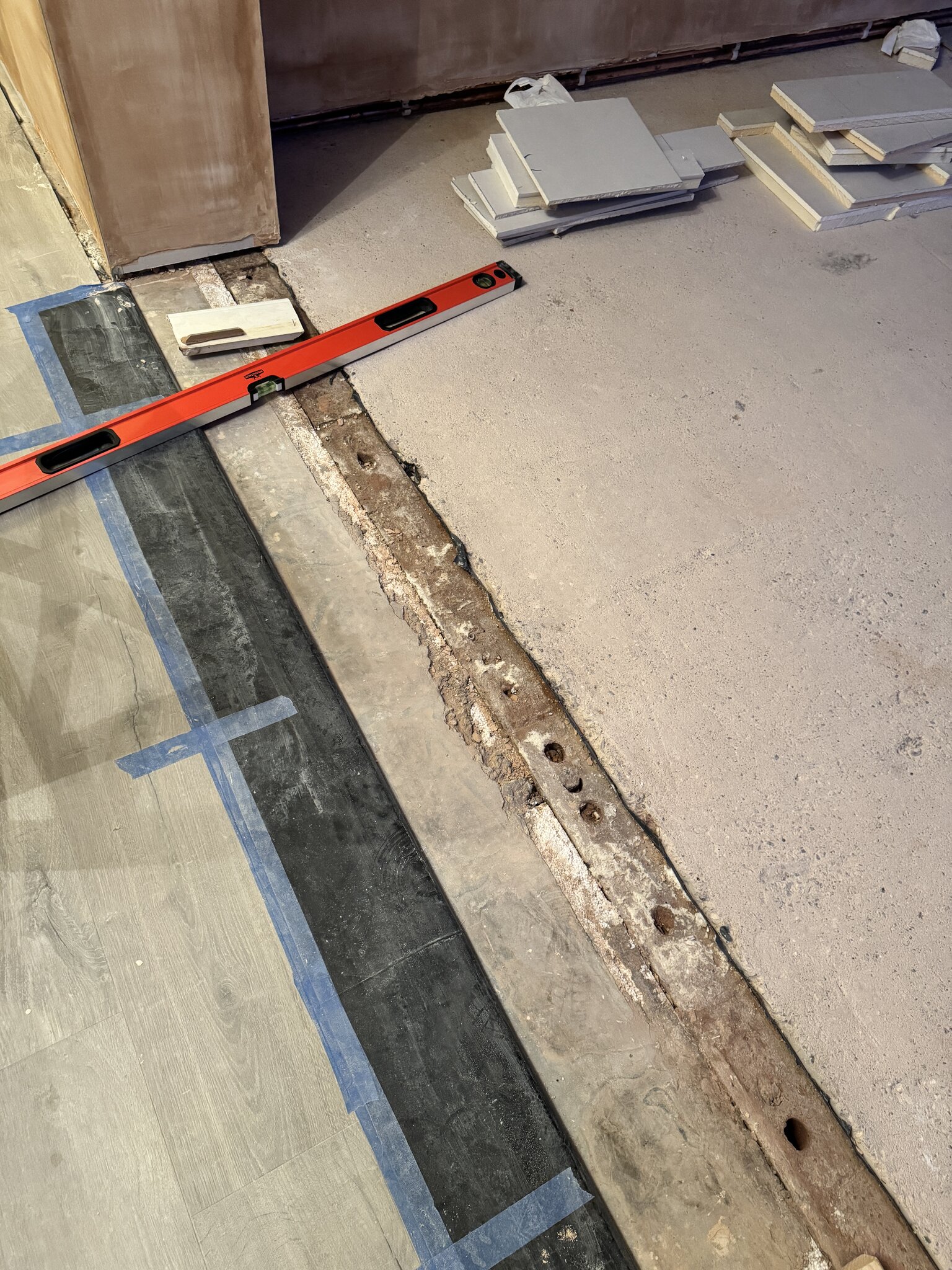
Hi All, any suggestions on how to deal with this floor cavity?

Previously there were some patio doors here which brought up moisture through capillary action via the screws securing the doors to the brick course. Since the removal of these doors there has been no issues with damp/moisture. It’s been dried out for a while now.

How do I cover this section to then lay my flooring? The dpm taped over the flooring isn’t the original and looks to be placed under the flooring underlay. Can I just simple use some self levelling compound. The original slab has some foam insulation between the slab and brick course, it also sits slightly lower by 5-10mm. The new slab has dpm edges butted up against the bricks.

IMG_2305.jpeg
 
I extended and removed a wall.
There was a cavity across floor.
I dug out 2 courses of bricks.
Vacuumed out.
Lined with plastic
Filled with concrete.

Is that something you can do as similar?
 
Hi All, any suggestions on how to deal with this floor cavity?
As per post above.

You are looking at sub DPC masonry - i.e. damp. Break out a course or two (both leaves), line with polythene, insulation and fill with concrete or screed.
 
Thanks for your replies, I’m not sure if the other line of bricks is there or possibly buried under the screed. Will have a look again to see if it’s already been removed.

What do I do with the foam insulation next to
The bricks? You can just make it out in the pics as it was screeded over
 
I didn't bother with foam.
The new side of floor had 50mm of foam under I put down before pouring new slab.
Old side from 60s didn't have any foam.
There was clear plastic under concrete from 60s.
 
IMG_2466.jpeg


I made a start and realistically I can probably only go one course down. I’m thinking I should leave the foam on the left in situ as it’s glued to the house slab.
 
Are there movement joints between the original building and extension?

If so you need to put some sort of movement joint in the floor, otherwise it will snap somewhere at random and turn into nasty crunchy bits under the flooring. In fact probably just do it anyway.
 
I would dig that foam out. it's not doing anything.
It's likely that if you put tiles over after filling with concrete you might get a bit of movement. 20 years on I've got two cracked tiles where my wall was which I'll replace one day.
You need to do the best you can to make it solid
 
You won't stop a building moving with a bit of concrete. It will crack, it's only a question of where. Put a movement joint in where new meets old, then you're controlling where it happens.

You don't need to bring the movement joint through the flooring, if it's loose-laid at least. Just floor right over it.
 
Break out the foam, it looks like jablite and acted as perimete insulation at time of orogin, tru and make a clean cut to both screed and conceret edges, line with a visqueen and fill with concrete and trowel off, a tip to troweling concrete is to do it early, but then to keep visiting it thrpugh the day and give it another shine, you will end up with a good finish.
 

If you need to find a tradesperson to get your job done, please try our local search below, or if you are doing it yourself you can find suppliers local to you.

Select the supplier or trade you require, enter your location to begin your search.


Are you a trade or supplier? You can create your listing free at DIYnot Local

 
Back
Top