When is an AA cell considered as discharged, and how long should they last?

Joined
27 Jan 2008
Messages
29,719
Reaction score
3,679
Location
Llanfair Caereinion, Nr Welshpool
Country
United Kingdom
The cat flap started flashing a red light, and the cat could not get in, so temporary fix was insulation tape over the catches, until I could get new batteries. So now four new AA cells and only our cats with the chip can get into the house, plus anything they help in by carrying it in their mouths, moles, mice, birds etc.

So measured old batteries at around 1.15 volts each, all Duracell Power Boost, not worth fitting cheap batteries for this job, the Optimum not on sale in local Morrisons. Same applies with TRV heads and wall thermostats, best quality used.

They have lasted around 9 months, so not too bad, but if cats can't get in, they stop going out, so important it does not fail.

But, years ago we realised the Duracell was a better quality battery, but today we have Power Boost, Optimum, Plus, Procell, Classic, and Simple. All are made by Duracell, with 70%, 100%, 150% and 200% being quoted, but it seems no watt/hour etc is stated.

The removed batteries say Optimum 03/2034 new ones Power Boost 03/2035. I just selected the most expensive. £9 for 12.

Was it worth it? Or would Morrisons own at £6 1793025825258.pngbe just as good?
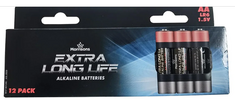
 
9 months suggests it is not a high-drain device, so you don't need expensive lithium.

Extracted from the October 2026 "Which" report....

--------------

Best Buy/Great Value: Tesco Extra Long Life AAA
Our score and verdict 78%, Better than most branded batteries
Available from Tesco (£3.50 pack of four)
Pros
Excellent in all types of devices
Value-for-money
Cons
Shorter life than more expensive lithium types

-----------------

Best Buy: Sainsbury's Home Long Life Alkaline AA
Our score and verdict 77%, Greatly improved performance
Available from Sainsbury's (£3.70 pack of four)
Pros
Fantastic all-round performance
Improved new formulation
Con
Shorter lifespan than lithium batteries in higher-drain devices

-------------

Best Buy: Duracell Plus AA
Our score and verdict 75%, A brilliant all-rounder
£4.98
Ryman UK
£4.99
Millets
£5.97
GO Outdoors
£8.00
Pros
Suitable for all types of devices
Widely available
Cons
Not as long lasting as our highest-scoring Best Buys

----------

Best Buy/Great Value: Varta Longlife Power AA
Our score and verdict 73%, Long-lasting alkaline batteries
Available from Battery Station (£1.59 pack of four), BuyaBattery (£1.75 pack of four)
Pros
Solid for energy-guzzlers
Ideal for low-drain devices
Cons
Outperformed by top-rated Best Buys

----------

Lidl are £2 for four and not quite as good at 68%
But at less than half the price, IMO better value.

Aldi at £2.49 for ten scored 54% and are my choice. I'd get Lidl if they do a big pack at that price.

Morrisons were 66% at £3 for four and you can get better for less.

Duracell Optimum scored 56% so not a good Buy.
 
Last edited:
Ups, done it twice. Really good info. I had to change batteries in my wall thermostat after just 3 weeks, date 10-2027 so likely already 8 years old, as it seems the use by date is 10 to 12 years from manufacturer.

But wall thermostat easy to change, and it sends a note to phone when they are too discharged, so not too worried.

Cat flap is another story, renewed on cat flap as thought faulty, cells not lasting very long, last lot must have lasted at least 9 months, but the problem is we don't see the red LED flashing, and so cats get locked out. So for cat flap cell life is important.

The TRV heads we tend to change every year, so as long as they will last a year, no problem, some seem to last over two years where hard to get to, so not changed.

But a rechargeable cell, AA, some down to 750 mWh and some up to 2400 mWh but they are clearly marked, no guess work, it tells you.
1793108016813.png
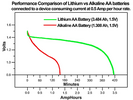
my TRV head actually tells me the voltage, as to what point to change, not so easy, as the graphs show how some batteries have a near parallel line mid use, so can only see when new, or near depleted, but others the graphs show how much energy left. So this
1793108292978.png
does not really tell me much, as far as time before I need to change.

The Ah it seems very dependent on load
1793108499898.png

I actually found a test on the cells I know with lead acid we had cold crank rate, Ah @ 10 hour and Ah @ 20 hour rate, so this is nothing new, but with all the TRV heads, looking at around £20 a year just on AA cells. In TRV, wall thermostat, cat flap etc.
 
I have a number of electricity monitors, all identical. When I remember, I write the battery type and change date on a slip of paper and put it in the battery compartment. I've got two that need changing, they had 2000ma rechargeable AAs fitted two months ago. I looked at another that had Lidl alkaline fitted Sept 2025 and still going strong.

I will see if any others have more dates.
 
Yes, I found one. All alkaline.

Oldest first
Wilko cheap, 11 months
Energiser, 11 months
Aldi 7 months
Aldi 12 months
Lidl 22 months
Aldi 17 months

Looks like the quality has improved over time.
 
Try Lithium rechargeable AAs? Although you'd get absolutely no warning that the battery management system (BMS) cuts out... (I use some on Blink doorbell/cameras that insist on Lithium AAs; they seem to last nearly as long as the two years Blink say non-rechargeable lithium ones will go 'up to' - they claim to be 3,500 mWh so 2300mAh roughly).

Get two sets, one and a spare so that you can then do a swap on a calendar basis... 4, 6, 8 weeks/months; whatever never strands the cat on the wrong side. Although a recharge only takes a few hours max - so it might be possible to do on a planned periodic basis when the door with cat flap is left open?

Lithium rechargeables will be fixed 1.5V out via the BMS... until they just cut out/off. Mine have a usb socket for recharging but one can get separate chargers and batteries without the socket... Similar capacity typically though.

The set of Procell AA alkalines in our touch-sensor toilet (motorised pneumatic actuator) seem to have lasted a lot longer than we expected from the toilet maker's data sheet.
 
I know I could get a motorbike battery and power the cat flap from that, and also many other DIY cures, but never seem to see the same batteries on sale twice, so to say last lot lasted 9 months so change them at 8 months does not work.

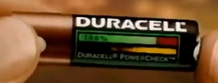
Clearly could get a battery tester, and check them every month, we did get built in test strips 1793208797934.png but seems these have gone.
 
You could change them at 8 months. Better to change a bit early than a bit late.

Do a battery test on the ones you take out and form an opinion on whether they would have lasted much longer. Buy a pack of a dozen from Lidl, the cost is not significant.

When I looked after a house with a Yale alarm, I changed all the batteries annually, at Christmas, when I was sure to be there. They were never flat.
 
If I was always using the same make and model of battery, that may work, in the main the TRV heads have good quality batteries and last over a year, so the annually changing of batteries works well.

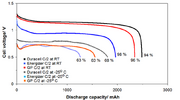
Cat flap not so cut and dried, the discharge graph 1793271887909.pngvary so much, with the lower quality the voltage is a good indication of how much left, but some one the higher quantity batteries, for a large part of their life, have a near straight line. Looking on the internet does not help 1793272207020.pngthese graphs seem to change depending on who has published them, one shown is for secondary cells, but the two graphs show room temperature RT and -25°C, OK will never get that low, but a cat flap is built into the door, so likely well below room temperature.

The time taken before failure has varied a lot, from 3 to 9 months, but the big problem is the warning lights turn on too late, the flap has already failed, so one is simply crossing fingers and hoping it does not fail while relying on it. The food dispensers are automated, so when we go away, the cats are still fed and watered, as long as they can get into the house, if batteries 6 months old, I would put a fresh set in just in case, but at 3 months don't expect them to fail.

And it seems from the packet all we have is up to 150% extra life* with Power boost actives** and ** = propriety technology and
* = refers to Longevity performance in digital camera vs the minimum average duration of the latest IEC AA high drain application test. Results may vary by device or usage pattern. (www.iec.ch) I missed this as printed on the upper facing part of the box as displayed, in very small writing, so it would seem these are not designed for cat flaps.

As to digital cameras, both my DSLR's use rechargeable batteries, so not sure what digital camera uses AA cells? Cheaper cameras may use AA cells, but these are often used for the flash, and in cheaper cameras the SCR shorts out the battery to trigger the flash, there have been warnings not to use secondary cells as these can burn out the SCR, so any cell which can deliver over the standard output for an AA cell should not be used in cheap cameras.
 
As to digital cameras, both my DSLR's use rechargeable batteries, so not sure what digital camera uses AA cells?
https://www.ebay.co.uk/itm/177416078664 is an AA adapter that will fit my Pentax K-r DSLR. There will be similar for other brands I'm sure. Not that I own or have used such an adapter rather than the rectangular Lithium rechargeable packs.

You really do like to make a mynydd out of a mole hill... just wire the flipping cat flap to a mains socket PSU that is on your house battery UPS system... It'll be far simpler in the long run.
No excuses or complaints about the difficulties... just do it!
 
Links in this post may contain affiliate links for which DIYnot may be compensated.

If you need to find a tradesperson to get your job done, please try our local search below, or if you are doing it yourself you can find suppliers local to you.

Select the supplier or trade you require, enter your location to begin your search.


Are you a trade or supplier? You can create your listing free at DIYnot Local

 
Back
Top