The following comes from another current thread, which has somewhat 'drifted'. In a subsequent post to this one (please be patient  ), I'll attempt to move this discussion forwards!! ...
), I'll attempt to move this discussion forwards!! ...I think I must be dim, because I've always struggled to understand how the Willis system (as depicted in your diagram) can possibly work.
I cannot see why heated water from the Willis heater should travel downwards into the cylinder, which contains colder water. It will rise to the top of the column of water in the expansion/vent pipe, but I don't see why it should move downwards - and, since the connection to the taps comes off the expansion pipe below the connection to Willis heater, I would expect it to draw water (for the taps) from the colder water at the top of the cylinder.
What am I missing?
I assume it starts a flow, and the gate valve regulates the flow, but can't find the Willis website. I liked the idea, but I am not sure how it will work with varying output from the immersion heater?
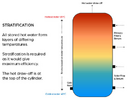
The heated water will rise up through the heater via thermosyphon, as it does it draws cooler water from the bottom of the cylinder, heating the cylinder from the top down.
As I said, with a Willis system simply as shown in the diagram you posted, I cannot understand how heated water would/could ever get into the cylinder. Nor can I see how any valves could alter that. I find it hard to believe that anything other than a pump could force heated water(hence lower density) to travel downwards into/through cooler water, despite gravity and Mr Archimedes.
Maybe the system is significantly more complicated (perhaps including a pump) than your diagram (and most other diagrams one sees) suggests?
I'm still pretty lost! ....
When all taps are closed, a small amount of water heated by the Willis heater will rise up into the expansion pipe, with the displaced cooler water moving downwards into the cylinder and/or the feed from the Willis heater. Since no water is being drawn, no water will be drawn from the bottom of the cylinder. So long as the taps remain closed, I cannot see why water at the top of the cylinder should get significantly heated - which would mean that there would be no significant heating of water in the cylinder whilst the taps remain closed.
When tap(s) are opened, water flowing to them will be a mixture of that from the top of the cylinder (which I would expect to be pretty cold, if taps had previously been closed) and from the Willis heater, the proportions via those two routes being determined by the relative resistances to flow in the two routes. What comes out of the taps would therefore seemingly be a mixture of heated water in the Willis heater (until it runs out) and of the (I would think cooler) water in the cylinder.
So, if it works (which I assume it must do), I must still be missing something.
It seems no pumps. I can see how therm-syphon will move the water, what I can't see is how there as any control as to how much water is heated.
The heated water doesn't go up the expansion pipe (ok the level might rise a bit) the cool water comes from the cylinder not the cold water feed tank, there will be no flow from the cold tank unless a tap is opened. thermosyphon is surprisingly effective, and the water will have no problems circulating around the cylinder. It has been used for cooling stationary engines for decades.
I'mnot sure that I can! "Move the water" from where to where? With all taps closed, I can't see why heated water should move anywhere, other than into the expansion pipe - remembering that water will rise through cooler (more dense) water and fall through warmer (less dense) water.
I presume that more-or-less all of the water in the Willis heater (however much that is) will get heated to the temp dictated by it's thermostat (I presume it must have one?). When a tap is opened, it will draw water from that in the heater (diluted by cooler water from the cylinder). That sounds to me to be similar to (but a bit 'worse than', because of the dilution) an 'instant hot water' unit with a small (1-5 litre under-sink reservoir) - in which case, as soon as all the heated water from the small supply (in reservoir or Willis heater) has been drawn, one will just be left with 'real-time' heating, which would need to be many kW to achieve a reasonable temp and flow rate.
I continue to assume that, IF the system works reasonably (are we sure it does?) I must still be missing something fairly fundamental!
I'm not talking about additional water moving into the expansion pipe. Rather, I'm talking about standard convection, with warmer (less dense) water rising through cooler (more dense) water, thereby displacing the cooler water which hence ends up below the warmer water - but with still roughly the same amount of water in the pipe (other than, as you say, a slight expansion).
Why? ... particularly given that (as I've also said) ...
I may need some educating here, since I was under the impression that a 'thermosyphon' was all about convection. As for it "having no problem circulating [water] around the cylinder", I agree that convection would have no problem in doing that IF some heated water were introduced into the cylinder - but my problem is in understanding how heated water from the Willis heater gets into the cylinder (seemingly contrary to the standard mechanism of convection)