XPS tile backer boards on blocks

Joined
2 Feb 2016
Messages
418
Reaction score
5
Country
United Kingdom
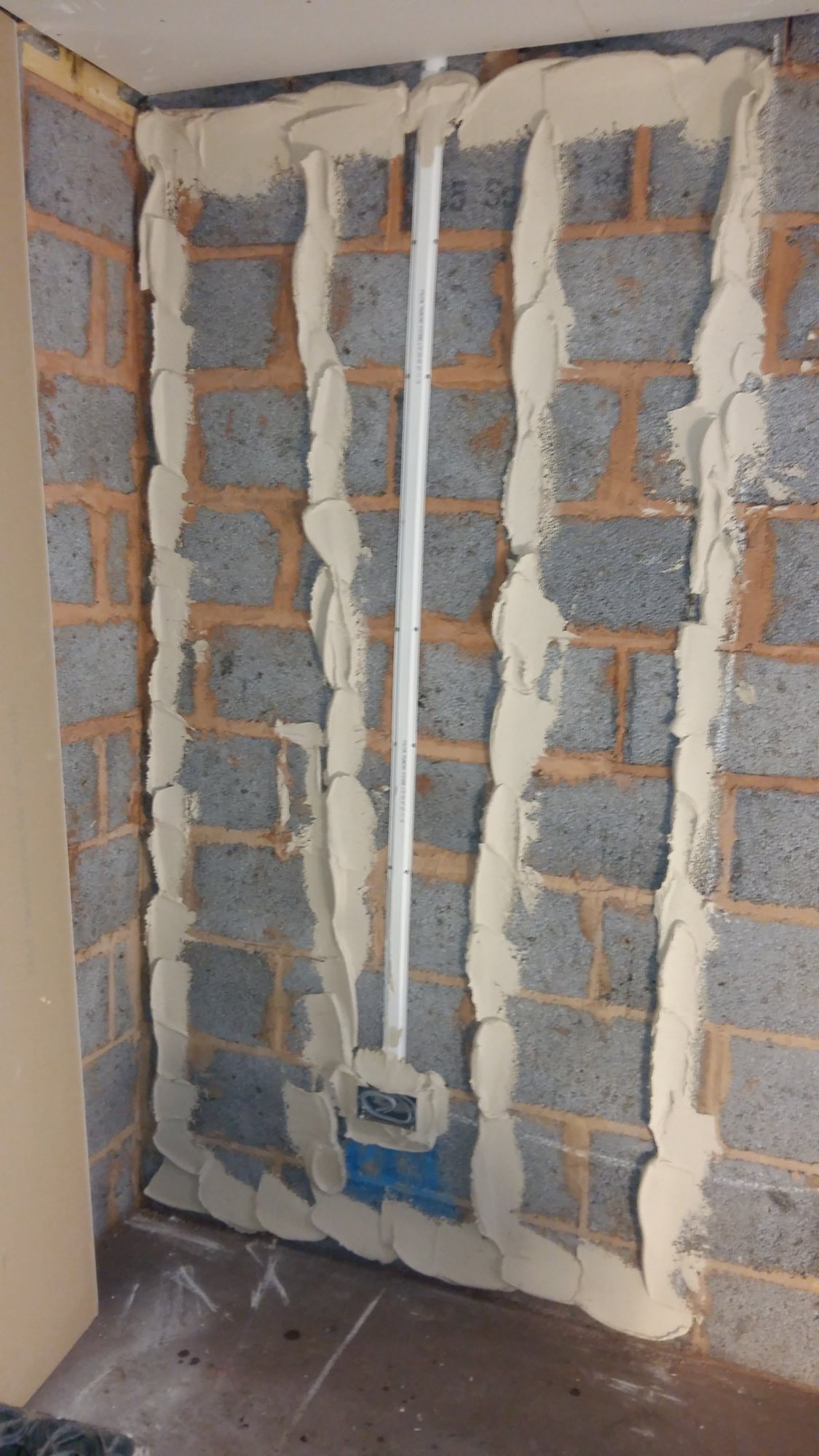
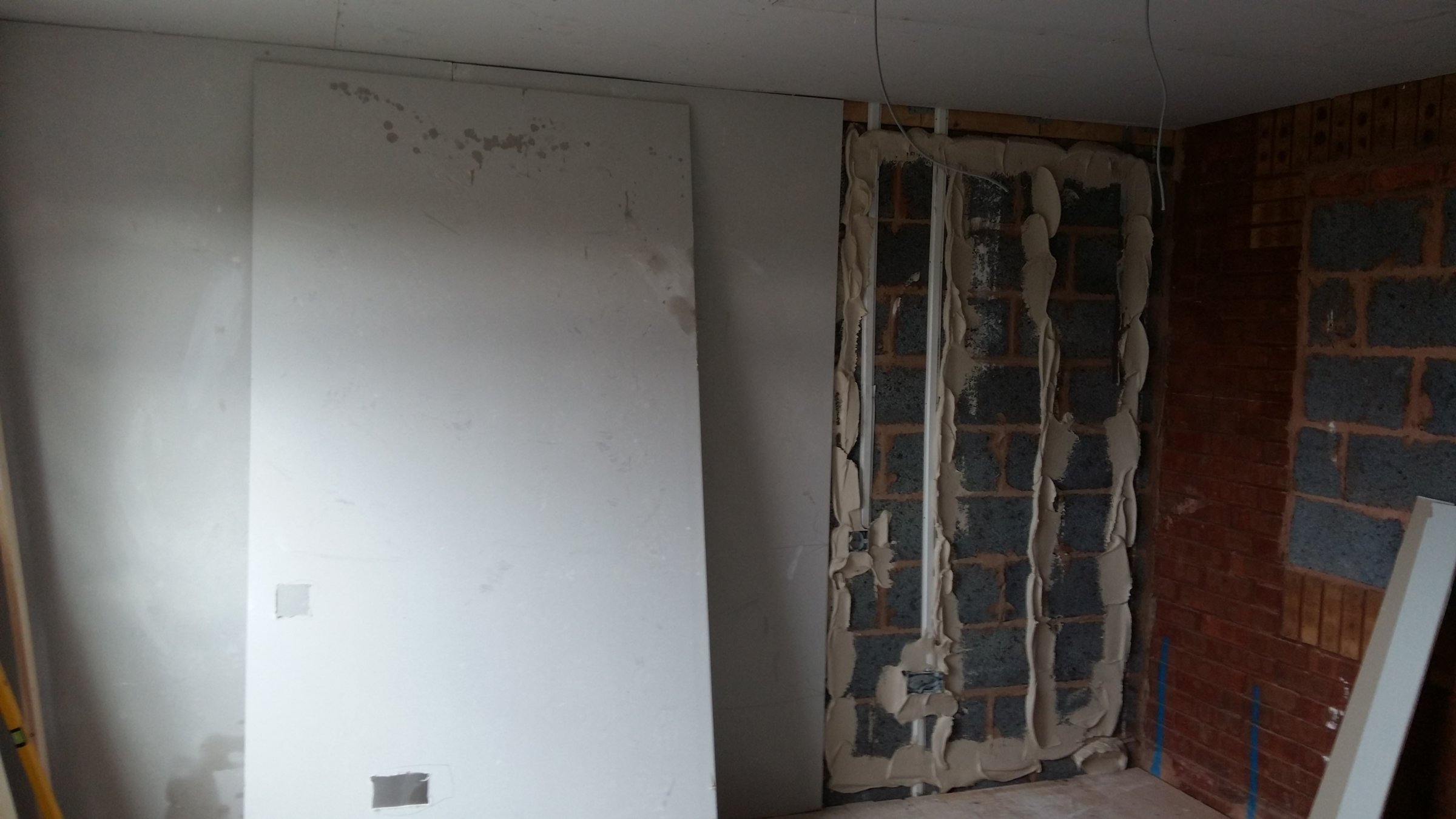
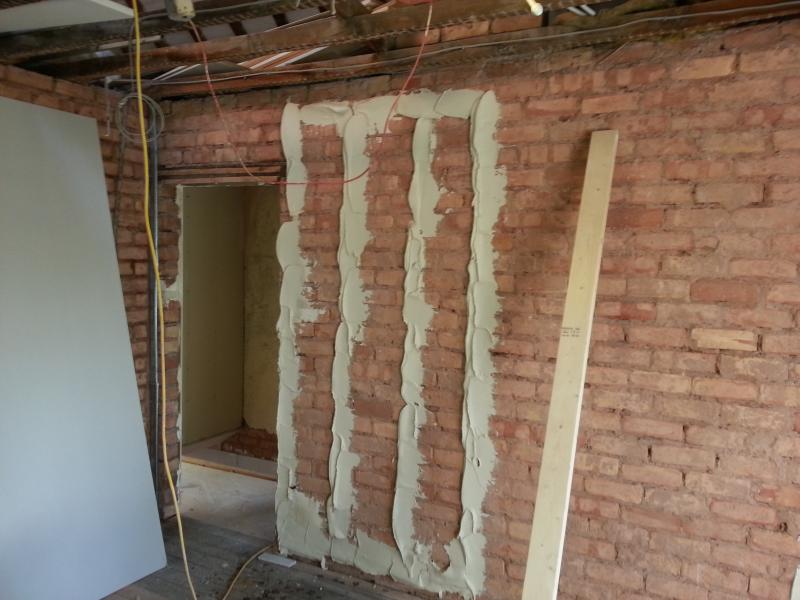
On the current external side of my bathroom wall there is currently green plasterboard that was dot and dabbed. The thickness of the plasterboards look approximately 20mm. I’m ripping the plasterboards out from the blocks completely to replace it with 20mm xps backer boards. I’ve attached a photo below of how the blocks look and the current plasterboard looks.

What I noticed is that there is a considerable amount of gap between the block and the plasterboard itself. And whatever adhesive was used to bond it is super strong but what they did was had big thick layers of that adhesive which created quite a big gap where there is no adhesive.

My question is, when I now come to stick the XPS boards, I was planning to use rapid set tile adhesive and stick the boards on and after the rapid set has cured drill some holes through and use washers and screws for extra mechanical fixing. Will this work? Should I aim to not have the sort of gap that’s currently there?

If the block isn’t 100% straight could I just pack it with extra tile adhesive in problematic areas?
IMG_2714.jpeg
 
The gap will hopefully vary across the wall, as it should be to level up a wonky wall.

The gap doesn't need to be big otherwise. Tile adhesive spread everywhere will only work on a perfectly flat wall.

Yes fixings with wedi washers would be a good idea afterwards. I can't tell if your wall is lightweight block. If it is, you may be fine just going in direct with woodscrews and they will thread into the wall... just don't overtighten them or drive them fast.
 
The gap will hopefully vary across the wall, as it should be to level up a wonky wall.

The gap doesn't need to be big otherwise. Tile adhesive spread everywhere will only work on a perfectly flat wall.

Yes fixings with wedi washers would be a good idea afterwards. I can't tell if your wall is lightweight block. If it is, you may be fine just going in direct with woodscrews and they will thread into the wall... just don't overtighten them or drive them fast.

Whatever adhesive was used by the original builders is rock solid. It literally takes chunks of the block out to come out. But they’ve only dabbed big thick blobs everywhere like some are 50cm apart. There’s no pattern that I can see. What kind of adhesive did they use? It’s rock hard not sure if it’s tile adhesive or something else.

Should I apply tile adhesive in dot and dab style like they did or use a notch trowel and trowel it in?
 
You would use dabs to allow the new boards to be plumbed and aligned. You can't do that with a solid bed.

You should not use tile adhesive. Use proper board adhesive or foam adhesive. You would not normally require additional mechanical fixings.

Finished cavity would be between 10 and 25mm, so dabs would be about 50mm to compress. You need a continuous band of adhesive around the whole board perimeter, and any service penetrations.

Get hold of the board manufacturer's fixing guidance
 
You would use dabs to allow the new boards to be plumbed and aligned. You can't do that with a solid bed.

You should not use tile adhesive. Use proper board adhesive or foam adhesive. You would not normally require additional mechanical fixings.

Finished cavity would be between 10 and 25mm, so dabs would be about 50mm to compress. You need a continuous band of adhesive around the whole board perimeter, and any service penetrations.

Get hold of the board manufacturer's fixing guidance

I have the qBoard backer boards. The instruction manual for it is here: https://www.myqboard.com/fileadmin/...hinweise/2_Englisch/Qboard_VH_basiq_WA_EN.pdf

On page 5 it covers the uneven surfaces. So it looks like the recommend just putting but dabs of it and then pressing it onto the wall. It doesn’t say what kind of adhesive to use though.

Not sure what adhesive was originally used but it’s rock solid and stuck to the blocks like mad. Is there any recommendations of what i can use?

QBoard sell the following but I don’t think this is designed for dot and dab as that will be very costly just to put that many blobs: https://www.diy.com/departments/qbo...b-adhesive-sealant-310ml/4025345058659_BQ.prd

Also, if I mark the areas that I am dot and dabbing once it’s dry for peace of mind could I put mechanical fixings too?

Will something like this work? I get a feeling this might have been what’s currently on the wall: https://www.diy.com/departments/driwall-plasterboard-adhesive-25kg-bag/35815_BQ.prd
 
Last edited:
Standard plasterboard adhesive is normal, it comes in bags like plaster.

It looks like q board do recommend a tile adhesive - c2 (cementitious) and s1 or s2 rated (ie flexible/highly flexible)
 
Standard plasterboard adhesive is normal, it comes in bags like plaster.

It looks like q board do recommend a tile adhesive - c2 (cementitious) and s1 or s2 rated (ie flexible/highly flexible)

You think the gyproc plasterboard adhesive for dot and dabbing will be ok? Specially if after it’s cured I put some mechanical fixings by the dot and dab areas too?
 
You think the gyproc plasterboard adhesive for dot and dabbing will be ok? Specially if after it’s cured I put some mechanical fixings by the dot and dab areas too?
Sorry for any confusion, my quote was a two part answer to your post

Not sure what adhesive was originally used
Standard plasterboard adhesive

Is there any recommendations of what i can use?
Qboard recommend a C2/S1 or S2 tile adhesive.

There are several other options - expanding foam adhesive, standard board adhesive, tube grab adhesive (not solvent based), and these will work. But unless you really need an alternative, it's probably best to go with the manufacturer's recommendations.
 
Its normal to use tile adhesive behind these boards, not drywall adhesive. You'll have to just remove all the blobs from the existing plasterboard application and then bed out the XPS boards as needed with tile adhesive to make them level.

from their installation manual:
Qboard® basiq can be laid on even and completely adhesivesubstrates by applying adhesive to the entire surface. It doesnot need to be dowelled as well. The substratemust be even and flush. No separating layers (e.g. paint residue) may hinder the adhesive bond with the substrate (e.g.plaster). The thin-bed mortar (e.g. standard synthetically enhanced cement adhesive) is applied to the wall using a coarse notched trowel. The Qboard® basiq construction boards,which may have to be cut to length, are then fully bedded intothe thin-bed mortar by gently moving them back and forth.Depending on the requisite thickness of the adhesive layer,which may differ due to slight dimensional tolerances in thesubstrate, it may be necessary to align the Qboard® basiq toensure that the resulting base is even and flush and suitablefor thin-bed tiling
 

If you need to find a tradesperson to get your job done, please try our local search below, or if you are doing it yourself you can find suppliers local to you.

Select the supplier or trade you require, enter your location to begin your search.


Are you a trade or supplier? You can create your listing free at DIYnot Local

 
Back
Top