Do I have 3 phase in my 1930s built house?

My leads can measure 600V cat IV with a tiny bit of exposed probe, but with the boot off the end they are 1kv CAT II.
That suggests that the lead is good for 1kv but there's something about covering the exposed metal that makes it safer to use on the dno equipment.
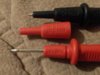
See the photo for one on and one off
 

Attachments

  • 15182973004386685003182458660452.jpg
    15182973004386685003182458660452.jpg
    280.7 KB · Views: 246
Interestingly in the instructions it says cat II is good for PFC up to 10kA, so maybe they are not worried on normal domestic installations after all
 

Attachments

  • 15182977620915803688677248659386.jpg
    15182977620915803688677248659386.jpg
    313.3 KB · Views: 222
My leads can measure 600V cat IV with a tiny bit of exposed probe, but with the boot off the end they are 1kv CAT II. That suggests that the lead is good for 1kv but there's something about covering the exposed metal that makes it safer to use on the dno equipment.
Fair enough, but that almost sounds more 'bureacratic' than representing 'real differences'.

What are these "CATs", anyway?

Kind Regards, John
 
Interestingly in the instructions it says cat II is good for PFC up to 10kA, so maybe they are not worried on normal domestic installations after all
Well, daft though one may regard it, it appears that one has to regard the PFV of a domestic installation as being potentially 16kA.

If one has a type tested fuse CU and a cutout fuse 100A, it is allowable for the devices in the CU to be rated at only 10kA, but that's because the let-through of the cutout fuse deals with some of the 16kA - but it's still "16kA"!

Kind Regards, John
Edit: silly typo corrected
 
Last edited:
Fair enough, but that almost sounds more 'bureacratic' than representing 'real differences'.

What are these "CATs", anyway?

Kind Regards, John
I think it's the covering boot prevents an arc from sustaining.
The cats seems to be some standard for test equipment based on the supply. Googling didn't find a lot of definitive information but I must say there could be an element of bureaucracy!
 
I think it's the covering boot prevents an arc from sustaining.
Who knows, but I wouldn't have expected that. Just as with lightning strikes, I would have thought that the arc would have made a beeline for the 'pointed end', regardless of how much other metal was exposed - but it's not a field I would claim to know much about.
The cats seems to be some standard for test equipment based on the supply. Googling didn't find a lot of definitive information but I must say there could be an element of bureaucracy!
That sounds familiar. In the past I have attempted to find out what CATs were all about, but ended up little the wiser. Have you tried "VDE", with which my experiences have been similar?

Kind Regards, John
 
Seems a fair bit of information, this one has a lot and seems comprehensive, although not necessarily definitive
http://www.ecmweb.com/content/does-your-meter-safety-measure
This PDF from flue is quite helpful regarding leads (couldn't get the direct link on my phone, sorry)
https://www.google.co.uk/url?sa=t&s...FjAOegQIERAB&usg=AOvVaw1R4z_6VnG8ncrU7MPi-mgW
Interestingly they explain the whole removable tip thing without specifically saying why
Screenshot_20180211-002629.png

This pdf explains the why very clearly
https://www.google.co.uk/url?sa=t&s...FjADegQICRAB&usg=AOvVaw01f6ZxFj_-x2SzHk1RyTO3
 
Last edited:
.... This pdf explains the why very clearly ....
Many thanks. I'll have a proper read. At a glance it is mainly about voltage transients. It also looks as if nothing in single phase domestic installations would ever be higher than CAT II, whereas parts of 3-phase ones (like mine and possibly the OP's) could perhaps be CAT III (even if that would not make a lot of logical sense to me). I'll try to remember to report back after I've had a read!

Kind Regards, John
 
... to add. If they are suggesting that there could be multi-kV transients at the origin of a domestic installation, large enough to kill the input circuitry of a digital meter, exactly how far into the installation do they think those transients can propagate - since I'm sure that most domestic premises contain plenty of electronic equipment at least as susceptible to transient-induced-death as are digital meters!

Kind Regards, John
 
I don't think they're worried about meter damage, I think they're trying to protect the person using the meter. See page marked 4 in the final PDF I linked. They are worried about things like arcs forming between exposed terminals but started by the meter.
 
The energy from a lightning strike on a 33 kV line that is not dumped to ground by the discharge gaps at the towers is going to be absorbed at the transformer that converts 33kV to 11Kv. Agreed the transformer might not survive but little if any of the transient will get to the 11Kv network. What does will be blocked / absorbed by the 11kV to 240 V transformers.

That said while the transient energy from the lightning strike is un-likely to reach the meter in any dangerous quantity damage to the network may result in prolonged abnornal voltages in the supply to the consumers.
 
Last edited:
I don't think they're worried about meter damage, I think they're trying to protect the person using the meter. See page marked 4 in the final PDF I linked. They are worried about things like arcs forming between exposed terminals but started by the meter.
Exactly. Whilst they are not 'worried about' the meter, it is the hypothesised destruction of the meter by transients which initiates the hypothesised chain of events they describe, which ultimately lead to a hypothesised sustained phase-phase arc, which may then give rise to the injury or death of people in the vicinity.

Whilst I accept that very few things are impossible, as a person who drives cars, crosses roads, climbs ladders and does all sorts of things, in the context of LV installations (even 3-phase, and even at their 'origin') I find it very hard to get excited about the 'hypothetical' (even if non-zero) risk they are describing. In particular, I find it hard to believe that the probability of a multi-kV transient destroying a meter is anything other than 'vanishingly small' - and if the meter doesn't get destroyed in that way, then none of the rest of the chain of events could happen.

That article is, of course, all about the ability of the input circuitry of the meter to survive (at least, not fail with a short-circuit between its probe terminals), and doesn't move us at all further forward as regards the matter of the probes we were discussing.

Kind Regards, John
 
Just rang Power networks and explained the situation. They said an an electrician should be able to tell from looking at it if its a 3phase head, i tried to explained what id found re voltages but that didnt get me far. It seems the long and short of it is that if they were to come out and replace the cutout theyed replace the lot, trench a new cable into the house along with the new cutout. :cautious:
And thats 3k.
 
Last edited:
Just rang Power networks and explained the situation. They said an an electrician should be able should be able to tell from looking at it if its a 3phase head, i tried to explained what id found re voltages but that didnt get me far.

When ringing the dno you have to get past the reception staff that are only trained to take details of power cuts. Ring them up and tell them you have been getting high voltage readings, they'll have some there ASAP, and he can sort your other queries.
 
Just rang Power networks and explained the situation. They said an an electrician should be able should be able to tell from looking at it if its a 3phase head, i tried to explained what id found re voltages but that didnt get me far. It seems the long and short of it is that if they were to come out and replace the cutoff theyed replace the lot, trench a new cable into the house along with the new cutout. :cautious:
And thats 3k.
Tell them it's not safe and they have to replace it for free. Worked for us.
 

If you need to find a tradesperson to get your job done, please try our local search below, or if you are doing it yourself you can find suppliers local to you.

Select the supplier or trade you require, enter your location to begin your search.


Are you a trade or supplier? You can create your listing free at DIYnot Local

 
Back
Top