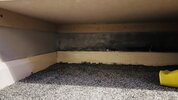
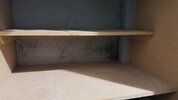
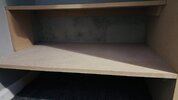
Mold in sons wardrobe 3rd floor victorian house.

Joined
24 Feb 2007
Messages
633
Reaction score
3
Country
United Kingdom
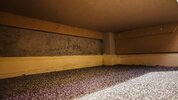
Hi guys, I wondered if someone could help me? I’ve recently moved into an old Victorian house that I’m currently renovating. I have noticed mould at the bottom of my son’s builtin wardrobe. This was cleaned off a few weeks ago with bleach and has returned.

I’m not 100% sure how to approach this. With it being the top floor is it more likely an issue with the roof or can damp rise that far?

Is there any benefit to damp proof paint?

Any thoughts or suggestions would be greatly welcome.

Many thanks
 

Attachments

  • IMG_3860.jpeg
    IMG_3860.jpeg
    284 KB · Views: 74
  • IMG_3859.jpeg
    IMG_3859.jpeg
    262 KB · Views: 61
  • IMG_3858.jpeg
    IMG_3858.jpeg
    138.7 KB · Views: 61
  • IMG_3857.jpeg
    IMG_3857.jpeg
    118.6 KB · Views: 67
I’m not 100% sure how to approach this. With it being the top floor is it more likely an issue with the roof or can damp rise that far?

Absolutely not rising damp, probably it is the cold weather, moist air and lack of adequate ventilation.
 
Yes , ventilation prevents mould spores settling .Should have been constructed with a back not touching the cold exterior.(or insulated )
 
Yes , ventilation prevents mould spores settling .Should have been constructed with a back not touching the cold exterior.(or insulated )
So even with insulated plasterboard e.g. 37.5mm or 52.5mm, to prevent condensation/mould developing, the back of the cupboard should

A. Not touch the wall?

B. Not get too close to the wall? e.g. 2 inches from wall

C. Both the above?
 
Thanks very much for the input chaps. Just had another closer look and spotted a couple of holes drilled that appear to have a bit plastic pipe in? I’m unsure if these were a previous attempt to remedy or if I should be filling.

Do you have any suggestions on what I should be doing? I’ve told my son to keep the doors open on the wardrobe and placed a dehumidifier in the room.

If I were to paint with a damp seal would that likely help?

Thanks
 

Attachments

  • IMG_3883.jpeg
    IMG_3883.jpeg
    353.5 KB · Views: 41
So even with insulated plasterboard e.g. 37.5mm or 52.5mm, to prevent condensation/mould developing, the back of the cupboard should

A. Not touch the wall?

B. Not get too close to the wall? e.g. 2 inches from wall

C. Both the above?
If you insulate it can be fixed to wall .
 
If you insulate it can be fixed to wall .
Thanks

Is there a minimum PB insulation thickness one should aim for to prevent condensation and be able to butt furniture/wardrobes right up to the wall?

OP apologies for all the questions. Not trying to hijack your thread
 
Your mould is caused by condensation. This is extremely common behind wardrobes that are up against an external wall. Its not an easy fix. Paint, and it will return.

Only real solution is to line the walls behind with insulation and make sure plenty ventilation in the room and around the wardrobes...

Not easy when they are built in though....
 
Thanks

Is there a minimum PB insulation thickness one should aim for to prevent condensation and be able to butt furniture/wardrobes right up to the wall?

OP apologies for all the questions. Not trying to hijack your thread
Hey no problem mate, we’re all here to learn
 
Thanks again guys, just to be clear this is not a pre built wardrobe, it’s a frame with sliding doors.

If I were to insulate type of insulation, would I use many thanks?
 
I see.

I used the roll of insulation that you buy in a decorators shop. Pasted to the wall. Making sure no gaps. It solved it for us...
 
That’s great good to hear. Im struggling to envisage what type of insulation I would use? Do you happen to know what type it is? Thanks Steve.
 
I used the roll of insulation that you buy in a decorators shop
Er, you mean the 3mm thick "insulated" liner?

Nearly a complete waste of money IMO; put the cash towards a decent thickness of PIR instead
 
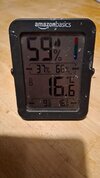
Dehumidifier is a good move. Also a cheap hydrometer to monitor moisture levels in the room/wardrobe. Must be kept below 70% humidity to help prevent mould from re-growing. A wardrobe with outside walls is a difficult area to keep mold free but as has already been suggested insulation should help.
 

Attachments

  • 20250219_184538.jpg
    20250219_184538.jpg
    156.3 KB · Views: 34

If you need to find a tradesperson to get your job done, please try our local search below, or if you are doing it yourself you can find suppliers local to you.

Select the supplier or trade you require, enter your location to begin your search.


Are you a trade or supplier? You can create your listing free at DIYnot Local

 
Back
Top