• Looking for a smarter way to manage your heating this winter? We’ve been testing the new Aqara Radiator Thermostat W600 to see how quiet, accurate and easy it is to use around the home. Click here read our review.

Installing Japanese toilet seat

Joined
9 May 2020
Messages
58
Reaction score
1
Country
United Kingdom
For a very very long time we've been pondering whether to install a Japanese-style bidet seat (something like this).

The plumbing and installation part are relatively straightforward but it is the electrics that have given me pause for thought.

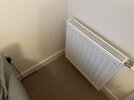
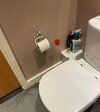
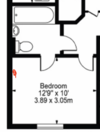
Naturally, there is no plug in the bathroom, but there is a plug relatively nearby in the room next to the bathroom (see floorplan below, and where the plug is is marked in red). The idea would therefore be to use that plug and run some core electrical cable from the plug, inside the wall (in the picture below would need to go towards the corner and then around the corner and roughly behind the radiator, all this hopefully inside the wall), then drill through the wall in the bathroom (marked in red where it would need to come out) and either install a single plug or, as many people seem to have done with these installations, a fused connector unit (something like this).

Mindful that all this is easier said than done. I'm guessing that I won't be able to feed the cable through the wall without hitting a stud (it's a new build so I expect most studs to be aluminum) so I'm not quite sure how to achieve this. Of course could just leave the cable on the outside, but definitely won't look as nice....

Also, on the electrics, this seem to be what most people who have installed these have done, but not sure if I'm missing something.
 

Attachments

  • Screenshot 2025-05-14 at 20.44.00.png
    Screenshot 2025-05-14 at 20.44.00.png
    292.7 KB · Views: 58
  • IMG_4618.jpg
    IMG_4618.jpg
    224.8 KB · Views: 60
  • IMG_4617.jpg
    IMG_4617.jpg
    244.4 KB · Views: 66
If there is a bath or shower in the same room as the toilet, then the work will need registering, the cost to register is likely more than the cost to get a scheme member to do the work.

Of course, you can break the law, possibly I would break the law myself, but if anything goes wrong, you're up the creak without a paddle.

I would use a FCU in the room with the toilet, but it needs to be 0.6 meters from the bath.
 
The plumbing and installation part are relatively straightforward
No it isn't.

The method of water connection shown in the product video cannot be used in the UK. That seat and others like it must be supplied from their own water supply with air gap. Not permitted to connect directly to the mains water supply - and that's not guidance or suggestion, it's the law.

Example: https://www.wrasapprovals.co.uk/approvals/testing-requirements/installation_requirements/irn_r070/
 
I would use a FCU in the room with the toilet, but it needs to be 0.6 meters from the bath.
The wall is about 1.4m from the bath, so probably OK there
No it isn't.

The method of water connection shown in the product video cannot be used in the UK. That seat and others like it must be supplied from their own water supply with air gap. Not permitted to connect directly to the mains water supply - and that's not guidance or suggestion, it's the law.

Example: https://www.wrasapprovals.co.uk/approvals/testing-requirements/installation_requirements/irn_r070/
OK, this I had no idea. I did see in the reviews of some of these seats that some had installed check valves (see for example here). Does this mean that it would potentially need to be fed from the water tank instead?
 
Does this mean that it would potentially need to be fed from the water tank instead?
Yes, that's the only practical option - but only possible if the seat has it's own built in pump.

I did see in the reviews of some of these seats that some had installed check valves
There are no check valves suitable for this application.
 
There are no check valves suitable for this application.
Interesting - that makes me wonder ... if the valves are nor regarded as being good/reliable enough to prevent backflow in this situation, what exactly are they regarded as being good/reliable enough to do?
 
what exactly are they regarded as being good/reliable enough to do?
Lower category fluids such as used to supply a garden hose, or in other situations such as supplies to small unvented water heaters.

The only check valves for use on Category 5 incorporate an air gap, and they are only suitable for open end applications.
 
Lower category fluids such as used to supply a garden hose, or in other situations such as supplies to small unvented water heaters.
Interesting. What do you mean by "Lower category fluids"? - most of us only have one type of 'fluid' (mains water) we which use either directly or via a storage tank.

However, your mention of garden hoses underlines the reason for my question. The water in a garden hose could come to contain pathogens at least as dangerous as (in some cases more dangerous than) those in any water associated with a toilet or bidet, even Legionella if the hose fall of water had been lying in the sun - so, if a valve is not considered safe enough with a toilet/bidet, why is it considered safe for supplying a hosepipe?

If the valve really does prevent backflow, then it should be safe in either situation, but if it is felt that a valve does not prevent backflow well or reliably enough for a toliet/bidet, I don't see why it should be regarded as adequate for a hosepipe?
 
Yes, that's the only practical option - but only possible if the seat has it's own built in pump.


There are no check valves suitable for this application.
Why does the pump have to be built in? What's wrong with using a small shower pump?
 
When we were kids we would drink from any hose.
Never been sick.
What happened?
 
I once had issues trying to fit an Australian toilet seat. Took hours....in the end i realised it needed to be fitted upside down!!!
 
If the valve really does prevent backflow, then it should be safe in either situation, but if it is felt that a valve does not prevent backflow well or reliably enough for a toliet/bidet, I don't see why it should be regarded as adequate for a hosepipe?
A few drops of water flowing back from a garden hose into the potable water supply will present a very low risk of biological harm.

A single drop of water contaminated with biologic material from a person's anus will present a very high risk of passing disease if it reaches the potable water system
 
A few drops of water flowing back from a garden hose into the potable water supply will present a very low risk of biological harm.
An interesting statement from he who commonly has much more aversion to even 'incredibly small risks' than many/most of us :-) The risk from water in a garden hose is, I agree, incredibly small - but, as I said, is not zero, and could include organisms such as Legionella. It is,of course, extremely rare that pressure in the 'potable water supply' to get so low (or 'negative') that backflow is possible, anyway.
A single drop of water contaminated with biologic material from a person's anus will present a very high risk of passing disease if it reaches the potable water system
That's what most people seem to intuitively think (including myself, I suppose) but, although the risk may be a bit higher than it is with water from a hose, it's actually nowhere near as "very high" as we tend to imagine. The clue is in your phrase "passing disease" - since one can only 'pass' a disease which one has ...

.... provided that someone is not suffering from an active gut infection (which is rare) or (even rarer) is an asymptomatic carrier of some disease (like typhoid), then what comes out of one end of their intestinal tract is not, in general, going to do harm if it goes into the other end (mouth) of the gastrointestinal tract of another person.

As an illustration of this, were this not a 'family forum' ( :-) ) I could mention some activities which are practised by some people without their contracting any disease.
 
Interesting. What do you mean by "Lower category fluids"? - most of us only have one type of 'fluid' (mains water) we which use either directly or via a storage tank.
1747399160157.png


So drinking water with bleach in it poses only a slight health hazard. OK.
 

If you need to find a tradesperson to get your job done, please try our local search below, or if you are doing it yourself you can find suppliers local to you.

Select the supplier or trade you require, enter your location to begin your search.


Are you a trade or supplier? You can create your listing free at DIYnot Local

 
Back
Top