I thought that IPXXD was essentially the same as IP4X, since it requires there to be "protection against unintentional access to live parts with a wire of minimum diameter 1.0mm" ?IPXXD is far less stringent than IP4X.

You are using an out of date browser. It may not display this or other websites correctly.
You should upgrade or use an alternative browser.
You should upgrade or use an alternative browser.
OK to have insulated inner cores within plastic trunking?
- Thread starter Ivor Windybottom
- Start date

No, it isn't the same at all. Otherwise there would be no reason for the two designations.I thought that IPXXD was essentially the same as IP4X, since it requires there to be "protection against unintentional access to live parts with a wire of minimum diameter 1.0mm" ?
AIUI The big difference is that IP4X requires a solid object of 1mm or greater size to be prevented from entering the enclosure at all. Whereas IPxxD allows the "access probe" to enter the enclosure as long as it doesn't come in contact with hazardous parts. The access probe is only 100mm long.I thought that IPXXD was essentially the same as IP4X, since it requires there to be "protection against unintentional access to live parts with a wire of minimum diameter 1.0mm" ?
If we assume that wires with only basic insulation are "hazardous"* and sheathed cables are not then it would seem the main difference would arise when only some parts of a trunking system contained wires with only basic insulation, then parts of the trunking system more than 100mm away from the wires with only basic insulation would not need to worry about IP ratings.
*if we assume a wire with basic insulation is not "hazardous" then the requirement for IPxxB seems like it would be meaningless.
I understand what the two different 'designations' mean but I still personally feel that, in terms of what 'matters', IPXXD achiNo, it isn't the same at all. Otherwise there would be no reason for the two designations.
That's always been my understanding, with the one exception that I thought (perhaps wrongly!) that IPXXD required that the 100 mm long) probe could not come into contact with "live" ("not hazardous") parts. If that were the case (maybe not - I'll have to check!) then what you go on to write, namely ....AIUI The big difference is that IP4X requires a solid object of 1mm or greater size to be prevented from entering the enclosure at all. Whereas IPxxD allows the "access probe" to enter the enclosure as long as it doesn't come in contact with hazardous parts. The access probe is only 100mm long.
.... would cease to be relevant, since, even if the wires only had basic insulation, they would still not be 'live' parts - so there would be no live parts for the probe to touch!If we assume that wires with only basic insulation are "hazardous"* and sheathed cables are not then it would seem the main difference would arise when only some parts of a trunking system contained wires with only basic insulation, then parts of the trunking system more than 100mm away from the wires with only basic insulation would not need to worry about IP ratings.
However, it's probably quite likely that you are right and I am wrong about the formal/official definition of IPXXD!
Having said that, I still think that, in practical terms, IPXXD (even if defined in terms of 'hazardous', rather than 'live' parts) does not fall all that far short of IP4X, since very few fingers are longer than 100mm, so a possible 'hazard' would only arise if someone started poking a long tool/object though a hole (in which case they probably deserve whatever happens as a consequence
 ). I certainly don't think I would say that IP4X was 'much more stringent', although I guess that some would argue about what those words actually mean!
Returning to the trunking issue, in attempting to 'formulate a view' I tend to 'personalise' issues, in this case asking myself whether I would be comfortable being exposed to, or be comfortable with my children being exposed to, conductors with only basic insulation which were within trunking (or whatever) which was 'only' IPXXD - and I have to say that my answer would be 'definitely yes'.

Good to know it's not a simple answer!
I'll play it safe and ensure the outer sheathing does at least enter the (screwed together) wiring centre. I've also added a second trunking now, which will make life easier.
The photo of the other wiring centre looks good, but I'll stick with what I have, it's (just) adequate for my needs and it's already screwed to the wall. I already re-wired it internally to do what I need. Perhaps I'm old-fashioned but I find screw terminals somewhat reassuring, especially if there's a need for two cables in one hole.
I have a total of ten external connections to this lot. Plus I've now decided to add a 4-way switch next to it to enable a plumber to switch each zone from Auto to Manual On if needed for plumbing purposes, so this will need an additional 4x 2-way cables - I'll use 0.75mm flex for this to keep it less bulky, with ferrules on the ends.
I'll play it safe and ensure the outer sheathing does at least enter the (screwed together) wiring centre. I've also added a second trunking now, which will make life easier.
The photo of the other wiring centre looks good, but I'll stick with what I have, it's (just) adequate for my needs and it's already screwed to the wall. I already re-wired it internally to do what I need. Perhaps I'm old-fashioned but I find screw terminals somewhat reassuring, especially if there's a need for two cables in one hole.
I have a total of ten external connections to this lot. Plus I've now decided to add a 4-way switch next to it to enable a plumber to switch each zone from Auto to Manual On if needed for plumbing purposes, so this will need an additional 4x 2-way cables - I'll use 0.75mm flex for this to keep it less bulky, with ferrules on the ends.
I'll add that this is all within a built-in cupboard, so that gets it another layer of common-sense protection!

- Joined
- 18 Apr 2022
- Messages
- 7,123
- Reaction score
- 1,066
- Country

I thought that IPXXD was essentially the same as IP4X, since it requires there to be "protection against unintentional access to live parts with a wire of minimum diameter 1.0mm" ?
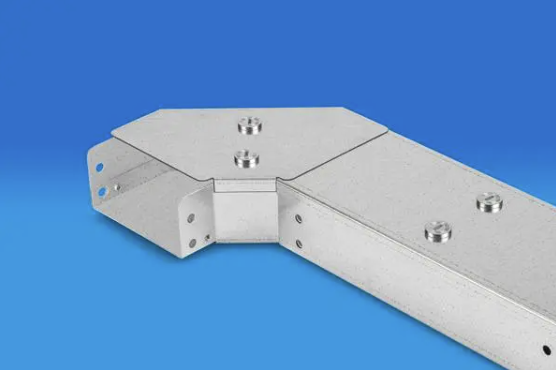
Trunking and IP Ratings - Voltimum UK
In this article, NAPIT’s Bill Allan discusses the application of the IP Code to cable trunking.
 www.voltimum.co.uk
Thanks, but I think that article merely adds to the confusion/uncertainty I discussed previously ...Trunking and IP Ratings - Voltimum UK
In this article, NAPIT’s Bill Allan discusses the application of the IP Code to cable trunking.
In the article there are reproductions of bits of a couple of tables (source not apparently indicated) relating to IPXXD (well, more specifically, to the "D") but they are inconsistent in the language used. In one table, they talk of access to "live" parts (which is what I'd always thought was the basis of the definition of the "D") but, in the other, they talk about access to "hazardous parts",which is what plugwash had said.
As plugwash argued, if one regards a conductor with only basic insulation (i.e. 'single insulated') as being "hazardous", then, assuming that was the word used in the definition, IPXXD would require that the 1mm diameter (and 100mm long) probe/wire could not touch it, which may or may not always be satisfied with some trunking (particularly at joints in the trunking.
However, if the definition of the "D" relates to "live parts" (rather than "hazardous" ones), then the presence of (intact) basic insulation presumably means that there are no "live parts" within the trunking that could be touched by anything (of any diameter or length!). However, that would be a bit silly, since it would effectively mean that, given only basic insulation, IP00 would be OK - which it clearly isn't (and therefore implies that the "hazardous part" definition of the "D" is correct)!
Comments?

Nothing ever is on here....Good to know it's not a simple answer
- Joined
- 18 Apr 2022
- Messages
- 7,123
- Reaction score
- 1,066
- Country
Trunking used to contain uninsulated conductors?Comments?
Trunking containing joints with exposed parts?
Maybe it's just that there are ratings for trunking and when they did the regulations someone said
"Which rating for trunking should we use?"
"Err... this one."
Well it's all wired up now. All complies with all requirements, I managed to get the outer sleeving into the screwed together wiring centre and split out from there. All works great and looks pretty tidy (well for inside a cupboard anyway).
Thanks for all the help, really good to know I haven't cut any corners.
I spurred it all off the power to the other heating controls. This was wired by a fully qualified and registered electrician just weeks ago. I checked up on him, all accredited. There were three earths in the fused outlet I opened up. One fell out as I took the faceplate out, it didn't protrude beyond the sleeving that was stuffed in the terminal hole. The other two were held in by the screws, but when I looked both screws were into the sleeving. Possibly making dubious contact with the copper via the torn hole in the sleeving but hardly connected.
I took the bloke's business card, I was going to get him back for a new consumer unit. Definitely not now, very glad I inspected one part of his work. I'm now going to check everything else he's done.
Is this sort of nonsense normal now?
Thanks for all the help, really good to know I haven't cut any corners.
I spurred it all off the power to the other heating controls. This was wired by a fully qualified and registered electrician just weeks ago. I checked up on him, all accredited. There were three earths in the fused outlet I opened up. One fell out as I took the faceplate out, it didn't protrude beyond the sleeving that was stuffed in the terminal hole. The other two were held in by the screws, but when I looked both screws were into the sleeving. Possibly making dubious contact with the copper via the torn hole in the sleeving but hardly connected.
I took the bloke's business card, I was going to get him back for a new consumer unit. Definitely not now, very glad I inspected one part of his work. I'm now going to check everything else he's done.
Is this sort of nonsense normal now?

DIYnot Local
Staff member
If you need to find a tradesperson to get your job done, please try our local search below, or if you are doing it yourself you can find suppliers local to you.
Select the supplier or trade you require, enter your location to begin your search.
Please select a service and enter a location to continue...
Are you a trade or supplier? You can create your listing free at DIYnot Local
Similar threads
- Replies
- 6
- Views
- 1K
