• Looking for a smarter way to manage your heating this winter? We’ve been testing the new Aqara Radiator Thermostat W600 to see how quiet, accurate and easy it is to use around the home. Click here read our review.

Can this light fitting be converted to accept LED bulbs?

Joined
7 Jan 2010
Messages
771
Reaction score
9
Location
Yorkshire
Country
United Kingdom
I have a light fitting in a bathroom that is around 14 years old and uses a 26W 835 G24q-3 4 pin bulb, like the following:


The bulb has lasted 4 years and now no longer works. It has now become more difficult to purchase this bulb and our local screwfix no longer sells it. I'm also not 100% sure if the bulb has gone or the ballast, or possibly even the transformer!

I can see LED equivalent bulbs, but obviously the light fitting won't take these without modification.

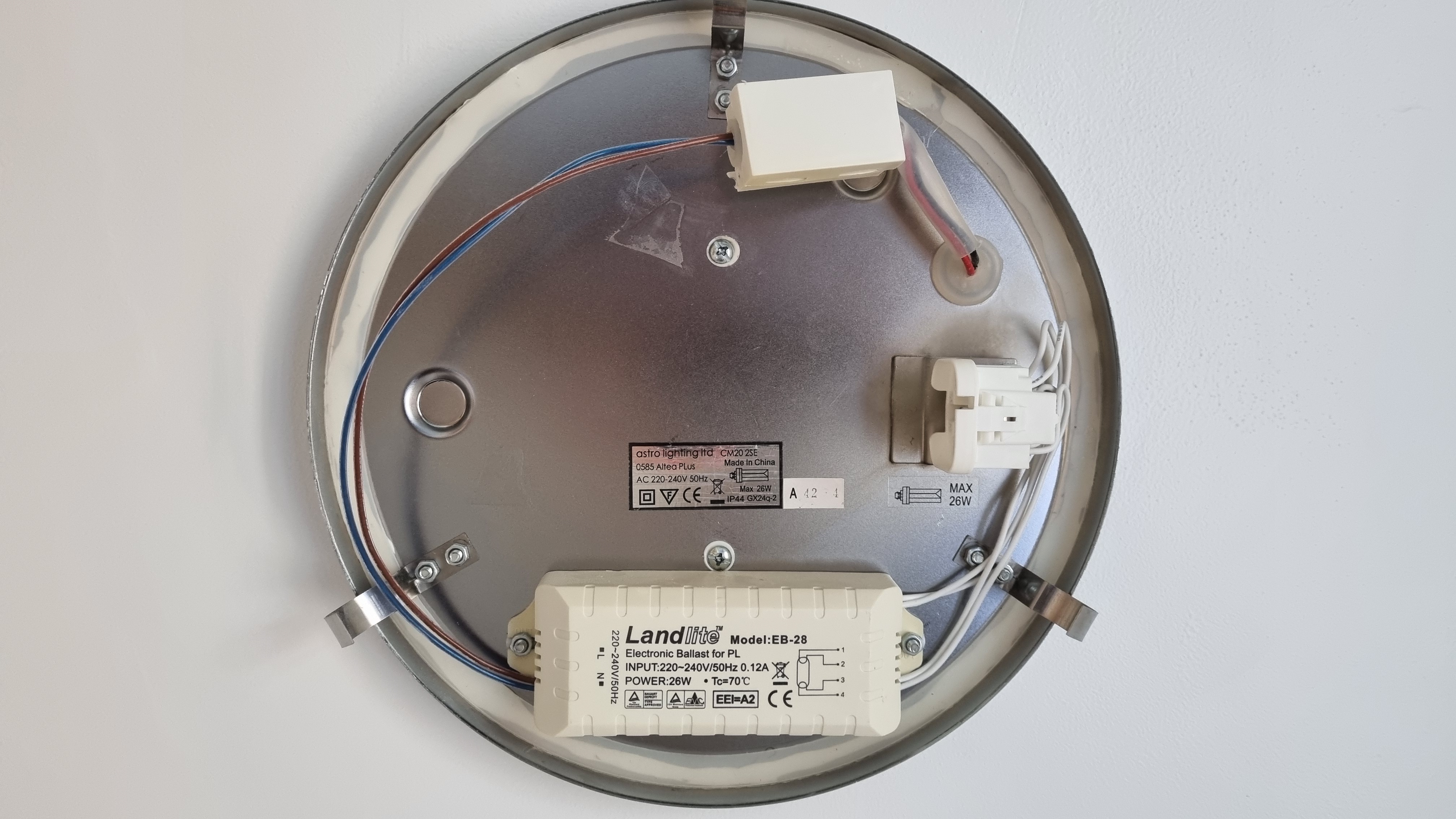
Can the following light fitting be easily modified to accept a LED G24q-3 4 pin bulb? Here's a photo of the fitting:


Is this a simple case of removing the transformer and replacing with a junction box, so the 240V is supplied directly to the LED bulb?
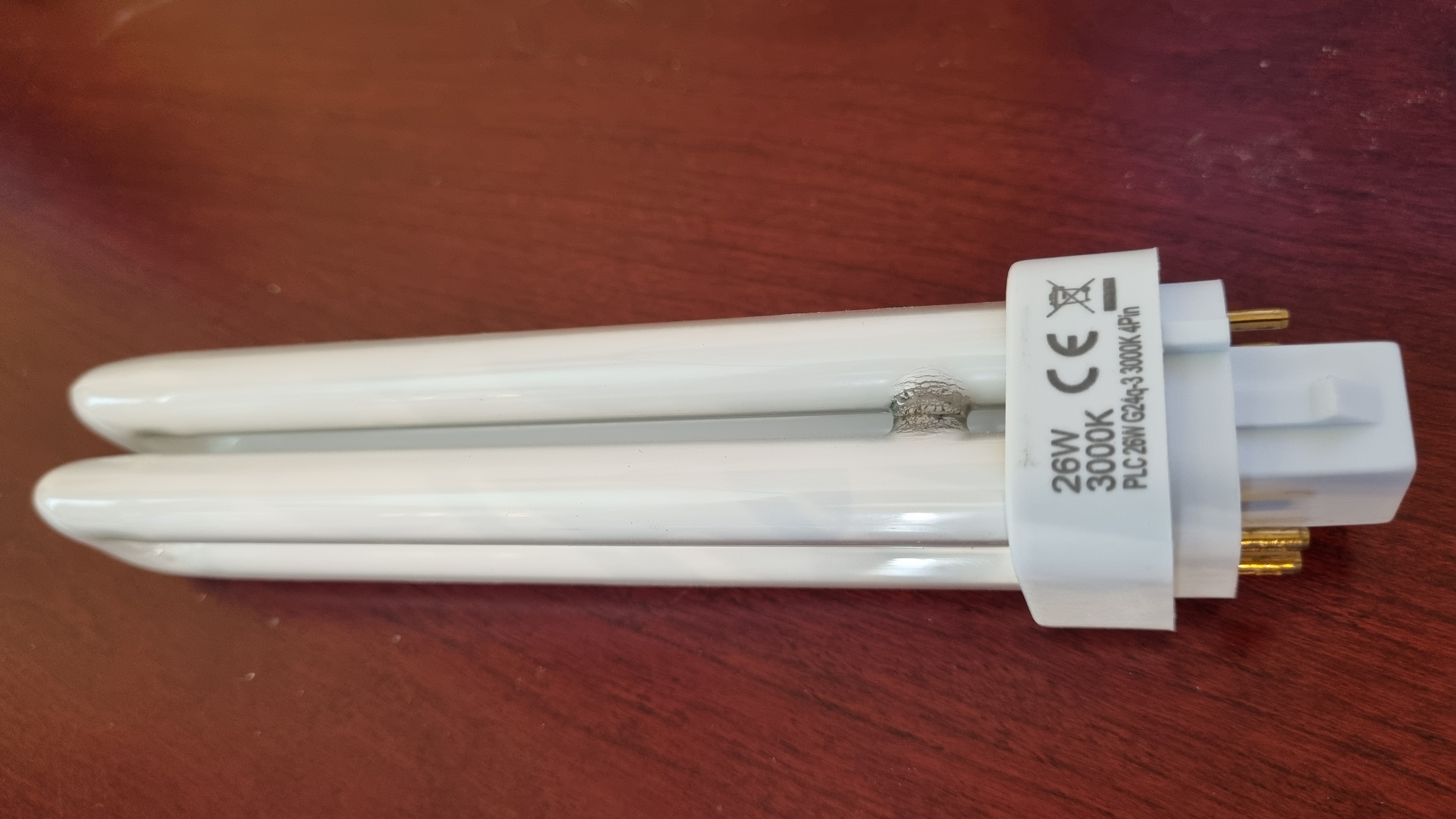
 
you might be better off changing the fitting to one that uses off the shelf LED bulbs ........
I did discuss this with my wife, but we both agree that we really like the existing fitting and would prefer to keep it if possible.

4 years ago, I would just nip into Screwfix over lunch and grab a replacement bulb. If it worked, great, if not then potentially the transformer had failed, but so far, only the bulbs have needed to be replaced.

I can source a replacement CFL bulb, but it would need to be an online order and if it doesn't work, suggesting the transformer has failed.... it's more of a pain. So, thinking of the future, it may make more sense to convert the fitting to accept 240V LED bulbs, which are more easily purchased now, not to mention more efficient.
 
As it is an electronic ballast, at some point likely it will fail. As to LED I am sure there are some units which would fit, be it a strip light 1748944457748.png or 1748944539898.png GX53 lamps, I am sure it could be converted, but why bother? If it is something special lamp-landing_1.jpg I love our landing light, then OK may be worth converting, my problem is I hate integral lamps, I want to be able to change a lamp without the need of screwdrivers, drills etc. If it fails want to simply pop in a new one, and also want the option to make it smart.

The 2D traditional round or square lamp does have LED replacements, so likely @Milleniumaire has the answer, although you still have a ballast.
 
Swap it for one for these https://www.lyco.co.uk/superslim-co...2n8gGHdilF27qDx-U5YDMJwfls2WkfgMaAu6ZEALw_wcB

They come in 6 /12 or 24 W and 3 selectable colour temps. very slim and surface mount. Not necessary this exact one but similar - there are others but the ar not as slim depending on the size of the bathroom I would go for the 12w they give a nice diffused light
Thanks for the link, but we really don't want to change the light fitting. Our current fitting is much nicer than those shown in the link and as ericmark says, I would prefer to have a changeable bulb, rather than a throw-away fitting.
 
View attachment 383202
If your handy you can simply screw in a lampholder like this, cutting the brown and blue wires and connecting direct, then fit whatever lamp will fit
Yes, one of my concerns about converting the fitting to use a 240v bulb is the existing bulb holder. Is that specifically designed, especially the 4 cables, to only expect a lower voltage? I described the larger device (Landlite model EB-28) as a transformer, but I guess this is the ballast and is therefore used to start the light fitting and not to reduce the voltage. If so, then I guess the existing bulb holder will be working with 240V, so bypassing the "electronic ballast" shouldn't be an issue?

I guess I could look around for a different bulb holder, but why bother if the current bulb holder can be used with a 240V G24q-3 LED bulb (assuming the electronic ballast is removed)?
 
Yes, one of my concerns about converting the fitting to use a 240v bulb is the existing bulb holder. Is that specifically designed, especially the 4 cables, to only expect a lower voltage?

Not exactly, but something like that. The only lamps you’ll find to fit that 4-pin socket are 4-pin compact fluorescent tabes like the one you have (*), where two pins go to the filament at one end of the tube and two pins go to the filament at the other. The “transformer” converts the 240V mains to what is required by the 4-pin tube. If you want to use any other sort of bulb you’ll need to change the lampholder to a regular one and remove the “transformer”.

(*) Or weird LED replacements that you’ve already found that are specifically designed to solve this problem…
 
Not exactly, but something like that. The only lamps you’ll find to fit that 4-pin socket are 4-pin compact fluorescent tabes like the one you have (*), where two pins go to the filament at one end of the tube and two pins go to the filament at the other. The “transformer” converts the 240V mains to what is required by the 4-pin tube. If you want to use any other sort of bulb you’ll need to change the lampholder to a regular one and remove the “transformer”.

(*) Or weird LED replacements that you’ve already found that are specifically designed to solve this problem…
Yes, I was planning to use one of those "weird" LED replacement bulbs, which would then require me to simply remove the electronic ballast. The other "small white plastic box" in the fitting is simply a plastic protector and has a cable connector within it. I assume this gives the light an IP rating for the bathroom.

I was thinking if the red and blue cables coming out of the connector (plastic white box) and going to the electronic ballast were removed, then the 4 white wires from the lamp fitting could be routed into the plastic box instead and connected directly to the black and red mains cables. This should then allow a 240V LED bulb with a G24q-3 connector to be installed in the fitting.
 
This existing wiring is of no consequence, as it would be removed to install an LED. However, you provide no dimensions, so it's hard to recommend one of the many circular LED lamps available, such as this.
 
This existing wiring is of no consequence, as it would be removed to install an LED. However, you provide no dimensions, so it's hard to recommend one of the many circular LED lamps available, such as this.
The bulb I linked to earlier would be a perfect fit for the existing lamp fitting, providing the ballast was removed as it is similar in size to the existing G24q-3 CFL bulb.

Philips CorePro PL-C LED 9.5W 1100lm - 840 Cool White Replaces 26W
 
I was thinking if the red and blue cables coming out of the connector (plastic white box) and going to the electronic ballast were removed, then the 4 white wires from the lamp fitting could be routed into the plastic box instead and connected directly to the black and red mains cables. This should then allow a 240V LED bulb with a G24q-3 connector to be installed in the fitting.

I would hope that the manufacturers of the LED G24q-3 lamp would provide advice about this. If they don’t say anything, then the lamp presumably expects the electronic ballast to still be in place.

Edited to add: reading the description on the web page you linked to, it’s clear that the lamp is intended to work in an unmodified light fitting, i.e. with the ballast still in place: “this bulb works with Electronic (HF); Mains (AC) Without Starter ballasts only. If you need more information about ballast compatibility, contact our customer service team.”

Edit 2: see also the “installing this lamp is very easy” section - no need to bypass or remove the ballast.

(By the way, modifying the fitting when replacing an old bulb with an LED is sometimes necessary; when my streetlights had their mercury vapour lamps replaced with LEDs, the electricians had LEDs that fitted the same socket but needed the ballast bypassing.)
 
Last edited:
I would hope that the manufacturers of the LED G24q-3 lamp would provide advice about this. If they don’t say anything, then the lamp presumably expects the electronic ballast to still be in place.

Edited to add: reading the description on the web page you linked to, it’s clear that the lamp is intended to work in an unmodified light fitting, i.e. with the ballast still in place: “this bulb works with Electronic (HF); Mains (AC) Without Starter ballasts only. If you need more information about ballast compatibility, contact our customer service team.”

Edit 2: see also the “installing this lamp is very easy” section - no need to bypass or remove the ballast.

(By the way, modifying the fitting when replacing an old bulb with an LED is sometimes necessary; when my streetlights had their mercury vapour lamps replaced with LEDs, the electricians had LEDs that fitted the same socket but needed the ballast bypassing.)
I confess, when I read that part of the description stating "... Without Starter ballasts only" I had assumed it was saying the bulb didn't need a ballast to work, so I had assumed the electronic ballast in the fitting would need to be removed. I agree, the "Installing this lamp.." section does imply it can simply replace an existing bulb, but then it talks about being an alternative to a "standard W PL or Dulux lamp". I'm not exactly sure what this means.

I will reach out to their customer support and get confirmation. It would be great if this is, as you say, a simple LED replacement bulb.
 

If you need to find a tradesperson to get your job done, please try our local search below, or if you are doing it yourself you can find suppliers local to you.

Select the supplier or trade you require, enter your location to begin your search.


Are you a trade or supplier? You can create your listing free at DIYnot Local

 
Back
Top