• Looking for a smarter way to manage your heating this winter? We’ve been testing the new Aqara Radiator Thermostat W600 to see how quiet, accurate and easy it is to use around the home. Click here read our review.

Ridge tile meeting hip

Joined
13 Jun 2016
Messages
2
Reaction score
0
Country
United Kingdom
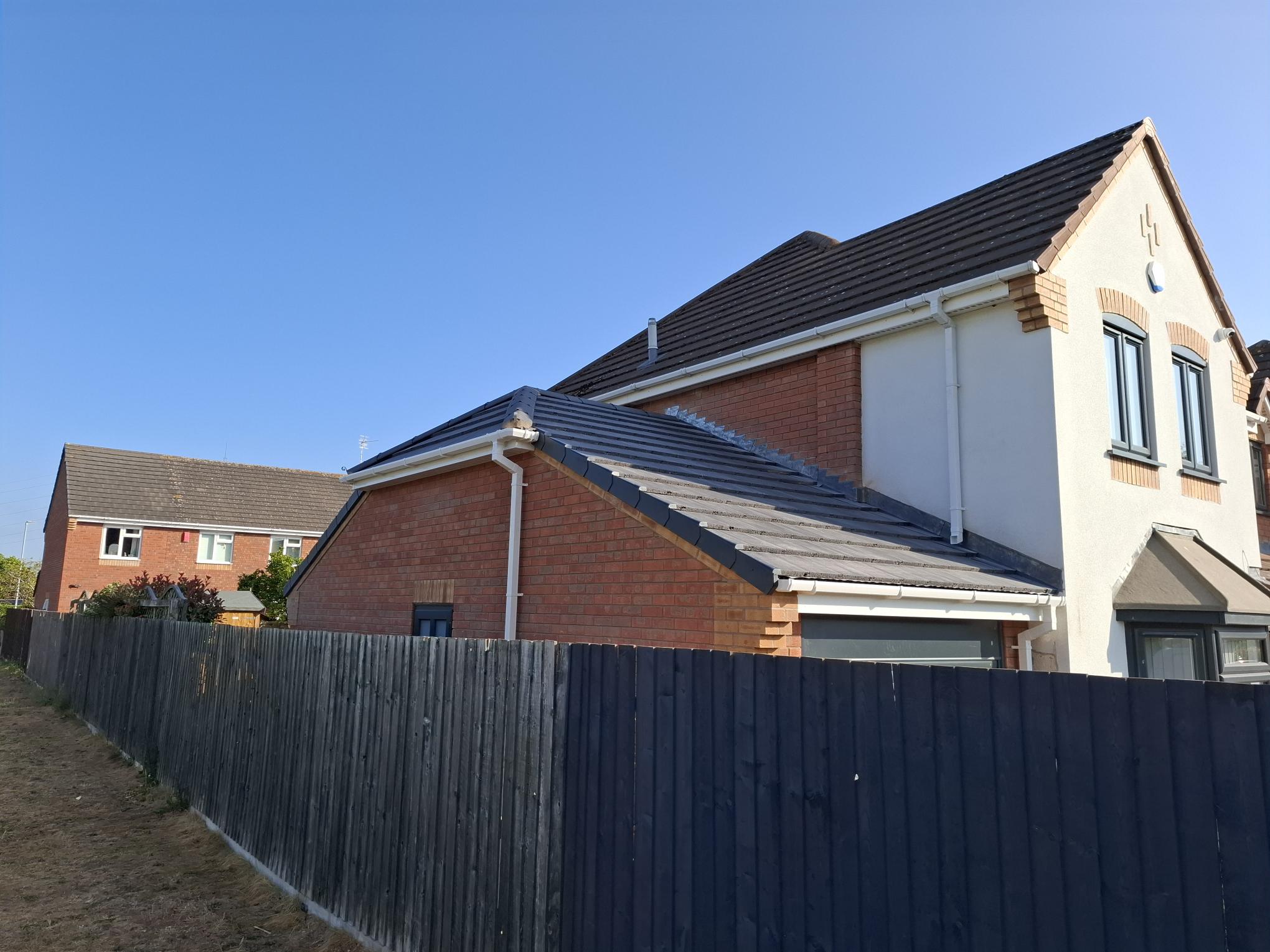
I have a ridge tile that is very heavily filled with mortar where if meets the hip. Builder is claiming it’s ok and should have a slight rise in it for weather proofing. I think it’s more than a slight rise and bad fit where the ridge or hip tile has not been cut accurately enough . Advice please as I’m told it’s fine and they will not rectify.

Thank you
 

Attachments

  • image.jpg
    image.jpg
    304.8 KB · Views: 75
It's always a clunky junction at best. He's tried to lift the ridge in order to take your eye off the higher profile of the hip tiles.
What he should have done is cut all three tiles (ridge and two hips) into a nest junction.

 
Yes, it looks like the ridge should be a bit longer, and the roofer did not want to add an extra bit of ridge tile.
 
It looks rubbish. No great scientific analysis required, it's just a complete lack of care (or ability). Get it fixed, by another roofer. Get before and after photos. Don't employ them again and trash their online reviews. If they contact you about the review offer to remove it for payment of what you paid the proper roofer.

Do you have a couple of spare ridge and hip tiles? You may need replacements for the ones that have been gobbed up.
 
thanks for the very honest opinion . I’m still trying to get them back to rectify but if that fails will take your advise. Don’t have spares hope they do
 
I have a ridge tile that is very heavily filled with mortar where if meets the hip. Builder is claiming it’s ok and should have a slight rise in it for weather proofing. I think it’s more than a slight rise and bad fit where the ridge or hip tile has not been cut accurately enough . Advice please as I’m told it’s fine and they will not rectify.

Thank you
You know how you uploaded a picture of a picture of the problem? It would always be better if you instead upload the original picture, as it would give more detail/clarity; either log into DIYnot on the smartphone that is displaying the picture, or send the picture from that phone to whatever device you use to interact with DIYnot

To upload pics here when on a smartphone, tap the camera icon, not the picture icon, then choose to grab a pic out of the media library

As to the problem, if the roofer had a distance of, say 62 inches of ridge tile needed to make the job look neat and the ridge tiles were 20 inches long each, tell him he shouldn't plonk three full tiles in and then mess about with a 2 inch sliver, or dodging it full of mortar and having it look gash, he should take four full ridge tiles and cut them all to be 15.5 inches long, then they will go the distance, and the eye won't see the 4.5 inches having been lopped off each one (unless his cutting technique is as fine as his mortaring one)

The more you want the job to look neat, the more tiles you cut to get the end one to land in the right place. The formula isn't hard:

Total distance needed, divided by length of a tile: 62/20 = 3.1

Probably this will result in a decimal number, so go to the next number up: 3.1 -> 4

Divide the distance by this new number: 62/4=15.5

That is how long the tiles need to be

-

For weatherproofing it would look better and cleaner to form a lead flashing over the tiles where hip meets ridge, then fit the ridge tiles over it, hiding it. Don't mound mortar up on the lead as that could provide a route for water to bypass it.

Or use a dry ridge system, rather than sticking with what we did 100 years ago because it was the best available thing at the time

 
As to the problem, if the roofer had a distance of, say 62 inches of ridge tile needed to make the job look neat and the ridge tiles were 20 inches long each, tell him he shouldn't plonk three full tiles in and then mess about with a 2 inch sliver, or dodging it full of mortar and having it look gash, he should take four full ridge tiles and cut them all to be 15.5 inches long, then they will go the distance, and the eye won't see the 4.5 inches having been lopped off each one (unless his cutting technique is as fine as his mortaring one)
It's not that complicated. You fit the small cut in a favourable position and NEVER at the end.
As in the image I posted up.
 
Naw, putting a 2 inch sliver of ridge tile in looks gash no matter where you put it. What's the problem with just doing a bit of math and running 3 or 4 cuts instead of 1?

You're demonstrably bright enough to do the math, and I know you know what a cutoff saw is (even if you don't always get the hose out) :)

As in the image I posted up.
Not to your usual high standard if I may say.. Bit of mortar dye would have helped no end if you were going to insist on mortaring a dry ridge..
 
Last edited:
Does anyone actually make a hip to ridge connector for the dry systems? :unsure:

If looks are important, small cuts less than 1/3 or 1/2 a tile are not used, rather two (or three) ridge tiles would be cut.
 
It's hard to tell from the photo, but what looks like thin slivers of tile may be the clips for a dry ridge system.

I think it's dry ridge each way, with a dollop of mortar where they meet. But no attempt to cut to length or a mitre has been made. One, the other or both is too long so they've ended up resting against each other up in the air.
 
Not to your usual high standard if I may say.. Bit of mortar dye would have helped no end if you were going to insist on mortaring a dry ridge..
Never ever use mortar dye. Awful rubbish.

End (starter) ridge and awkward junctions - mortared. Would you prefer to see foam?
 
Does anyone actually make a hip to ridge connector for the dry systems? :unsure:
I've not seen one that suits all pitches, no. Junctions and ends are always mortared as well as drilled and mechanically fixed with SS screw and washer.
 

If you need to find a tradesperson to get your job done, please try our local search below, or if you are doing it yourself you can find suppliers local to you.

Select the supplier or trade you require, enter your location to begin your search.


Are you a trade or supplier? You can create your listing free at DIYnot Local

 
Back
Top