• Looking for a smarter way to manage your heating this winter? We’ve been testing the new Aqara Radiator Thermostat W600 to see how quiet, accurate and easy it is to use around the home. Click here read our review.

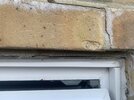
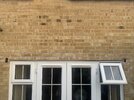
Cracks in mortar above patio door

Joined
11 Jan 2009
Messages
219
Reaction score
3
Location
London
Country
United Kingdom
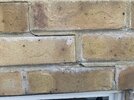
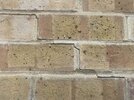
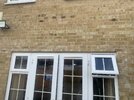
We have cracks in the mortar on part of the brick above the patio/French doors. I cant remember for how long but I think it has been there for years, just kept forgetting to do something about it.

Please can you give me pointers on what needs to be done to fix the issue. I wanted to have an idea before calling someone to fix it.
Thanks
patio copy.jpg
 
It's really hard to tell. It may just be shrinkage that's cracked at a weak point, or it may be a missing or inadequate lintel.

How old is the building, is the opening original or was it added? If the opening was original then did it previously have a wooden frame?

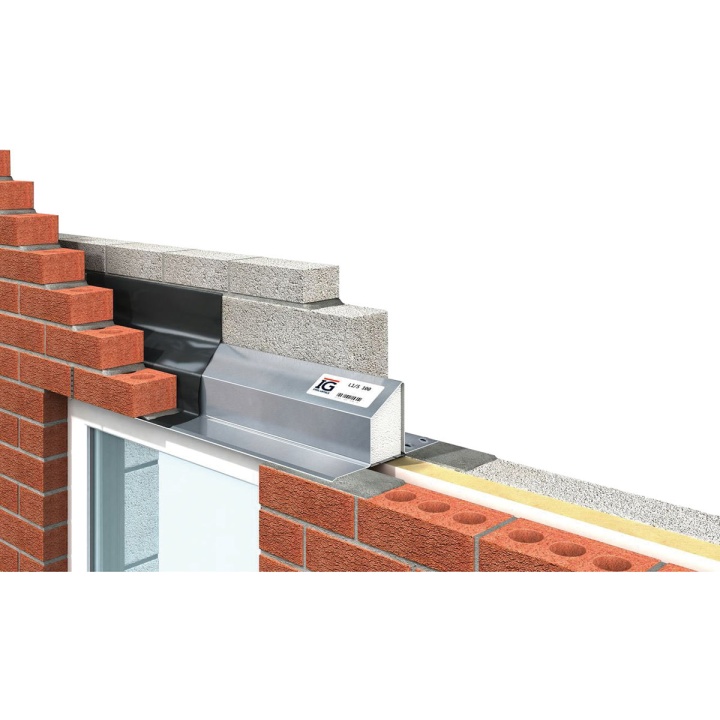
Get a magnet, check whether it sticks to the underside of the reveal (opening) on the inside. It probably won't stick under the cavity, as the lintel will probably look like this...

415752730_01.jpg
 
Please get a closer photo of the crack, square-onto it rather than at an angle looking upwards. You'll need a ladder or something to stand on. It looks like the horizontal gap is widest, and the vertical lines are just cracks rather than gaps, in which case it's moved downwards to the left of it, indicating a lintel issue. But it's impossible to tell from the oblique photo.
 
Please get a closer photo of the crack, square-onto it rather than at an angle looking upwards. You'll need a ladder or something to stand on. It looks like the horizontal gap is widest, and the vertical lines are just cracks rather than gaps, in which case it's moved downwards to the left of it, indicating a lintel issue. But it's impossible to tell from the oblique photo.

Here is a closer picture
 

Attachments

  • crack1.jpeg
    crack1.jpeg
    722.8 KB · Views: 24
  • IMG_0077.jpeg
    IMG_0077.jpeg
    727.9 KB · Views: 17
It's really hard to tell. It may just be shrinkage that's cracked at a weak point, or it may be a missing or inadequate lintel.

How old is the building, is the opening original or was it added? If the opening was original then did it previously have a wooden frame?

Get a magnet, check whether it sticks to the underside of the reveal (opening) on the inside. It probably won't stick under the cavity, as the lintel will probably look like this...

415752730_01.jpg
There is a metal lintel in picture, sticks to magnet. Opening is original. The house was built very late 90's or year 2000. It had sliding doors when we purchased in 2003. I cant remember if the frames were metal or wood but the rest of the house had wooden double glazing. We changed to upvc French doors probably around 2007. There is a metal lintel.
 

Attachments

  • width.jpg
    width.jpg
    356.8 KB · Views: 29
  • lintel.jpeg
    lintel.jpeg
    420.3 KB · Views: 23
I'm wondering if the opening was widened at some point and a new lintel added but not well so we now see a bit of movement in the bric.k. Put a staight edge or stringline under the lintel to see if there's any deflection there.
 
I'm wondering if the opening was widened at some point and a new lintel added but not well so we now see a bit of movement in the bric.k. Put a staight edge or stringline under the lintel to see if there's any deflection there.
I have one of those laser level somewhere so will look to check. The widening has not been altered. There are 8 properties on the close built at same time. I have been in 5 of them with exactly the same widening. Unfortunately 4 have built conservatories (and covered) afterwards so cant check if they have the same issue
 
There is a metal lintel in picture, sticks to magnet. Opening is original. The house was built very late 90's or year 2000. It had sliding doors when we purchased in 2003. I cant remember if the frames were metal or wood but the rest of the house had wooden double glazing. We changed to upvc French doors probably around 2007. There is a metal lintel.
Looks to me like a lintel has been (retro?) fitted?
 
I'm wondering if the opening was widened at some point and a new lintel added but not well so we now see a bit of movement in the bric.k. Put a staight edge or stringline under the lintel to see if there's any deflection there.
Too bright outside for the laser line so used a string stuck on both sides where it enters the brickwork and it looks perfectly straight. The lintel is pretty much behind the string without deflection when I climb to view at eye level
 

Attachments

  • IMG_0083.jpg
    IMG_0083.jpg
    363.3 KB · Views: 22
Looks to me like a lintel has been (retro?) fitted?
Wont there be a visible damage to the brick work or evidence of new mortar with a diffirent color to the rest? I know there is certainly some sort of lintel on the inside because a cordless hammer drill could not drill through when I was putting up vertical rail blind so just used plasterboard fixings in the end
 
The lintel is pretty much behind the string without deflection when I climb to view at eye level

That wider view, seems to suggest the lintel has dropped a little on the right, rather than deformed due to load, in the middle.
 
Wont there be a visible damage to the brick work or evidence of new mortar with a diffirent color to the rest? I know there is certainly some sort of lintel on the inside because a cordless hammer drill could not drill through when I was putting up vertical rail blind so just used plasterboard fixings in the end
The mortar on the two courses directly above the doors looks greyer than the buff mortar above them. As said it looks like a rebuild of the jambs (partial) and the two courses above the doors.
 
The mortar on the two courses directly above the doors looks greyer than the buff mortar above them. As said it looks like a rebuild of the jambs (partial) and the two courses above the doors.
If so then the brickwork may have dropped just after or even during this work and is in fact supported.

Perhaps just re-point and see what happens. Hopefully nothing further.
 

If you need to find a tradesperson to get your job done, please try our local search below, or if you are doing it yourself you can find suppliers local to you.

Select the supplier or trade you require, enter your location to begin your search.


Are you a trade or supplier? You can create your listing free at DIYnot Local

 
Back
Top