
You seem to be querying how UFH works?


That wouldn't take much searching.I've repeatedly said that thermostat location appears to be crucial to everything we've been discussing but, despite my having repeatedly asked the question, no-one has yet told me where the thermostat is in a Willi system,
Of course.so I have been guessing/assuming that it is within the Willis heater.
No it isn't. It is dependent on the temperature in the tube; not in the cylinder.If so, the situation is identical to that with an internal immersion, with the stat switching off the heating when the desired water temp gets level with the Willis.
Then use that variant.One variant of 'common sense' would tend to agree with that.
So what? If some hot has risen then some other not quite so hot must fall.However, if that's what happens, I presume it would have to be (probably slowly) by conduction, since I can't see why ('by convection') heated water should fall through the cooler water below the heater?
Because the Willis gets a supply of water from the bottom of the cylinder.As above, if the Willis has a thermostat (which I strongly suspect that it probably does), then I see no difference from any other immersion+stat.


Good point. Looking at round housesWarm air, or water, rises. The heat source is in the floor, the floor area will be warmer the air above it, therefore it will rise. The air current will be rising in the middle, because the walls will be cooler. Basic common sense, in my view!
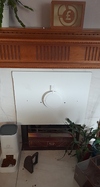 I have made a unit to connect it to the AC, so no need to open a window in the summer for the exhaust, it has never been used by me to heat the house, main problem is air goes up the chimney and is replaced through every crack and gap in all doors causing drafts, as there is no ducting for combustion air, so it is for emergency use only as a fire.
When this is settled, are you familiar with magnetism?
When this is settled, are you familiar with magnetism?
ELECTRIC LOVE
My love is like a dynamo
With woven wire for hair,
And when she brushes it at night
The sparks run crackling there.
Oh she is the magnetic field
In which I pass my days,
And she will always be to me
ELECTRIC in her way.
No insulated force is she;
Galvanic rather , seeing
Hers is the current keeping bright
My filament of being
Oh yes,my love's a dynamo
Who charges all the air ;
My love is an Electrolux
Who sings upon the stairs..
so not doing too bad withLook for the positives. Whilst waiting you will have plenty of time to think about another pointless post on the forum.
But 252 replies will take some beating.Pleeeeaaase, not another endless thread!
As I said, that's what I've been assuming.That wouldn't take much searching. ... It's in the Willis, which is just an immersion heater in a tube.
Can I remind you of your 'levelling' theory/explanation? - which, ironically, was one of the things which helped me to understand (I though/think) how the Willis system works.No it isn't. It is dependent on the temperature in the tube; not in the cylinder.
The problem with using what I described as 'one variant of common sense'(which I probably should have called 'intuition') is that it may well be flawed - e.g.perhaps by ignoring the fact that heating water below the level of the heat source might be an extremely slow process, primarily dependent on conduction through the water and the material of the cylinder.Then use that variant.
Yes, but only in the region above the heat source. There is no heat source below that, so what could have created 'hot water' to rise in that region?So what? If some hot has risen then some other not quite so hot must fall.However, if that's what happens, I presume it would have to be (probably slowly) by conduction, since I can't see why ('by convection') heated water should fall through the cooler water below the heater?
Where are you suggesting that an immersion 'gets its supply of water from', and how does it importantly differ in this respect from the Willis?Because the Willis gets a supply of water from the bottom of the cylinder.
Not really, but I certainly am querying how on earth UFH got into this discussionYou seem to be querying how UFH works?

In the round house depicted in your drawing (and many others) the 'heat source' (the fire) is surely 'in the middle', which would seem to be a very good reason why 'a current rises in the middle, wouldn't it?Good point. Looking at round houses View attachment 409358your answer is clearly correct.The air current will be rising in the middle, because the walls will be cooler. Basic common sense, in my view!
Yes which was one of the reasons for the depends on vote. As I said with my own living room, because of the shape, and the radiators being on a wall, it will start circulation, otherwise far corner from radiator would be very cold, shape of the room or tank matters.In the round house depicted in your drawing (and many others) the 'heat source' (the fire) is surely 'in the middle', which would seem to be a very good reason why 'a current rises in the middle, wouldn't it?

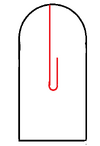 and this
 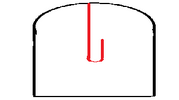 I would not expect to heat in the same way, the latter this
 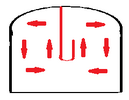 is likely heating nearly the whole tank, but not with the tall tank. As to how wide the tank needs to be to see the change, not sure.
Certainly interesting to see how and to what extent such baffles might affect the characteristics and whether that might make some plus or minus differences that could be helpful or could be best avoided according to need too EricThis View attachment 409425and this View attachment 409426I would not expect to heat in the same way, the latter this View attachment 409427is likely heating nearly the whole tank, but not with the tall tank. As to how wide the tank needs to be to see the change, not sure.

If you need to find a tradesperson to get your job done, please try our local search below, or if you are doing it yourself you can find suppliers local to you.
Select the supplier or trade you require, enter your location to begin your search.
Are you a trade or supplier? You can create your listing free at DIYnot Local

