That may be bureaucratically true, but that certainly is not technologically/literally true - you could, like me, have a 'dumb' dual-tariff meter.Since I did not have a teleswitch, only way for me to have a dual tariff was a smart meter.

You are using an out of date browser. It may not display this or other websites correctly.
You should upgrade or use an alternative browser.
You should upgrade or use an alternative browser.
RTS turn off
- Thread starter DiyNutJob
- Start date

Or two meters? One for normal and one for off peak run by a time clock such as the old mechanical one you mentioned?That may be bureaucratically true, but that certainly is not technologically/literally true - you could, like me, have a 'dumb' dual-tariff meter.
Sure, but we've "moved on" from that to equivalent but 'more convenient' solutions.Or two meters? One for normal and one for off peak run by a time clock such as the old mechanical one you mentioned?
In my present home, I've always had a dual tariff. It started with an 'external' electromechanical time switch and two meters. It then moved to a single dual tariff meter, still controlled by the external time switch. 'Finally' (i.e. 'still now') it changed to a single electronic dual-tariff (still 'dumb') meter with some sort of internal clock, hence no need for an external time switch.
The next, and, I suppose, 'really final' stage will be the ultimate change to a 'smart' meter - but, as I've said, there certainly is no 'need' (other than a bureaucratic/policy one) to have a 'smart' meter in order to have a dual tariff.

- Joined
- 27 Jan 2008
- Messages
- 29,271
- Reaction score
- 3,594
- Location
- Llanfair Caereinion, Nr Welshpool
- Country

Yes I have an export meter which has never been used. The system was simple, the supplier can't force anyone to have a smart meter, but if you refuse, they can also refuse to allow dual tariffs or export payment. So to refuse is to cut off your nose to spite your face.That may be bureaucratically true, but that certainly is not technologically/literally true - you could, like me, have a 'dumb' dual-tariff meter.
I know someone who still has two meters and a mechanical clock and gets a afternoon boost on the off peakSure, but we've "moved on" from that to equivalent but 'more convenient' solutions.
In my present home, I've always had a dual tariff. It started with an 'external' electromechanical time switch and two meters. It then moved to a single dual tariff meter, still controlled by the external time switch. 'Finally' (i.e. 'still now') it changed to a single electronic dual-tariff (still 'dumb') meter with some sort of internal clock, hence no need for an external time switch.
The next, and, I suppose, 'really final' stage will be the ultimate change to a 'smart' meter - but, as I've said, there certainly is no 'need' (other than a bureaucratic/policy one) to have a 'smart' meter in order to have a dual tariff.

I knew someone who moved into a house with a dual rate meter controlled by a timeswitch and NSH's who complained bitterly the heating was useless/unpredictable and constantly having to 'top up' during the day. The discovery by Sunray that each heater contained a mechanical time switch which only ran for the duration of the contactor being operated was predicted to be the source of the confusion...I know someone who still has two meters and a mechanical clock and gets a afternoon boost on the off peak
Sunray bypassed the timeswitches which if anything created a worse situation and a bill increase and more confusion.
It turned out it was a very old 'heating plan' system (possibly E10?) and the timeswitch settings had the cheap rate for most of the day,
However there was a second timeswitch operating the contactor; for something like an hour during the night (peakrate) and again during the day, for part of which the meter didn't register anything (a third rate not enabled??)
Back in those days I had no idea about any of these plans and made my discoveries by using a slow speed video recorder (CCTV) and camera watching the meter etc.
I advised them to get it sorted out and call me back to sort out the heaters if needed.
Last edited:
Just searched and google said turn off in June. I will see overnight if the night rate is still spinning on meter.If anybody's still interested, my RTS was switched off about a month ago. Unsurprisingly, it froze in day mode.
That sounds fair enough to me ....... The system was simple, the supplier can't force anyone to have a smart meter, but if you refuse, they can also refuse to allow dual tariffs or export payment. ...
Well, yes, IF you 'refuse' - but why not just accept the 'smart' meter?... So to refuse is to cut off your nose to spite your face.
Such a system certainly persisted here for a few years before they eventually 'upgraded' it to a dual-tariff meter (and an external mechanical time switch).I know someone who still has two meters and a mechanical clock and gets a afternoon boost on the off peak
- Joined
- 27 Jan 2008
- Messages
- 29,271
- Reaction score
- 3,594
- Location
- Llanfair Caereinion, Nr Welshpool
- Country
30 June 2025 was the cut-off date. Government press release said date delayed It would start 30 June 2025 but on 30 May 2025, there were 314,935 RTS meters requiring replacement in Great Britain, according to supplier data collected by Ofgem.Just searched and google said turn off in June. I will see overnight if the night rate is still spinning on meter.
At the rate of 1000 meters a day, looking at May this year before it is completed. So the standard method is to fit smart meters. @fixitflav has said his was turned off a month ago, and
Which should not have been required, his meter should have been updated before the RTS signal stopped.Though at some point I might succumb to the pestering to have a smart meter.
clearly he should have heard before the turn-off. As to if he will benefit from a split tariff is another question.They said the engineer would decide when he came, but I've heard no more since.
The problem is tariffs are not nationwide, one has to enter a post code to get rates where you live, and we have dozens of options even staying with one supplier. The schemes are designed for EV uses, heat pump users, solar panel users, storage heater users, and the problem is if anyone has a combination then hard to select a tariff. Also, some of the "Smart" tariffs require your equipment to be controlled by the supplier, so we have tariffs like Octopus Go that have a smart and non-smart version.
The problem is all these tariffs charge you more at peak times. So my Standing charge (per day) 69.699p, Unit rate - day (per kWh) 32.277p, Unit rate - night (per kWh) 8.625p where if not a dual tariff the day rate is lower, but to find out what it will be
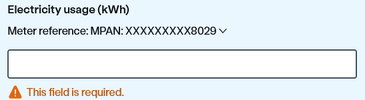 one has to enter the MPAN number, Ofgem says
 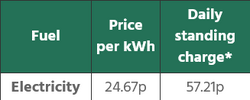 which is less than I am paying, so once you sign up for a split tariff, one needs to be sure your using enough off-peak to ensure it is worthwhile. My battery charges overnight, and my daytime use is either from the battery or solar, since if I did not use the solar, I would get paid 12p/kWh for export, I do not need to worry, I can fully charge my 6.4 kWh battery overnight, even if it then has no room to take the solar in the day.
However, this is an out of date rate but
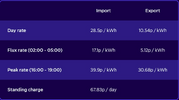 if I was to use Flux, then I would need to be careful not to run out of battery between 4 pm and 7 pm, and I simply did not want to control my life around when I use electric.
Google:30 June 2025 was the cut-off date. Government press release said date delayed It would start 30 June 2025 but on 30 May 2025, there were 314,935 RTS meters requiring replacement in Great Britain, according to supplier data collected by Ofgem.
and 7 pm, and I simply did not want to control my life around when I use electric.
The Radio Teleswitch Service (RTS) is being phased out starting from 30 June 2025, with a final shutdown occurring in June 2026. This affects older electricity meters, often used for electric heating/hot water. Customers must contact their energy supplier immediately to arrange a free, secure smart meter upgrade to prevent heating failure.
- Joined
- 27 Jan 2008
- Messages
- 29,271
- Reaction score
- 3,594
- Location
- Llanfair Caereinion, Nr Welshpool
- Country
Yes, that's what I used. But it saidGoogle:
All depends on which report one reads.There will not be a mass switch off of the RTS national signal on 30 June 2025. From this date, a phase out will begin of the RTS functionality for small groups of meters at a time. Customers will be informed directly.
OK, RTS switched off for me as well. But everything is working as it should on peak rate, including the electric element for the normally gas-heated hot water tank. Some time ago the supplier said they were reducing my cost. Presumably they switched me over to a single rate that was cheaper than the old peak rate.
Last edited:
June 27th is R4 LW (low frequency) audio end date https://www.bbc.co.uk/reception/work-warning/news/radio4lw
Reports elsewhere of retuning/closure announcements being made from LBH on the network of tranmitters: 3x 198 kHz LF transmitters Droitwich, Burghead and Westerglen that also transmit the RTS data on the carrier via phase modulation. Droitwich is the one with the dodgy transmitter / lack of valves. Plus the MF (medium wave) fillers.
It's as clear as mud what they are doing after that date or if a (lower power?) phase-modulated carrier will continue for a while or not. Listen to that space on Saturday 27th or a few days later to find out.
Ovo reckon June 30th is the absolute end of RTS broadcasts https://www.ovoenergy.com/radio-teleswitching-service so CW may continue with the audio muted? (Or a continuous retune loop). LBH could switch off the Data Assembler so no data is sent to the transmitter sites (if suitably instructed depending on the Contract between BBC and Energy Co.
So any with RTS that haven't taken up a smart meter install offer need to extract their digits and do so asap.
Reports elsewhere of retuning/closure announcements being made from LBH on the network of tranmitters: 3x 198 kHz LF transmitters Droitwich, Burghead and Westerglen that also transmit the RTS data on the carrier via phase modulation. Droitwich is the one with the dodgy transmitter / lack of valves. Plus the MF (medium wave) fillers.
It's as clear as mud what they are doing after that date or if a (lower power?) phase-modulated carrier will continue for a while or not. Listen to that space on Saturday 27th or a few days later to find out.
Ovo reckon June 30th is the absolute end of RTS broadcasts https://www.ovoenergy.com/radio-teleswitching-service so CW may continue with the audio muted? (Or a continuous retune loop). LBH could switch off the Data Assembler so no data is sent to the transmitter sites (if suitably instructed depending on the Contract between BBC and Energy Co.
So any with RTS that haven't taken up a smart meter install offer need to extract their digits and do so asap.
What does "extract their digits" mean?So any with RTS that haven't taken up a smart meter install offer need to extract their digits and do so asap.

DIYnot Local
Staff member
If you need to find a tradesperson to get your job done, please try our local search below, or if you are doing it yourself you can find suppliers local to you.
Select the supplier or trade you require, enter your location to begin your search.
Please select a service and enter a location to continue...
Are you a trade or supplier? You can create your listing free at DIYnot Local
Similar threads
- Replies
- 26
- Views
- 3K
