

Well done team, we did it!
After a complete inspection, my regular wheel is confirmed to leak only at the valve stem surround.
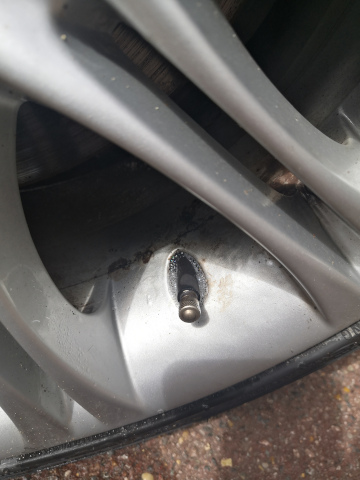
Using the puller tool to rotate the stem didn't produce a non-leaking position. When the tool is pulled, the problem is immediately apparent: the stem is very easy to stretch, having the mechanical characteristics of silicone. No way this could handle any meaningful amount of air pressure.
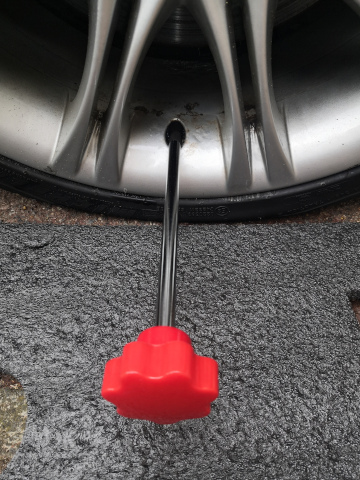
The valve stem is extracted using the earlier described technique. While over excited, I accidently dropped the garden wire and old stem base into the wheel. These are fished out using another wire with a magnet attached. A mini bulb is lowered in to help positioning the rescue.
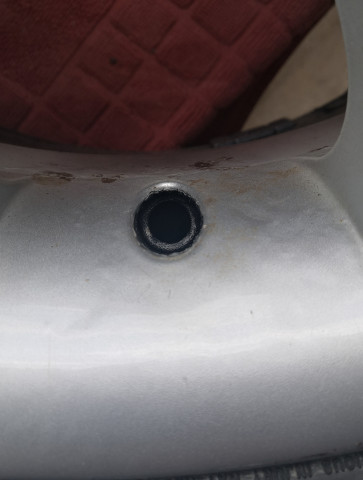
The hole is cleaned up, removing flaking paint and aluminium corrosion. Then it is given a coat of tyre sealant which cures in 5 seconds.
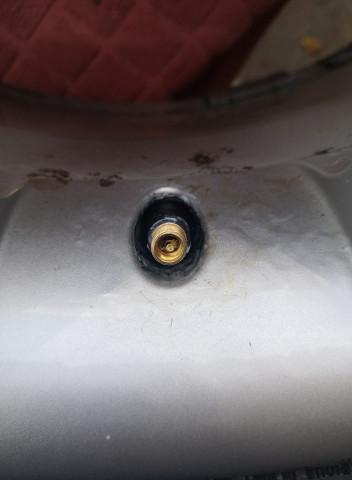
New china brass-tubed stem is installed using earlier describe technique. Has confirmed no more leaks. The china stem has substantially stiffer rubber, which is how it should be according to my gut feelings.
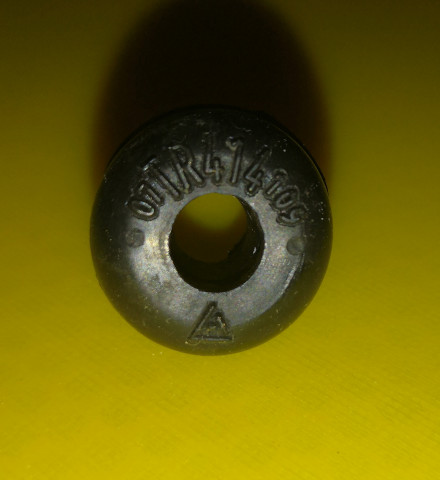
Here's is the base of the leaking stem. The markings are "07 TR414 109". Can anyone identify?
After a complete inspection, my regular wheel is confirmed to leak only at the valve stem surround.
Using the puller tool to rotate the stem didn't produce a non-leaking position. When the tool is pulled, the problem is immediately apparent: the stem is very easy to stretch, having the mechanical characteristics of silicone. No way this could handle any meaningful amount of air pressure.
The valve stem is extracted using the earlier described technique. While over excited, I accidently dropped the garden wire and old stem base into the wheel. These are fished out using another wire with a magnet attached. A mini bulb is lowered in to help positioning the rescue.
The hole is cleaned up, removing flaking paint and aluminium corrosion. Then it is given a coat of tyre sealant which cures in 5 seconds.
New china brass-tubed stem is installed using earlier describe technique. Has confirmed no more leaks. The china stem has substantially stiffer rubber, which is how it should be according to my gut feelings.
Here's is the base of the leaking stem. The markings are "07 TR414 109". Can anyone identify?
Last edited:


