
Plug in solar

I was thinking of getting ours converted to work off grid - would seem daft to be sitting here in the dark dring a power cut with 20 solar panels and two full batteries - but that is exactly what would happen. and in an ever more uncertain world with a more uncertain climate - we cant rule out power cuts
At what cost? My inverter was designed to have an EPS system, so all it needed was a SWA from the inverter outside house to kitchen. Very little extra cost.

But to fit a new inverter to get an EPS, that's not cheap. So one of these 1787994048577.pngmay be more valve for money, not looking at that one in particular, 1500W AC Input, Full Charge in 56 Minutes, 1800W output, 3600W surge beyond limits is what it says, a new 3.2 kWh battery for my solar is nearly £1000 well more fitted.
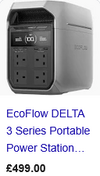
Be it with or without direct solar input, one shown will take 1000 watts of solar, the rub comes, how do you connect that output to the home?

Well before we moved, I looked at the idea of EPS, (EPS basic same as UPS, but the change over is a little slower) lights is easy enough to remove from consumer unit, and plug them into a socket wired from where the lights were fed, so you can move all lighting to be supplied from the EPS. But, I have an 8 bulb chandelier in living room, so 50 watt for just one light, do I want so much light in a power cut? And the socket circuits could need more than the inverter can give.

So the question is, what would you run from an EPS? We have just central heating and freezers, we have a spare socket, so an extension lead with an up-lighter would be quick and easy, but the old battery pack Battery pack and charger.jpg only 300 watt output, but it would run an up-lighter with a 12 watt bulb for 12 hours, so why run cables or mess around with EPS?
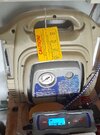
It could recharge from car or the spare 13 amps EPS socket, so how far do we go to give emergency light?

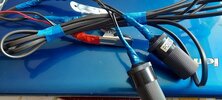
I have batteries removed from cars, not good enough to run a car any more, but will power a light, and a mobility scooter with 2 x 35 Ah lead acid batteries, so a simple lead, Emergancy power kit.jpg croc clips to cig lighter sockets, will charge phones with the car USB adaptor, and run anything which would work in the car.
I would like some more emergency torches, the type which auto light with a power cut, but to date, had power cuts, but not long enough to have needed the EPS for freezers.

We have a suitcase type camping gas stove, and all in all, that would be the biggest problem, we also have a single ring induction hob at 2 kW, which would run off our existing EPS.

So the biggest problem, is to find them in a power cut.

I could switch off the front of house sockets, at the double pole RCBO, and make a widow maker extension lead EPS to front of house sockets, but I have no intension of doing that. In the main, as knowing me, I would forget to turn something off.
 
Eric, just to clarify, what does EPS mean? I imagine it might mean Emergency Power Supply as in say a seperate lighting circuit or 3 to act similar to an Emergency light in a power cut but perhaps with manual or say PIR switching etc of some type.
I might be wrong though (it has been known)
 
I was thinking of getting ours converted to work off grid - would seem daft to be sitting here in the dark dring a power cut with 20 solar panels and two full batteries -
A friend of mine had exactly that situation when the pole route was demolished, he tried hooking a cheap modified sine wave inverter into the system and it was enough fool the PV inverter.
but that is exactly what would happen. and in an ever more uncertain world with a more uncertain climate - we cant rule out power cuts
 
I see my inverter has an unused EPS port, and from the data sheet it is capable of ultra fast switch over (<10ms) and can handle 3600w

presumably they would need a dedicated circuit (hence linked back to the fuse box ?) but even a 13a outlet from the inverter would be pretty useful! probably need a dedicated earth ?
 
So I was thinking of getting Anker solar bank 4 with extra battery storage , yes I know they are not legal yet as plug in.

Then I realised if I were to get 15 kw of battery storage with it in total for I think £4,500 which includes inverter .

Sell 10KW back to the grid a day at 29.32 pence per KW at peak hours rate I could get paid back £1,069 per year

Minus any additional top up required at night at 8 pence per KW .

So I could then as it would need to be officially plumbed in increase my panel count so I wouldn’t have to import as much to top up up the batteries make more money .

It’s now spiralling out of control , I’m now thousands more out of pocket and even more unsure of my numbers.


Lol
 
Seems pretty straightforward to me, one household is one that is fed from one supply with one consumer unit.

The hugely insurmountable problem with your straightforward idea is that unless specifically redefined, 'household' means people. It has no meaning whatsoever which involves a building, or part of a building, except insofar that living together (somewhere) is what makes a group of people a household.

If you want to adopt an incorrect definition because to you it seems more straightforward than the real one, there's not much anybody can do, but you thinking that an incorrect one is straightforward does not magically make it correct.


Many laws have different definitions for the same words and phrases, it depends of what the law is intended to regulate.

It depends on two things:

1) Does the law or regulation provide its own special definition of a word, or
2) Has there been a court case to rule on what the definition is.

If neither, then the word has its dictionary meaning. It cannot be otherwise.

The Plug-in Solar Device Interim Product Specification tried to redefine "household", but failed to do so successfully because they used words and phrases which they did not redefine, and which were mutually incompatible.

In short the definition of "household" in the Plug-in Solar Device Interim Product Specification is, quite literally, meaningless.
 
The hugely insurmountable problem with your straightforward idea is that unless specifically redefined, 'household' means people.
I disagree, the definition doesn't mention people. It tells you what it means.
If you want to adopt an incorrect definition because to you it seems more straightforward than the real one, there's not much anybody can do, but you thinking that an incorrect one is straightforward does not magically make it correct.
And your belief that I'm incorrect doesn't make make it that way.
It depends on two things:

1) Does the law or regulation provide its own special definition of a word, or
2) Has there been a court case to rule on what the definition is.

If neither, then the word has its dictionary meaning. It cannot be otherwise.
Don't necessarily disagree with that.
The Plug-in Solar Device Interim Product Specification tried to redefine "household", but failed to do so successfully because they used words and phrases which they did not redefine, and which were mutually incompatible.

In short the definition of "household" in the Plug-in Solar Device Interim Product Specification is, quite literally, meaningless.
I've got no issue with you holding that view, but I don't agree.
 
It’s now spiralling out of control , I’m now thousands more out of pocket and even more unsure of my numbers.

And the more panels you have, the more you move away from plug-in, the harder it is for you to take the kit with you if you move house, so even if someone is young enough to consider an investment with a payback period of many years, possibly into decades (with a looming cost of battery replacement), unless you know you'll not move home for decades, your investment is toast.

Your buyer will thank you for it though.
 
And the more panels you have, the more you move away from plug-in, the harder it is for you to take the kit with you if you move house, so even if someone is young enough to consider an investment with a payback period of many years, possibly into decades (with a looming cost of battery replacement), unless you know you'll not move home for decades, your investment is toast.

Your buyer will thank you for it though.
What's to stop him taking it with him?
 
I disagree, the definition doesn't mention people. It tells you what it means.

No, it doesn't, because what it says, given that it uses other words which it does not redefine, is without meaning.


And your belief that I'm incorrect doesn't make make it that way.

It's not a "belief", it is a fact. "Household" means people, no matter how much you try to pretend otherwise.


Don't necessarily disagree with that.

Good.

So please tell us, in this:

A single dwelling unit with its own electricity supply and consumer unit. In buildings containing
multiple dwellings (e.g. blocks of flats, converted houses), each dwelling with its own consumer
unit is treated as a separate household


what is a "dwelling" or "dwelling unit"?


I've got no issue with you holding that view, but I don't agree.

Some people do not agree that the world is roughly spherical.

Some people do not agree that the trails left at altitude by aircraft are just condensation from jet engine exhaust.

Some people do not agree that it was planes flying into them which caused the World Trade Center towers to collapse.

Some people do not agree that Apollo astronauts landed on the moon.
 
I`ve just had a quick read thru of "Plug-in Solar Device Interim Product Specification Version 2.0, July 2026 Technical and safety requirements for plug-in solar photovoltaic devices" , it mentions "Qualified Electrician" but I can not see any definition of one, how do we interpret that term?
 
what is a "dwelling" or "dwelling unit"?
A building with one electricity supply and consumer unit.

"Household" means people, no matter how much you try to pretend otherwise.
But it simply doesn't in these regulations, it tells you what it means. It doesn't mention people, I quoted the definition. You may not like the wording and I'm not sure how you would now go about getting it changed.

The regulations/product specification are incorporated into law and are intended to ensure electrical safety in the installation and use of plug in solar. It means that only one installation is permitted per electrical supply and consumer unit. It is to stop overloading of existing circuits/installations. The number of people is irrelevant, it makes no difference.

There are laws where it is absolutely relevant and makes a difference. But not for plug in solar.
 
I`ve just had a quick read thru of "Plug-in Solar Device Interim Product Specification Version 2.0, July 2026 Technical and safety requirements for plug-in solar photovoltaic devices" , it mentions "Qualified Electrician" but I can not see any definition of one, how do we interpret that term?

We can't. We can try to guess what the idiot who wrote it thought they were trying to do, but in terms of a official standard/specification it's another f-up, because there is no legal definition of "qualified electrician" in the UK. There is for "competent person", but the idiot probably doesn't know that.
 
A building with one electricity supply and consumer unit.

Where does it say that?


But it simply doesn't in these regulations, it tells you what it means.

No, it does not. It cannot, because it forms sentences using words which when you look at their definitions make the sentences nonsensical.


It doesn't mention people, I quoted the definition.

It's not a "definition". It's something which an idiot thought was a definition.


You may not like the wording and I'm not sure how you would now go about getting it changed.

I very much doubt that any of the idiots have the slightest interest in fixing it.


The regulations/product specification are incorporated into law and are intended to ensure electrical safety in the installation and use of plug in solar. It means that only one installation is permitted per electrical supply and consumer unit. It is to stop overloading of existing circuits/installations.

Oh, so now we have "installation" do we.

What is an "installation"? How and where is it defined?

The number of people is irrelevant, it makes no difference.

Well then maybe the idiots shouldn't have used a term which only means people.


There are laws where it is absolutely relevant and makes a difference. But not for plug in solar.

There are only two ways to use words/terms/phrases.

1) According to what they officially mean without modifications.

2) According to what they mean courtesy of a special definition to be used within a limited context.
 

If you need to find a tradesperson to get your job done, please try our local search below, or if you are doing it yourself you can find suppliers local to you.

Select the supplier or trade you require, enter your location to begin your search.


Are you a trade or supplier? You can create your listing free at DIYnot Local

 
Back
Top