Bedroom insulation

Joined
4 Jan 2026
Messages
8
Reaction score
0
Country
United Kingdom
Hi all,

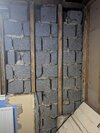
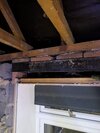
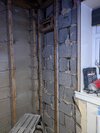
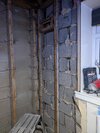
This is a block - cavity - brick wall that's facing outside (photos attached).

The depth of the studs is inconsistent, 80% of it is 35-40mm, closer to the ceiling there are a few spots of 15-25mm.

1. What would be the best option to insulate it?

PIR and just shave of the back to make it fit or something else?

2. If I have space, could I combine the PIR between the studs with an insulated plasterboard on top?

3. Also, can I fill the gaps between blocks with expanding foam for better insulation or should I put some mineral wool in there?

Thanks
 

Attachments

  • PXL_20251230_194912791.MP.jpg
    PXL_20251230_194912791.MP.jpg
    353.8 KB · Views: 32
  • PXL_20251230_194904311.MP.jpg
    PXL_20251230_194904311.MP.jpg
    446.5 KB · Views: 32
  • PXL_20251230_194939784.MP.jpg
    PXL_20251230_194939784.MP.jpg
    199.6 KB · Views: 32
If space, to make a noticeable gain I’d deffo go with more like 50-100mm PiR, framed/trapped to existing battens/masonry with battens then normal plasterboard rather than bothering with insulated board.

Edit: just zoomed in on the photos, what the hells going on with that blockwork !
 
So increase the depth of the studs by adding battens to the existing ones and just plasterboard on top of it?

What about the existing gaps between blocks? Should I use expanding foam or put some mineral wool in there?

Yeah, that block work is crazy...
 
Assume that’s a timber frame with block infill?

There’s loads of ways you could do it, could start again with a 2x2 frame with say 50mm PIR behind it and screwed through into the existing studs. Then another 50mm layer between the new battens. That’d be pretty easy but lose you at least 100mm. Or you could put PIR between the existing studs and go from there. Or several other combos along similar lines. And dependent on how plumb the existing studs are

If it’s a timber frame, assume you’d want a moisture barrier also.
 
Assume that’s a timber frame with block infill?

There’s loads of ways you could do it, could start again with a 2x2 frame with say 50mm PIR behind it and screwed through into the existing studs. Then another 50mm layer between the new battens. That’d be pretty easy but lose you at least 100mm. Or you could put PIR between the existing studs and go from there. Or several other combos along similar lines. And dependent on how plumb the existing studs are

If it’s a timber frame, assume you’d want a moisture barrier also.
That's correct, it's a timber frame with block infill.

Because of how bad that blockwork is, the depts of the frame is smaller in certain places, can I shave off the back of PIR so that it fits flat?


What about the existing gaps between blocks? Should I use expanding foam or put some mineral wool in there? Some of the gaps are huge.
 
Foam gaps - yes
Shave PIR - I wouldn’t, as I said above, just do it in such a way as that’s not needed
 
Foam gaps - yes
Shave PIR - I wouldn’t, as I said above, just do it in such a way as that’s not needed
The problem with that is the radiator, it's relatively close to the wall.

Do you think it would be okay to "bend" as in pull the water pipe away from the wall that goes to the radiator by 2cm? It's relatively loose?

Don't really want to drain the whole system right now and modify the pipes.
 
pretty unlikely, better doing it properly and re-piping it. And surely you want to be moving it out more than 2cm based on the above?
 
pretty unlikely, better doing it properly and re-piping it. And surely you want to be moving it out more than 2cm based on the above?
The current depth of the studs is around 4cm so If I were to add 2cm battens on top, that would allow me to fit 50mm PIR. The room was not cold before, I just thought I'd add some more since the plasterboard is removed.

That's why I thought temporarily, for the winter, if I could just move the pipe slightly by around 2cm, and once we stop heating, I'd get it re-piped properly.
 
You could try, just make sure it’s not near a joint which could break and cause an involuntary drain down…
At a push could also just remove rad and work around the pipes and make good when it does get redone
 
You could try, just make sure it’s not near a joint which could break and cause an involuntary drain down…
At a push could also just remove rad and work around the pipes and make good when it does get redone
One more question if you don't mind.

The party wall between me and my neighbour is made of concrete slabs, not sure if there's a gap between us.

It's concrete studs with timber battens on top of it.

The depts is 120mm and I will use 100mm of mineral wool.

Since it's a party wall and we're both heating our houses, would I need a VCL on top of the mineral wool? I will leave a 20mm gap between the mineral wool and the concrete.

You can see the wall on the left in the photo attached.

Thank you for all your help.
 

Attachments

  • PXL_20251230_194912791.MP.jpg
    PXL_20251230_194912791.MP.jpg
    353.8 KB · Views: 8
Not sure what you mean by concrete slabs and concrete studs, but if it’s a party wall, forget vapour barriers or thermal insulation and focus on dense acoustic rockwool stuff.
 
The frame
Not sure what you mean by concrete slabs and concrete studs, but if it’s a party wall, forget vapour barriers or thermal insulation and focus on dense acoustic rockwool stuff.
The wall itself is concrete, it's an older house that was bricked later on but the wall between us I believe is just concrete.

The frame into which the mineral wool will go is also concrete with timber battens on top of it, you can kinda see it on the photo on the left side.

So no need for a vapour barrier? Even at the edge of the ceiling that goes into the loft?
 
You don’t need a vapour barrier on a party wall.
Whether you need one on the external walls may be up for debate, but from what I understand/can see, if I was doing it, I’d staple one up before adding the plasterboard.
 
You don’t need a vapour barrier on a party wall.
Whether you need one on the external walls may be up for debate, but from what I understand/can see, if I was doing it, I’d staple one up before adding the plasterboard.
Since I'll be using PIR on the external wall, I will tape joists.

Thank you for your help.
 

If you need to find a tradesperson to get your job done, please try our local search below, or if you are doing it yourself you can find suppliers local to you.

Select the supplier or trade you require, enter your location to begin your search.


Are you a trade or supplier? You can create your listing free at DIYnot Local

 
Back
Top