Brass to copper solder?

Joined
17 Feb 2006
Messages
389
Reaction score
4
Country
United Kingdom
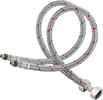
Don't ask why, but can I solder this:

https://directplumbingsupplies.com/...MI_47fyKzWkwMVuZxQBh22GgM_EAQYGiABEgJZDvD_BwE

Into a 15mm straight copper coupler. I assume the outside diameter is the same as 15mm copper pipe, as it says it's designed to go into an isolating valve.

Somewhere somebody says brass takes a bit more heat. But I've got a good Rothenburger gun, with the "wrap around" guard thing. And I can do this away from the actual job, so don't have to worry about scorching anything.
 
Somewhere somebody says brass takes a bit more heat. But I've got a good Rothenburger gun, with the "wrap around" guard thing. And I can do this away from the actual job, so don't have to worry about scorching anything.

Brass is just as easy as copper pipe and fittings, to solder. It just has more thermal mass, and so needs more heat to be applied. When joining copper to brass, it can help to tin the brass first, and once tinned, concentrate most of the flame on the brass part, rather than the copper.
 
Why not buy a flat faced iso valve?
Yes, that's a possibility too. Though one end needs to be 3/8" (which are available). But there's a really strange 1/2 to 3/8 adaptor scarcity thing going on, or else I don't understand (which is a possibility).
 
What are you trying to do? Is this just to put 3/8" tap flexi's onto 15mm hot and cold feeds? If so the brass 3/8" adapters you have linked to fit into a standard 15mm ISO compression valve, nothing else needed.
 
What are you trying to do? Is this just to put 3/8" tap flexi's onto 15mm hot and cold feeds? If so the brass 3/8" adapters you have linked to fit into a standard 15mm ISO compression valve, nothing else needed.
Yes.

The new tap hasn't arrived yet, so although a benefit of decent quality German kit (read, expensive!) is that there are good dimensional drawings and instructions available before one buys, it's still good practice to have the thing in my hands and see exactly how/if it will fit, yes?

So:

1. The manufacturer claims the flexi tails are 900mm long.

2. That would, or could, take them under the bottom shelf of the cabinet, into the 6 inch void below.

3. A plus of that is that any leaks/bursts will happen where they will do far less damage. The kitchen has a suspended floor, so most water would end up below the floor.

4. If I do connect it inside the cabinet (under the sink) the pipework actually gets quite a bit more complicated. Or at least messy, as the flexi tails are probably "too long". If I try and keep them inside the cabinet there has to be way more plumbing inside the cupboard under the sink, danger of bashing, lots more notches to cut out of the shelf, etc. etc.

5. So I'm tempted to have everything underneath. This also ties up with a re-arranged dishwasher connection, by the way.

6. But that's a bit awkward when it comes to tightening up compression joints. And anyway, every compression joint is another potential leak. I shy away from them if possible. Sometimes that makes things harder, as I don't have many isolation valves around the house. But that's just me. Sometimes I regret that.

7. So I'm planning (at this stage) to do as much as I can in soldered copper, all of which can be done on the bench away from the job. The other joints would be pushfit Hep2o lever isolation valves, a pair of pushfit Hep2o elbows (to join to existing Hep2o) and the two screw on 3/8 flexi tap connectors themselves. The 3/8 x 15mm adaptors could go directly into the iso valves, yes. But probably not in a convenient or elegant way. They might end up being in a place with some lateral strain on the compression joint, not good.

But as I say, things will become clearer once the tap arrives.

PS. NONE of my compression joints has ever leaked, except in the initial stages - you know, gradually nipping it up until it stops. But I still don't like them. Most of mine have been on the CH, but I have some on the supply, which have never leaked, and it's 5 bar mains pressure here. Though thinking about it they are nearly all under the house - maybe I should lift the trap and have a look, for all I know it's a swimming pool under there!

 
Last edited:
4. If I do connect it inside the cabinet (under the sink) the pipework actually gets quite a bit more complicated. Or at least messy, as the flexi tails are probably "too long". If I try and keep them inside the cabinet there has to be way more plumbing inside the cupboard under the sink, danger of bashing, lots more notches to cut out of the shelf, etc. etc.

5. So I'm tempted to have everything underneath. This also ties up with a re-arranged dishwasher connection, by the way.

6. But that's a bit awkward when it comes to tightening up compression joints. And anyway, every compression joint is another potential leak. I shy away from them if possible. Sometimes that makes things harder, as I don't have many isolation valves around the house. But that's just me. Sometimes I regret that.

Why? Just make a pig tail of the flexies, and take the copper up higher, where you can work on it more easily, and keep an eye on it for leaks. Leaks are more likely from the flixies, as they get older, than the copper.
 

If you need to find a tradesperson to get your job done, please try our local search below, or if you are doing it yourself you can find suppliers local to you.

Select the supplier or trade you require, enter your location to begin your search.


Are you a trade or supplier? You can create your listing free at DIYnot Local

 
Back
Top