Building insurance and cracks?

Joined
8 Jun 2013
Messages
830
Reaction score
138
Location
Gloucestershire
Country
United Kingdom
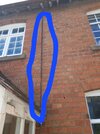
My parent's house has settlement cracks. There's a fairly decent one between the main house and the full height extension and others, below the windows of the extension etc. These are all historic as far as we can tell. They were present when I lived there as a youngster some 40+ years ago. We had ivy shoots growing through into the bedroom at one point, I remember. Long since filled in. I don't think things have gotten worse over the years.
For insurance purposes can these be ignored? Or, declared as 'settlement' even as historic? I don't think it would be classed as subsidence. It's certainly not falling down around our ears.
Thanks
 
If they have not been repaired you are giving the insurance company a reason to say the building has not been properly maintained and reject any claim that is made.
 
Patch them up. Mine has a 4mm crack top to bottom because the extension settled. I had a local structural engineer put it in writing that it's historic so I'll be grouting it up and painting it in the spring. My insurance company already does me up the chute for premiums so I'm not giving them an excuse to charge me more.
 
Settlement occurs within the first few months after construction, and are common and may not be an insured risk

You need to determine the cause of the cracking and check this against the policy schedule of what is covered.

And as these are pre-existing they would need to be declared at the start of each policy proposal and would likely be excluded from cover whether declared or not
 
I think it's movement due to clay.
It's an 1890s semi with extension built in 1964 I believe, they moved-in in 1960. The long vertical join / crack was there when I was young in the 70s. It hasn't gotten any worse.
In all reality we're not going to be getting anything 'repaired'. My mother is 91, on her own and doesn't want any disturbance with builders etc. I'm sorting her insurance for her to remove any stress.
The cracks do not get any worse year on year, they just seem to be there. I suppose what I am asking is, for the correct definition of them for when making any declaration on the insurance forms.
 

Attachments

  • 20220831_121338.jpg
    20220831_121338.jpg
    328.1 KB · Views: 17
  • 20220831_121333.jpg
    20220831_121333.jpg
    347.6 KB · Views: 17
I think it's movement due to clay.
It's an 1890s semi with extension built in 1964 I believe, they moved-in in 1960. The long vertical join / crack was there when I was young in the 70s. It hasn't gotten any worse.
In all reality we're not going to be getting anything 'repaired'. My mother is 91, on her own and doesn't want any disturbance with builders etc. I'm sorting her insurance for her to remove any stress.
The cracks do not get any worse year on year, they just seem to be there. I suppose what I am asking is, for the correct definition of them for when making any declaration on the insurance forms.
The vertical crack is expected and is a differential movement crack - usually alleviated with (polysulphide) mastic.

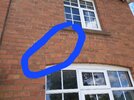
The one above the window likely occurred when the windows were swapped from a load bearing, sturdy mullioned, wooden window, to the placcy one you see there. The shallow arch and window above doesn't help. It's probably settled as much as it's going to, unless the walls start pushing out sideways.
 
The vertical crack is expected and is a differential movement crack - usually alleviated with (polysulphide) mastic.

The one above the window likely occurred when the windows were swapped from a load bearing, sturdy mullioned, wooden window, to the placcy one you see there. The shallow arch and window above doesn't help. It's probably settled as much as it's going to, unless the walls start pushing out sideways.
Brilliant! That gives me some reassurance. Thank you.
 
I suppose what I am asking is, for the correct definition of them for when making any declaration on the insurance forms.
As a lay person you would not be expected to know what they are called or caused by other than it being "a crack". You could elaborate with hairline/narrow/wide or suchlike or give dimensions, but you would be wise to avoid that level of detail. And avoid speculation on the cause too. They are just cracks to you.

FWIW, one is vertical abutment mortar cracking, the other is a stepped mortar cracking.

The vertical one is common where buildings meet and from movement mainly sideways due to contraction shrinkage in the wall. But there does appear to be some downward movement too - which again would be common as the houses appear to have been built independently.

The stepped cracking is likely the same cause in the absence of any other cracking further along or around the corner. Wall contacted, causing the opening to widen and the arch drop.

There are other potential causes, but more detail and investigation would be needed.
 

If you need to find a tradesperson to get your job done, please try our local search below, or if you are doing it yourself you can find suppliers local to you.

Select the supplier or trade you require, enter your location to begin your search.


Are you a trade or supplier? You can create your listing free at DIYnot Local

 
Back
Top