
Hotels of course have a 'ring'. Where water is constantly pumped around the ring and back to the tank. Rooms are then feed off the ring, so it doesn't take too long to get hot water.
Then it is well worth/essential to insulate the ring.

Hotels of course have a 'ring'. Where water is constantly pumped around the ring and back to the tank. Rooms are then feed off the ring, so it doesn't take too long to get hot water.
That's a lot closer to my situation here - roughly 8 pints before it starts to get warm and 10 pints or so to get hot.I had to try, 6 pints before it started to get warm, 8 pints before hot at the front kitchen sink. Not that it makes any difference as my dishwasher is cold fill.
I guess new builds at the time put the heating device/storage in the middle of the building.


Total DHW in summer is around 12 kWh per week, at the most this costs me 15p/kWh in lost revenue, assuming using electric for ½ the year I spend less than £50 per 6 months on DHW, so no way would I lift the floor to insulate pipes.The only 'advantage' of lagging the DHW pipework would be to avoid 'wasting energy' when hot water was used (by taps, showers etc.) during the Summer months, and that is likely to be fairly trivial - certainly not enough to justify the time, effort, cost and disruption that lagging the pipes would involve.
When I moved into my present house, I inherited such a system, mostly plumbed with massive (about 2" OD) steel pipes (the pipes I imagine installed some time in the early 20th century), constantly pumping water (heated by a coal-fired boiler) all around the very large house.Hotels of course have a 'ring'. Where water is constantly pumped around the ring and back to the tank. Rooms are then feed off the ring, so it doesn't take too long to get hot water.

Indeed. As I've just written, it's certainly not something I would bother to do, even if I had reasonable access to the pipework.Apart from a m or so where it's boxed in, I have access right now to the entire 7-8m run of 15mm from combi to kitchen tap. ... Unfortunately I don't think I have any lagging, and given the 1,000,001 jobs of actual importance I have to do, I wouldn't have the time even if I did have the materials
In Summer, yes.Then it is well worth/essential to insulate the ring.
This can't happen with my house, the front kitchen and back kitchen are quite a distance apart. And a bathroom on all three levels.Our HW cistern, is adjacent to the bathroom (airing cupboard), directly over the kitchen, 2nd toilet alongside it, then utility just beyond - so the longest pipe run is to that utility. So all the hot outlets, at the rear.
Total DHW in summer is around 12 kWh per week, at the most this costs me 15p/kWh in lost revenue, assuming using electric for ½ the year I spend less than £50 per 6 months on DHW, so no way would I lift the floor to insulate pipes.
That's very close to eric's "£50 per 6 months".Our gas HW use, costs (ignoring standing charge) around £2 per week ....
I'm not sure that "ignoring standing charge" is necessarily appropriate, given that I think many/most people are paying over £120 per 6 months for that!
Exactly (although 30p per day is pretty low - less than half of what I'm paying). I realise that there's nothing you can do about it (if you want electricity at all, but the cost of electricity consumption (as well as other things) is presumably 'rolled into' the standing charge, so one probably should take it into consideration when talking/thinking about the 'cost' of electricity consumption.Even with zero consumption, I would be paying 30p per day, £2.10 per week, £109 per year.
As said, same as my costs,Our gas HW use, costs (ignoring standing charge) around £2 per week, including baths every alternate evening, at 5/6p per Kw.
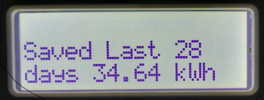 = 18.5571p per day = £1.29 per week, but I don't include baths. We take showers. I am also not including electric standing charge, which is fair, as I could not do without electric. And I suppose you can't do without gas as used for other things.
Exactly (although 30p per day is pretty low - less than half of what I'm paying). I realise that there's nothing you can do about it (if you want electricity at all, but the cost of electricity consumption (as well as other things) is presumably 'rolled into' the standing charge, so one probably should take it into consideration when talking/thinking about the 'cost' of electricity consumption.

And I suppose you can't do without gas as used for other things.

If you need to find a tradesperson to get your job done, please try our local search below, or if you are doing it yourself you can find suppliers local to you.
Select the supplier or trade you require, enter your location to begin your search.
Are you a trade or supplier? You can create your listing free at DIYnot Local
