• Looking for a smarter way to manage your heating this winter? We’ve been testing the new Aqara Radiator Thermostat W600 to see how quiet, accurate and easy it is to use around the home. Click here read our review.

Damp on hidden fireplace

Joined
7 Sep 2025
Messages
4
Reaction score
0
Country
United Kingdom
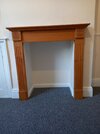
Hello, I've bought a flat and it has three hidden fireplaces. All of the walls are freshly boarded and plastered and the walls look quite thick. I didn't know there were fireplaces until taking the flooring up and seeing the hearths.
I've also now noticed a damp patch at the base of one of the fireplaces, not on the face of it but on the side, and just one side. It's about a 20cm tall patch.
I've been reading about the fireplaces needing to be vented but have no idea if these were and have no access to the floor above (I'm in the ground floor flat of the house). There are chimney stacks and the surveyor recommended that they get capped and have flashing repaired.

So I'm wondering if I should just drill a few holes into the damp patch to see what's behind the plasterboarded walls, or just go into the face of the fireplace and see from there.

What would people recommend?

I can't see damp around the other two fireplaces (which are either side of the same wall) but should I drill into them anyway?

I'd like to avoid having to do too much work, if I open up the plasterboard and there is an airbrick, would it be a matter of just putting a vent on the plasterboard?
 
I believe that they normally need to be vented on the ground floor.

Often, the original opening is faced with plasterboard. If so you could use a pad saw to cut an opening and then fit a grill over it. Ideally, the chimney pots would have caps over the top to allow air flow but minimise rainfall downwards.
 
I suspect as your surveyor says re the chimney's needing capping. It's likely that rain is getting down inside. The good news is that they are open to the air. I'd cut a hole and fit a vent grill. If you're really concerned about the physical water coming down then you could get up inside the opening and fit a 'baffle' plate of some sorts. This would soak up the direct rain drips and then hopefully dry out before the next shower. Alternatively, arrange with the free-holder to have the chimneys either capped fully or have large shrouds / covers added so that the rain does not blow in.
 
You could fit the vent on the side of the chimney breast as then it would be out of direct sight?
 
You could fit the vent on the side of the chimney breast as then it would be out of direct sight?
I think the problem there is that he will have to go through possibly 2 thickness of bricks whereas on the front it will just be plasterboard.
 
I think the problem there is that he will have to go through possibly 2 thickness of bricks whereas on the front it will just be plasterboard.
Alternatively, remove the plasterboard front and see what's behind. You may find that the existing Victorian fireplaces are still there and you could make them a feature or,even if already removed, you could face the opening's sides with board (I've just used plywood in the past) and then paint, carpeting right into the fireplace. I fit a 'ceiling' to the opening and the vent goes in there, out of sight.
 

Attachments

  • 20250107_144035.jpg
    20250107_144035.jpg
    314.6 KB · Views: 15
Poster #8,

One would not "need to include some sort of baffle".

Have you previously suggested installing baffles in flues or covering vents "to stop dirt, dust and debris" - or for any other reason? What kind of baffle would you use?
 
Only a fool, would install a vent horizontally, at the base of a chimney, without some sort of baffle to deflect dust and debris. It would lead to a constant problem of having to clear up the mess which comes down through the open vent. All it needs, is a simple thin metal plate, or panel, located over the vent, to deflect it.
 
Only a fool, would install a vent horizontally, at the base of a chimney, without some sort of baffle to deflect dust and debris. It would lead to a constant problem of having to clear up the mess which comes down through the open vent. All it needs, is a simple thin metal plate, or panel, located over the vent, to deflect it.

Agreed. In time the old soot will fall through it (in the absence of a baffle).
 
I did similar and inserted a wine rack and for a baffle at to top I used one of these, or actually I think I used just the top half so it went up and a 90 degree turn. In the picture the grid end was down and actually has a flange. Looks really neat if you stick you head in and look up.
Screenshot_20250910-153712.Chrome.jpg
 
Last edited:
Once you've made sure the chimneys are capped with vented cowls (if they're not, a lot of water will be coming in - think how much rain accumulates in a bucket left outside) and then read this from a damp specialist company https://www.tracebasementsystems.co.uk/post/damp-chimney-breasts

Ventilation can work, but only if no part of the chimney is colder than the dew point of the air you are letting in. You can use a hit/miss vent and take the time and trouble to assess whether there is a condensation risk at that time and open/close the vent accordingly, but on balance because the dew point of room air is about 12 degrees, and the loft/top of chimney is very often colder than this, you have to be very careful with through-flow ventilation because you can introduce more problems than you solve. If it's 15 degrees or warmer outside, yes, ventilate, but if it's not, then don't.

The best place to ventilate a chimney for through-flow is to outside, because the air being drawn in is already at ambient temperature, and as there is no scope for further cooling inside the chimney you won't get condensation.

To those who still persist in suggesting that bottom ventilating a chimney is always a good idea, I ask "why do we fit condensation traps at the bottom of vertical air extractor chimneys?".....https://www.extractorfanworld.co.uk/blogs/condensation-traps
 

If you need to find a tradesperson to get your job done, please try our local search below, or if you are doing it yourself you can find suppliers local to you.

Select the supplier or trade you require, enter your location to begin your search.


Are you a trade or supplier? You can create your listing free at DIYnot Local

 
Back
Top