
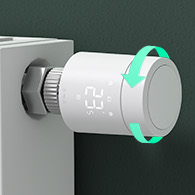
• Looking for a smarter way to manage your heating this winter? We’ve been testing the new Aqara Radiator Thermostat W600 to see how quiet, accurate and easy it is to use around the home. Click here read our review.

EV charger installation possible?

Joined
25 Aug 2013
Messages
41
Reaction score
3
Location
Yorkshire
Country
United Kingdom
Hi,

My partner lives in a 3 year old new build. She is looking to get an EV charger installed. I have an Easee One that's been removed from another house and would like to use this.

In the garage there is a square black wiring 'box' with a twin and earth cable that apparently goes back to the CU. The house was sold as 'EV charger ready'. I'm not sure of the size of the cable but it is definitely beefy. I'd be very surprised if it's not up to the job.

I've posted a picture of the CU below. Does there appear to be sufficient capacity to wire the charger in? I'll be getting an electrician in to do the job but just wanted to avoid any shocks (!) in terms of extra equipment/labour needed.

I did speak to an electrician informally and all they said was that they'd need to install EV Ultra cable back to the CU as you need the data cables for load monitoring. Is that necessary? I have an identical Easee One at my house and the electrician was fine installing it without any extra monitoring.

The heating is all gas. Usual high power devices on downstairs socket circuit are Microwave, toaster, kettle, instant hot water tap, washing machine, heat pump dryer. Hob is I believe ceramic (glass top, heats up red) not induction.

Thanks!
Ted

1763123606814.jpeg
 
1) You can't supply an EV from that consumer unit as it stands, as it does not have a dedicated RCD for the EV supply, and I would need to see if the RCD is bidirectional as well.
2) Monitoring the supply power use is not required if you have some other way to ensure it does not cause an overload, supplying the main consumer unit from a 60 amp fuse and both EV and main from a 100 amp fuse, would clearly mean there is 40 amp spare for the EV charger, as to if one can see there is always 32 amp to spare is good enough, is down to the installer.
3) One would assume if 80 amp RCD's are used, your supply is 80 amps or less, looking at right-hand side RCD.
4) One likely will want a low tariff to charge the EV with, and to get the low tariff suppliers like Octopus insist on doing the job of fitting the EV charging point to their spec. Which in the main means a dedicated consumer unit, even if yours could be used.

So I pay 8.5p/kWh for off-peak, 00:30 to 05:30, but my son pays 6p/kWh and also has charging outside the 5 hours, as Octopus can decide when his car is charged. I have an EV tariff, but not got an EV charge point, my battery is static and part of the solar panel set up.
 
Thanks for the reply, I have a few further questions though so will ask them below...

1) You can't supply an EV from that consumer unit as it stands, as it does not have a dedicated RCD for the EV supply, and I would need to see if the RCD is bidirectional as well.

The Easee one states that it has an internal RCD, does this mean a dedicated one would still be needed in the CU? https://easee.com/en/2023/02/this-is-how-our-rcd-works

2) Monitoring the supply power use is not required if you have some other way to ensure it does not cause an overload, supplying the main consumer unit from a 60 amp fuse and both EV and main from a 100 amp fuse, would clearly mean there is 40 amp spare for the EV charger, as to if one can see there is always 32 amp to spare is good enough, is down to the installer.

I guess any questions around this would depend on your answer to the previous question.

3) One would assume if 80 amp RCD's are used, your supply is 80 amps or less, looking at right-hand side RCD.

The meter fuse is 100A. Would the two 80A RCDs not each supply half of the circuits?

4) One likely will want a low tariff to charge the EV with, and to get the low tariff suppliers like Octopus insist on doing the job of fitting the EV charging point to their spec. Which in the main means a dedicated consumer unit, even if yours could be used.

I am on Intelligent Octopus Go at my own house and Octopus have never asked about the installation - in fact you can use that tariff with a granny charger as long as the car is IOG compatible. The switch from OG to IOG can be done instantly via the app as long as you have compatible EV or charger. Most chargers are not compatible.

So I pay 8.5p/kWh for off-peak, 00:30 to 05:30, but my son pays 6p/kWh and also has charging outside the 5 hours, as Octopus can decide when his car is charged. I have an EV tariff, but not got an EV charge point, my battery is static and part of the solar panel set up.
 
The RCD type units supplied in most (all?) EV chargers aren't compliant with the british standards because they're not a mechanical switch with a test button. So basically, you do have to have a RCBO but there's no reason you couldn't have one fitted to that CU (I'm not sure whether lewden make a single module double pole but you have 2 modules available regardless).

Looking at the loads on the CU, she has electric cooker, heat pump and immersion heater. Off the top of my head, anything less than a 100A supply (you should ask the DNO to confirm the fuse size) I'd be wanting load curtailment on the charger. However, there's no reason other than maybe aesthetics that an EV ultra cable would have to be run back to the consumer unit/meter box if an adequate power cable is already in the garage, any 2+ core data cable would suffice for the CT clamp.

I wouldn't read into the 80A RCDs - as you say they're only feeding half the board each and it's a maximum current rating, not any indication of design current.
 
... I would need to see if the RCD is bidirectional as well.

Umm...

With an RCD connected this way round, then for half of each cycle the current flows in the direction shown on the left, and for half of each cycle it flows in the direction shown on the right:

1763145918735.png


With the RCD connected the other way round, then for half of each cycle the current flows in the direction shown on the left, and for half of each cycle it flows in the direction shown on the right:

1763146015348.png


So, umm ...

What am I missing?
 
What am I missing?
In terms of those diagrams, nothing.

However modern RCDs contain electronics which are powered from the supply. it may be a requirement of the manufacturers spec that those electronics are disconnected when the device trips - which would not happen if a supply was connected to the 'load' terminals.
The test button would normally be disconnected when tripped, again this might not occur if the supply was connected to the other terminals.
Some RCDs require the presence of the supply voltage to operate. Others do not.

Whether they are 'bidirectional' or not is up to the manufacturer.
 
The rules changed, at one point it did not matter if the sum of the MCB's exceeded the size of the RCD if the DNO fuse was bigger, now it does.
Are you saying diversity isn't taken into account for that? If so that's news to me, and I wouldn't be surprised if other electricians have fallen foul of it (I would like some proof though).
 
Either the supply, or the total of distribution, should be below or equal to RCD size. I am not saying I agree with that, in my home I can look at the power used, 1763156801663.pngand I know nowhere near the 60 amp limit of the fuse, not that it matters as all RCBO, but in the main the 60 amp fuse is a left over from the days of the Wylex fuse box,
Wylex 60 amp.jpg
where the isolator was only rated at 60 amp.
 
@ericmark I know what you're saying, I don't think that's the case though. The design load of the entire installation can be taken into consideration rather than speculating that every single circuit is simultaneously being used to the brink of overload - otherwise the right hand RCD would be non-compliant on that basis alone.
There's no way of knowing what his supply is fused at without removing the fuse carrier and checking, which technically should only be performed by the DNO
 
The rules changed, at one point it did not matter if the sum of the MCB's exceeded the size of the RCD if the DNO fuse was bigger, now it does.

That makes no sense. In the "before now" scenario, what was being protected by the supply fuse?
 
If you had a circuit (the cut out itself is one circuit to the consumer unit?). Say for example 100 amps OPD.

A/ Then what would happen at 101amps?

B/ Then what would happen at 110amps?

C/ Then what would happen at 113amps?

D/ Then what would happen at 145amps?

E/ if it disconnects as intended then how long must that take?
 
There are two amp ratings on the RCD, one is its running amps, and the other short circuit amps. So if the loop impedance is 0.25Ω then 230/0.25 = 920 amps, so a RCD rated 6kA is OK, as it will handle that current without bursting into flames, for the short time it takes for the protection device (fuse) to open (rupture).

The running amps however is limited by two things, clearly an immersion heater of 3 kW will draw 13 amps even if we are using a 16 amp MCB, but the ring final and cooker can draw over 32 amps, and so in that case, the limit is the MCB size. But early cookers were under the 32 amp, so as we went to larger and larger cookers, we as electricians failed to realise the whole situation had changed, and we were fitting consumer units where the load could exceed the rating of the RCD.

A fuse as @ebee points out has a curve, and it does not fail at 110% of its rating until a long time has passed, the MCB has a different curve, we have B, C, and D type, the letter refers to the magnetic part of the trip, 3-5, 5-10, and 10-20 times the thermal rating, and is designed to trip with a short circuit, the thermal part is a lot slower.

The magnet part limits the amount of cable we can use, if a circuit is too long, then it may fail to trip with a short circuit, so 230/(32x5)=1.44Ω * 95% to give a safety margin then 1.37Ω, but we also must consider volt drop, for a ring final we assume 20 amp centre and 12 amp even spread, so with a 0.35Ω incomer, allowing for Correction factor Ct, we would be limited to 0.94Ω line - neutral which equates to 106 meters of 2.5 mm² cable. So in real terms, only when type C and D are used is the loop impedance limited by the MCB size.

There are other things like "let through current" with fuses, and clearly line - neutral and line - earth will not be the same with reduced earth sizes, but I would need to look that up, been a long time, so here endeth the first lesson.

But to sit down and do all the calculations is long-winded, and I know I have made errors using my slide rule working them out. So large firms are aware of the limitations of on site electricians, and tend to issue rules or guidelines to ensure their employees are unlikely to make an error.

So the likes of Octopus will tell their installers they must fit a dedicated CU for the EV charging point. And even if the existing CU has slots left for EV charging, they are not used. The rules with bidirectional equipment, and not binding the RCD due to other loads, which may have DC current flowing, are all taken care of by fitting a dedicated CU.

One could consider some of the things the likes of Octopus does as unfair trading, I know my son bought his EV from Octopus and all was installed by Octopus, and his tariff is lower as a result. Even as an electrical engineer, it was not worthwhile, installing the EV charging point himself.

If I had trained to fit EV charging points, I would be furious as this, as there is no way the sole trader can compete. But as an EV user, these packages are likely a good thing, as it stops untrained electricians doing the work. The same goes for the scams sorry schemes, which are designed to ensure electricians toe the line with domestic installations.

As an electrician most of my working life, I realised sole trading simply did not pay, unless in a specialist subject, like installing PLC's etc. Even back in 1980 I was earning £250 a week tax free, I was paying class 4 stamp, OK only got home every 8 weeks, but contract work has always been good pay, what I earned in Falklands, Hong Kong, Algeria and even in UK on second seven crossing and Sizewell 'B' would be hard to equal as a sole trader, so to find a sole trader that knows his stuff is hard, there are some good ones around, but finding them is hard.
 

If you need to find a tradesperson to get your job done, please try our local search below, or if you are doing it yourself you can find suppliers local to you.

Select the supplier or trade you require, enter your location to begin your search.


Are you a trade or supplier? You can create your listing free at DIYnot Local

 
Back
Top