Installing a 3pin integrated oven

Joined
13 Mar 2017
Messages
158
Reaction score
15
Country
United Kingdom
Hi, I'm thinking of remodeling my kitchen and moving the position of my cooker. I've seen some kitchen models that fit into wall units and hav a 3 pin plug. Does this mean I can plug it into a wall socket in another part of the kitchen? Any help would be grateful.
Regards Dave
 
If you mean moving an exsisting oven from one socket to another then yes you can do that. If you are buying a new oven once you have selected the make and model you like then download the manufacturers instalation instructions and follow those. But generally if the new oven comes with a plug attached then you should be able to plug it into a different socket in your kitchen
 
I don`t know if I`m the only one or not but a few times I have deliberately created a separate ci,rcuit if I know the istallations are to be used for such ovens, example one, two or three sockets in a kitchen where it is likely that such might be used.

That would be as an additional circuit to the remaining circuit for traditional kitchens which might be a dedicated ring or radial for kitchen only or for kitchen and likely lightly loaded places like bedroom(s).

That might be considered by some to be overkill though.

It also gives the advantage of being able to use some kitchen appliances if a kitchen circuit is down temporarily due to planned maintenance or faults too.

Obviously if we take this idea to wild extremes we`d have the absurd situation of an installtion with each circuit having only one point of utilisation, the cost would be enormous and one (maybe large room) area would be dedicted to switchgear and nothing else.

I have seen a few instances where a few such plug in ovens get plugged into standard circuits at any one time as well as two or three 2kw or 3kw fan heaters for more than occasional use.
 
Hi, I'm thinking of remodeling my kitchen and moving the position of my cooker. I've seen some kitchen models that fit into wall units and hav a 3 pin plug. Does this mean I can plug it into a wall socket in another part of the kitchen? Any help would be grateful.
Regards Dave
It’s definitely worth checking the cooker’s power requirements before moving it. Even if the appliance has a 3-pin plug, you should make sure the wall socket and circuit are rated for the load, and that the location meets the required kitchen safety and installation rules. Getting an electrician to check it before remodeling could save you from problems later.
 
It’s definitely worth checking the cooker’s power requirements before moving it. Even if the appliance has a 3-pin plug, you should make sure the wall socket and circuit are rated for the load, and that the location meets the required kitchen safety and installation rules. Getting an electrician to check it before remodeling could save you from problems later.
Here we go again...
 
It’s definitely worth checking the cooker’s power requirements before moving it. Even if the appliance has a 3-pin plug, you should make sure the wall socket and circuit are rated for the load,

Can you show us examples of BS1363 sockets which are not rated for 13A loads?

As for the circuit rating, really?


and that the location meets the required kitchen safety and installation rules.

Which are?


Getting an electrician to check it before remodeling could save you from problems later.

He wants to plug an appliance fitted with a plug into an existing socket....
 
You should be able to move appliances around and plug into sockets for 'general use'

The number and rating of socket circuits should be suitable for the anticipated loads in the area served
 
Hi, I'm thinking of remodeling my kitchen and moving the position of my cooker. I've seen some kitchen models that fit into wall units and hav a 3 pin plug. Does this mean I can plug it into a wall socket in another part of the kitchen? Any help would be grateful.
Regards Dave
When you say 'cooker', are you referring to a standalone combined hob and oven? If so then you probably have a 30/32A cooker circuit already at that position. Ideally this circuit would be used to power both the new hob and the new oven, using a cooker connection splitter. If you are planning a built-in kitchen then cables can easily be run behind to the new oven position using either an FCU or a socket behind the oven. The wiring regulations recommend a dedicated circuit for higher powered equipment. A lot depends on exactly what you currently have and what it will become. For all we know you may not be planning a full fitted kitchen.
 
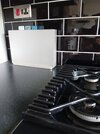
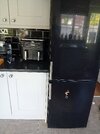
I am replacing the gas hob to induction, which will be connected to the switch already connected and the oven will be in a tower unit where the fridge freezer is positioned.
Photos attached
 

Attachments

  • IMG_20261002_150100_196.jpg
    IMG_20261002_150100_196.jpg
    293.1 KB · Views: 3
  • IMG_20261002_150213_096.jpg
    IMG_20261002_150213_096.jpg
    301.7 KB · Views: 3
Are you saying that you do or don't have a 32A cooker circuit coming from your Consumer Unit? BTW, the hob is going to be your main concern, power-wise.
 
Yes I have a 32A cooker circuit supplying the electric oven. The cooker at the moment is gas hob and electric oven.
 
OK. It it were me, I'd do what I said using a cooker connection splitter, if the current cooker supply position allows it. It's very much a matter of personal choice, but when the power is available on its own cooker circuit it seems a shame to eat into the supply to the rest of the kitchen.
 
Thank you for your advice, I did wonder if a hob could be operated from the same connection. but didn't know there was a splitter to do the job.
The oven will be approx. 3 mtrs away on a different wall. If I use a splitter can I sink the same size cable in the wall and the new oven?
 
Plugging an oven into a ring final is not actually forbidden, but I believe its not regarded as good practice.

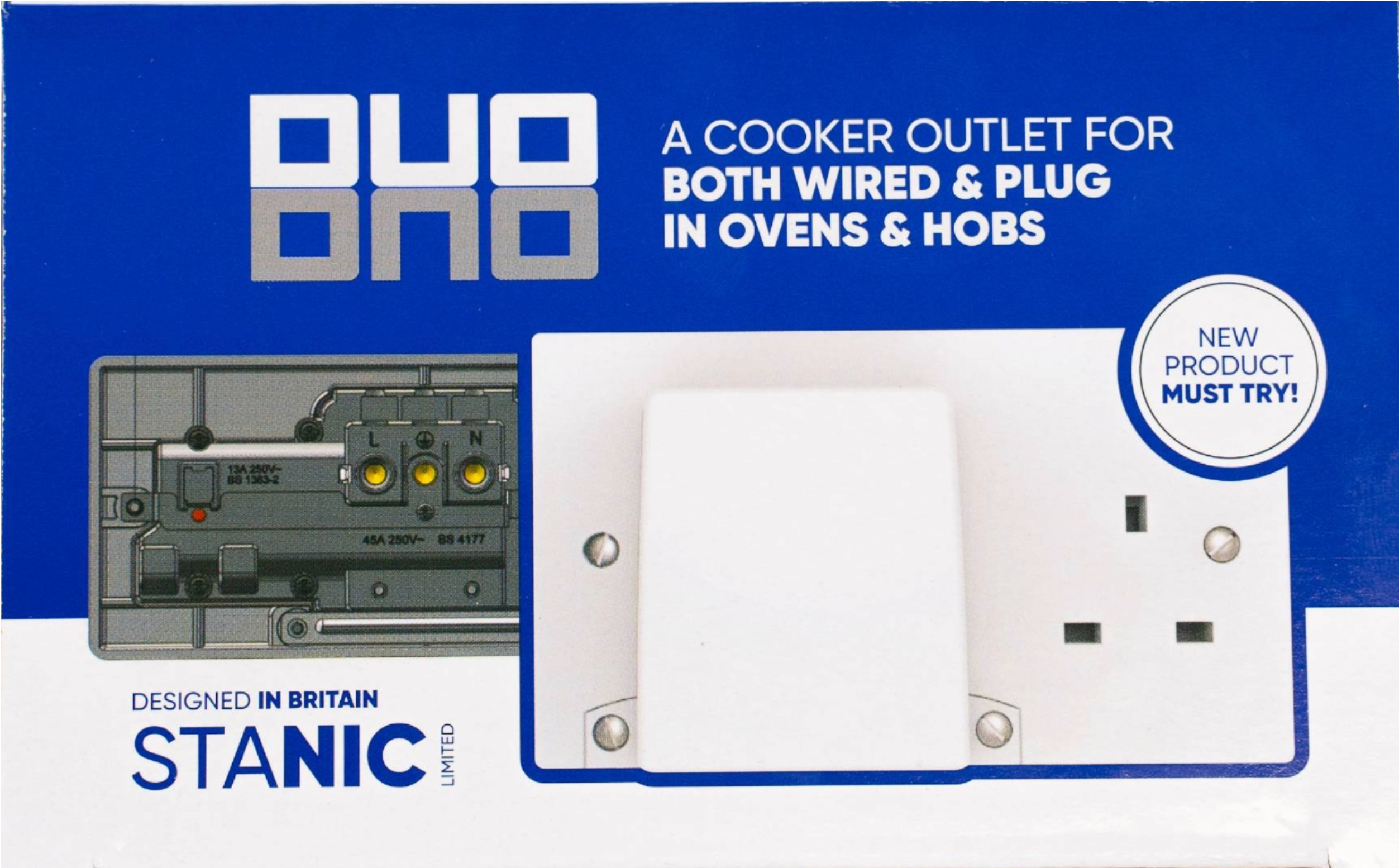
As your oven comes with a plug, you should probably use one half of a twin outlet

1790956701643.jpeg


to supply a socket,

or get something like this:


If you need to find a tradesperson to get your job done, please try our local search below, or if you are doing it yourself you can find suppliers local to you.

Select the supplier or trade you require, enter your location to begin your search.


Are you a trade or supplier? You can create your listing free at DIYnot Local

 
Back
Top