You're welcome - but don't forget that, even though things are now working as you would wish, we still don't really have 'an answer'/explanation, although you know what my suspicions are.Anyway thanks John for all your help
Kind Regards, John

You're welcome - but don't forget that, even though things are now working as you would wish, we still don't really have 'an answer'/explanation, although you know what my suspicions are.Anyway thanks John for all your help

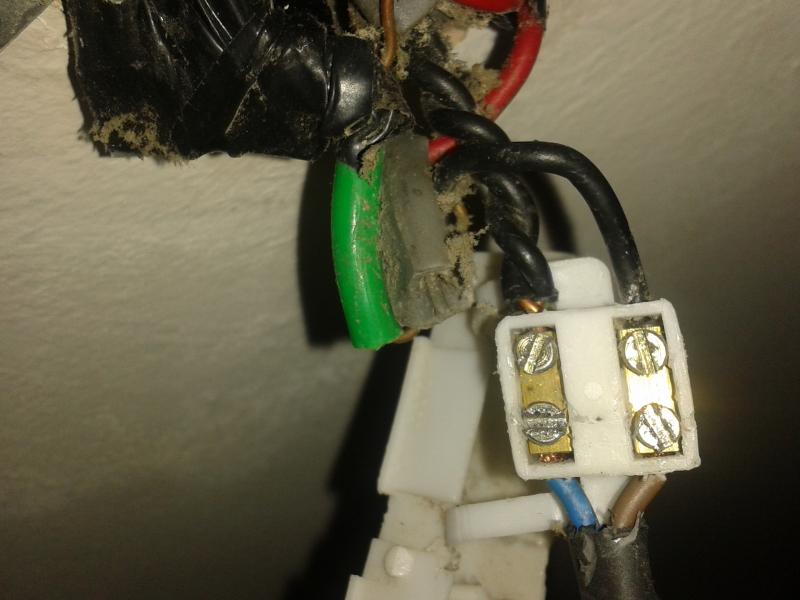
I suppose so, but do you seriously think it's possible that the functionality of the switch has somehow reversed, co-incidentally at the same time as the transformer was changed? If, as is likely, it's a rocker switch, there is also a difference of opinion/desire between people as to which positions should be on and off - 'up' and 'down' were so easy to define with toggles/dollies/'levers'!I think the MAKE of the switch would help, Assuming the switch is the right way up, same as before we could determing whether L1 or L2 is actually used for one way switching.
Yes, sorry about thatJohn, i beleived and didnt check when you said its a proper transformer, though I was suspicious of the 105VA rating which is rare for a wire wound
 Since the OP just included the model number (not a link) in his post, I had to type it into Google - but goodness knows what I found (it was certainly a wire-wound transformer), since it clearly was not the right one - I obviously didn't look carefully enough! However, now we're pretty sure that only one pair of wires (those going to the lamp) are connected to its output, I really don't think the nature of the device makes any difference.
It was quite late in life that I discovered that not all people think the same way as me as to which should be 'on' and which should be 'off' with a rocker switch! If you want to switch a rocker switch 'off', do you expect to press the top half or bottom half of the rocker?I did work in a house where all the switches were reversed, the owner said a foreign electrician done it and said that was the correct way.
I don't think that the OP was particularly reluctant - I think he was put off my someone suggesting that it represented an inappropriate 'suck it and see' approach.As the original post was regarding the reversal of the switch and the OP seems convinced it aint changed im baffled, but as you agree the switch needs eliminating, which the op seems reluctant to do


This was the final straw:It is a very odd thread (about what I'm increasingly coming to suspect is a 'non-problem'), but I think that BAS's piccies are (or, at least, may be) unjustified.
You're obviously more credulous than I.The transformer has overload and surge protection on it does this help
You must be referring to your 'Troll Spray' post, because the post you quote above was posted a minute after your first pic.This was the final straw:The transformer has overload and surge protection on it does this help
I wouldn't say that there is any reason for incredulity, given that the OP is clearly no expert on electrical matters. He posted the above statement just after we'd been having exchanges about the probably effects of wiring the 'transformer' back-to-front, and whether that would cause a 'bang', and I would have thought it very credible that an electrical layman might well think that the device's built-in protections might be relevant in that regard, wouldn't you?You're obviously more credulous than I.


Of course - many of us suggested that very early on. However, the OP has remained adamant that (b) and (c) never happened. My money is on either the above (maybe unbeknown to the OP), or that the reported 'reversed switch' is just a quirk of memory, and never actually happened.a. The light stops working
b. Someone removes the switch to see if the problem is there
c. That someone replaces the switch upside down
d. OP replaces transformer and the reversed switch problem is evident
 what should happen if I do this
Except we have had 7 pages of denial of that.a. The light stops working
b. Someone removes the switch to see if the problem is there
c. That someone replaces the switch upside down
d. OP replaces transformer and the reversed switch problem is evident

If you need to find a tradesperson to get your job done, please try our local search below, or if you are doing it yourself you can find suppliers local to you.
Select the supplier or trade you require, enter your location to begin your search.
Are you a trade or supplier? You can create your listing free at DIYnot Local