Loft humidity after insulation and vents added

Joined
29 Mar 2013
Messages
11
Reaction score
1
Country
United Kingdom
I need some advice on my loft space if anyone can help as I’m getting nowhere with my H/A and need to understand what I’m being told and what I’m talking about in response.
We have a very small loft in a 1920’s built coastal house. Roof is sound, no leaks roof tiles not slate. The loft was insulated, about 200mm and boarded onto the very deep joists. Lofts been fine, for many years with the exception of some mould in winter on the sloping eaves/borrowed eaves/skeelings? That was addressed with some celatex installed and pretty much worked.
We’ve now had the insulation brought up to around 400mm and partially re boarded with loft legs and easy vents have been installed under the vapour barrier inbetween every rafter. It’s currently very cold as expected but it’s well over 90% RH.
We’ve had to take everything out of the loft that’s been living here for years as it was wet, visible condensation on plastic boxes and all cardboard boxes were soft and squishy.
Insulation was pushed into the eaves but that been pulled back to the wall plate but as soon as the loft hatch was closed and the sensor up there stabilised the humidity just started climbing again. What have they done?

Someone has suggested they have over filled the loft with insulation, any truth in this, when I say small, you can barely kneel without hitting your head and it’s only a small footprint ?

Any help or advice would be greatly appreciated.
 
How is it ventilated if it’s been infilled with Celotex?
Sounds like ventilation is ineffective .
 
How is it ventilated if it’s been infilled with Celotex?
Sounds like ventilation is ineffective .
Welcome to my nightmare.
They lifted the tiles, put the Celotex in, from memory they said there was still room for some ventilation.
I don’t know. I understand IT, fibre optics and can build you an amplifier that will loosen your windows but lofts, no clue.
All I know is it was fine.
It’s no longer fine.
Celotex went in two years ago. Insulation tick box event this year. Problems this year.
 
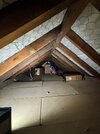
This is the loft/crawl space
 

Attachments

  • Loft.jpg
    Loft.jpg
    565.3 KB · Views: 14
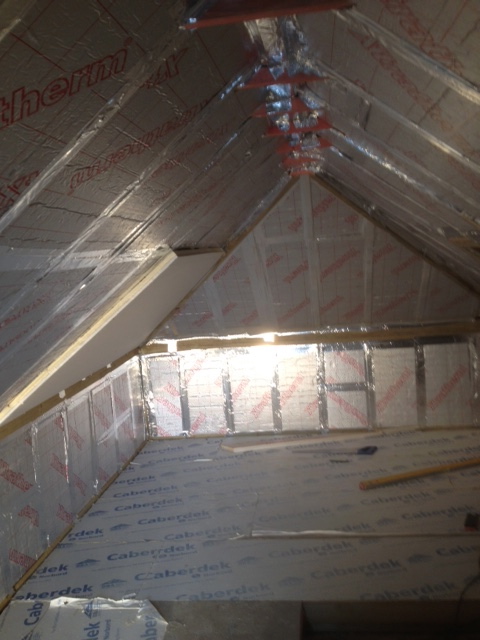
No it's been placed down the eaves. They took the roof tiles off to install it as they didnt have the room to push it down, you cant really see it from inside the loft. The Knaff roll insulation is under the bad boarding. As I said we have sloping ceilings upstairs, they have cut and pushed Celatex behind that slope in an attempt to stop the cold bridging. Apparently it's a common problem with these roofs/ceilings.
Ceiling.jpg
 
It’s currently very cold as expected but it’s well over 90% RH.
Hardly surprising. I expect that the loft isn't perfectly sealed to the house, and/or you are letting house air in to it at ~20 degrees and probably 50-60% humidity.

The problem is that air at that temp and humidity will start condensing to liquid water at about 12 degrees, and of course at the condensate surface the humidity will be 100%. ambient air cooled to outside temperatures is highly likely to be at a high humidity, or even condensing.

The other challenge is your loft may be letting in outside air through ventilation, which might be for example at 12 degrees and close to 100% humidity if it is raining. If the weather suddenly cools, the insulation on the roof will slow the cooling internally, but after a while, if no heat energy can get through from the house, the inside of the roof will be at the same temperature as the outside. Quite likely that air at 12degrees/95% humidity will start condensing on the now cold surfaces that are below its dew point.

soon as the loft hatch was closed and the sensor up there stabilised the humidity just started climbing again

Of course it will - you close the loft hatch and the air in the loft starts to cool. Cooling air raises its relative humidity - that's just physics.
 
Hardly surprising. I expect that the loft isn't perfectly sealed to the house, and/or you are letting house air in to it at ~20 degrees and probably 50-60% humidity.

The problem is that air at that temp and humidity will start condensing to liquid water at about 12 degrees, and of course at the condensate surface the humidity will be 100%. ambient air cooled to outside temperatures is highly likely to be at a high humidity, or even condensing.

The other challenge is your loft may be letting in outside air through ventilation, which might be for example at 12 degrees and close to 100% humidity if it is raining. If the weather suddenly cools, the insulation on the roof will slow the cooling internally, but after a while, if no heat energy can get through from the house, the inside of the roof will be at the same temperature as the outside. Quite likely that air at 12degrees/95% humidity will start condensing on the now cold surfaces that are below its dew point.


Of course it will - you close the loft hatch and the air in the loft starts to cool. Cooling air raises its relative humidity - that's just physics.
I get the physics side of condensation, what im trying to understand and hopefully rectify is why I cant store anything in there now. 7 years and not a problem, no major heat leaking though the ceilings and old insulation (lathe & plaster ceiling), obviously that I know of. Loft hatch is new, insulated and as far as I can tell well fitting and sealed.
The loft was cold in winter and hot in summer but never damp, I had an old computer up there and two sets of studio monitors and both were fine but were covered in condensation a few days ago. We had the loft hatch moved to the bedroom so we can pop up and down and have been using it as storage space.

I don't know if it's going to make any difference but we are having the cavities filled with bonded beads on Thursday. Out of my hands though.
 
I get the physics side of condensation, what im trying to understand and hopefully rectify is why I cant store anything in there now. 7 years and not a problem, no major heat leaking though the ceilings and old insulation (lathe & plaster ceiling), obviously that I know of. Loft hatch is new, insulated and as far as I can tell well fitting and sealed.
The loft was cold in winter and hot in summer but never damp, I had an old computer up there and two sets of studio monitors and both were fine but were covered in condensation a few days ago. We had the loft hatch moved to the bedroom so we can pop up and down and have been using it as storage space.

I don't know if it's going to make any difference but we are having the cavities filled with bonded beads on Thursday. Out of my hands though.
I suspect you had more heat leakage that you realise, enough to keep the temperature in the loft slightly elevated.
 
If you get the physics you should be able to work it out. Sounds like the additional insulation has made the loft colder allowing more condensing surfaces.
 
If you get the physics you should be able to work it out. Sounds like the additional insulation has made the loft colder allowing more condensing surfaces.
Of which the added vents are supposed to combat which never made sense as we live by the coast, its a damp area prone to sea mist and low cloud, its just letting the outside in ?
It's possible some warmth is seeping up I guess, I have no way of telling.
Yes and thats exactly what's happened with the insulation, its doing its job.
Currently 93% RH at 9.9c up there (+/- 0.3%) and 84% outside at 7c, I imagine if I could be bothered to go up there again the rafters would be damp, the chicken wire over the vapour barrier was dripping last time I looked. Glad its not my bricks and mortar..
My only really concern is being able to put our stuff back up there as like I said the loft hatch was moved specifically to give us more space and save moving a disabled household just because its a small house. Was all fine till the energy efficiency department got involved.
 
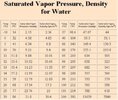
so call loft temp 10 degrees. saturated vapour density at 10 degrees = 9.21. X 93% = 8.56 which is the saturated vapour density at about 8 degrees. Any surface colder than that will have liquid condensation.

If it's 7 degrees outside, quite likely the inner roof surface is approaching 8 degrees, because a heat gradient of only 9.9 down to 7 isn't going to keep it much above the outside temp. Inner roof will be at the dew point for the air in the loft = internal condensation.
 

Attachments

  • humidity table.jpg
    humidity table.jpg
    32.6 KB · Views: 1

If you need to find a tradesperson to get your job done, please try our local search below, or if you are doing it yourself you can find suppliers local to you.

Select the supplier or trade you require, enter your location to begin your search.


Are you a trade or supplier? You can create your listing free at DIYnot Local

 
Back
Top