
Old Habits Die Hard...

Joined
11 Jan 2004
Messages
45,969
Reaction score
3,551
Country
United Kingdom
I found this today on a rewire signed off by BCO.

The job was done to the 17th Ed., according to the paperwork.

More like 15th, if you ask me!
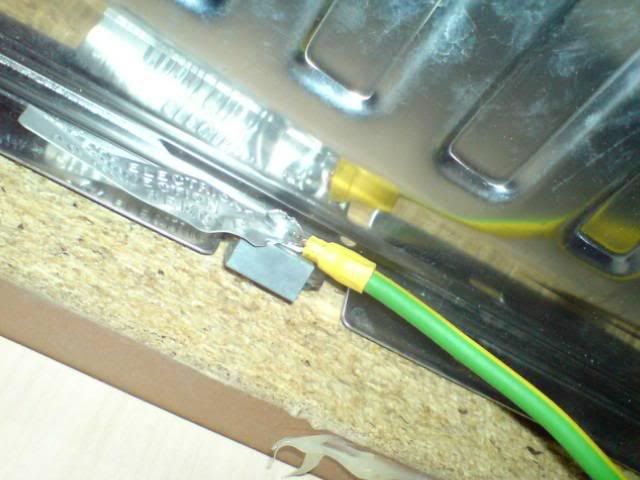
SinkBond.jpg
 
Are you absolutely sure that the occupiers aren't naturists, and use the kitchen naked, thereby creating a situation of increased risk of shock?
 
Well, I did ask the female customer this, and I got a slap across the chops & am now being investigated by my manager for sexual impropriety, so I guess the answer's no.

Joking aside, when I explained to one guy about the importance of MEB to the water pipe, he said, in all seriousness, "I'll buy my wife a pair of rubber gloves to wash up with"... :wink:
 
Nice Marigolds

Ban I don't think those girls are really diy'ers their tools are too clean :wink:
 
Sorry Guys, inexperienced silly question time, again..

I can see it is meant to be a earth to a kitchen sink.

The only thing I can actually see wrong is the fact that the aluminium clamp warning plate is folded over the connection.


Help I feel a right arse!!!

Have not bought my 17th yet as I've just lashed out on a multi function tester (can't wait for the wife to find out!!)
 
It has not been a requirement to install supplementary bonding in kitchens since the 15th edition regulations, which were superseeded by the 16th edition in 1992.

Many folk still do it though.

No need!!
 
Sorry to be a plank but...., the reason that bonding isn't a requirement in a kitchen per 17th ed is because you are less likely to be naked :?:

Whereas it is required in a bathroom, cos you are more likely to be naked :?:

I am updating a shower room and about to tackle the issue of bonding. I thought I read on a recent RF post that bonding is no longer required in a bathroom if all incoming circuits are RCD protected?

If that is the case, does it imply that people are now RCD protecting lighting circuits? (mine aren't - only the Fing)

Feel free to slap me if i'm way off the mark here and talking drivel......! :oops:

[/quote]
 
My understanding of the 17th is that no bonding is required in shower/bath room as ALL circuits must be RCD protected - power and lighting.
 
If that is the case, does it imply that people are now RCD protecting lighting circuits? (mine aren't - only the Fing)
afaik
Not everrone is yet, but the bathroom light will be compulsory once the 17th take over, not neccesarily the whole lighting circuit though.

I dont think the supp bonding can be just dismissed,or removed.
Only if certain other regs etc are also taken into account and comply,can that be considered.
 
If that is the case, does it imply that people are now RCD protecting lighting circuits? (mine aren't - only the Fing)
afaik
Not everrone is yet, but the bathroom light will be compulsory once the 17th take over, not neccesarily the whole lighting circuit though.

I dont think the supp bonding can be just dismissed,or removed.
Only if certain other regs etc are also taken into account and comply,can that be considered.

Well if that's the case, will manufacturers start making split load boards to allow 3 splits? One side for cooker, immersion etc - one side for RCD sockets, one side for RCD lighting? (excuse my ignorance if they do already)
 
Afaik
Existing boards could get round it (An rcbo on the non rcd side just for the bathroom light on a radial is one way)
However makers are all coming out with newer boards, taking various combos of rcbo's and various rcd's etc.

http://www.electrium.co.uk/Wylex17th Edition.pdf


http://download.hager.com/hagergrou...rmation/ConsumerUnitGuideToThe17thEdition.pdf

Wylex hager etc will send you info on there new range boards if you go to there sites.
They also recently done presentations showing them at most elec wholesalers
For the regs though you need to ensure when it does go off that not too much other stuff goes off as well
People say rcbo's are the way to go , but expensive at present

Apoligies to securespark
I will leave your thread alone
 

If you need to find a tradesperson to get your job done, please try our local search below, or if you are doing it yourself you can find suppliers local to you.

Select the supplier or trade you require, enter your location to begin your search.


Are you a trade or supplier? You can create your listing free at DIYnot Local

 
Back
Top