
Plastering over junction box

Joined
17 May 2011
Messages
7
Reaction score
0
Location
Buckinghamshire
Country
United Kingdom
Hi

I've cut out a 1" deep round hole in a solid wall to fit a junction box into which will make safe a couple of live lighting cables that used to stick out of the wall. I then want to plaster over the hole with the junction box in it to conseal it for good.

What type of filler do you recommend I use?

Thanks

Johnny

Here are some pics.

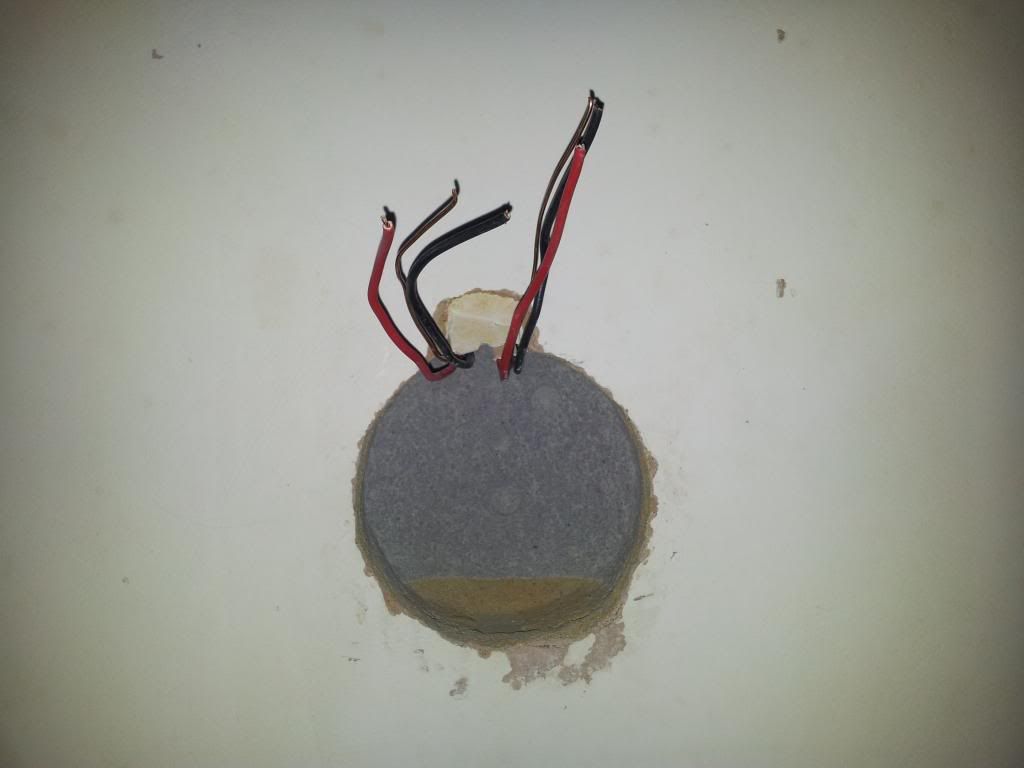
This is how it started out, just two cables coming out of the wall.


Here's a close up.


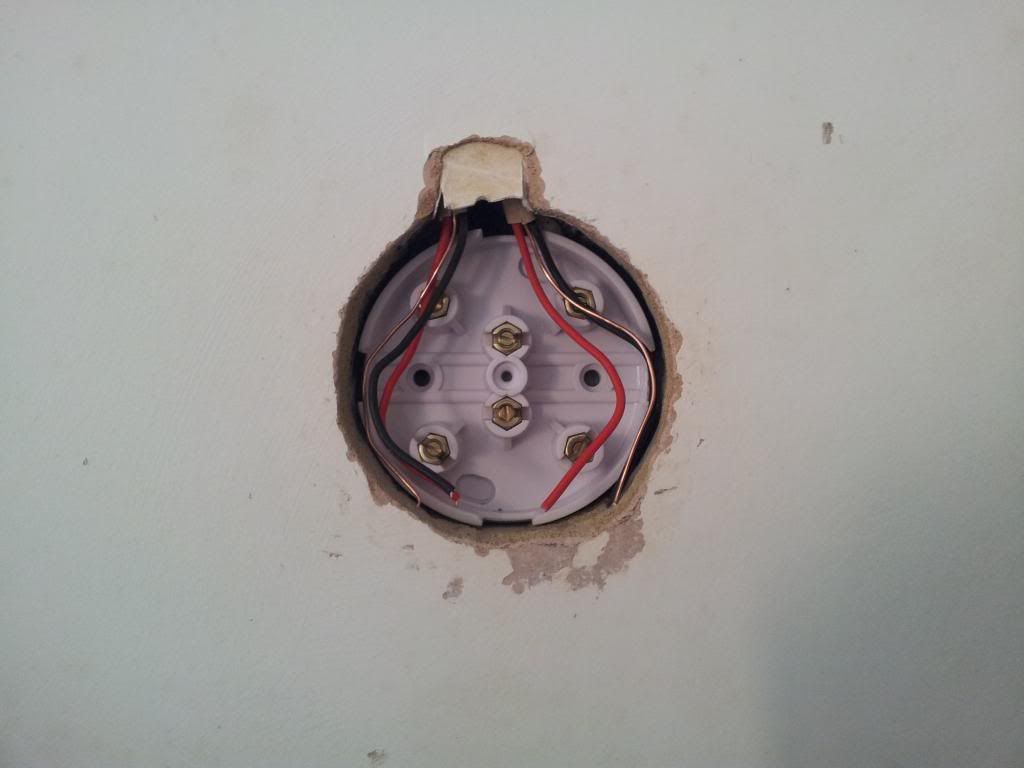
This is after I made a 1" deep hole to fit a junction box in and stripped the wires back.


This is the back of the junction in the hole.


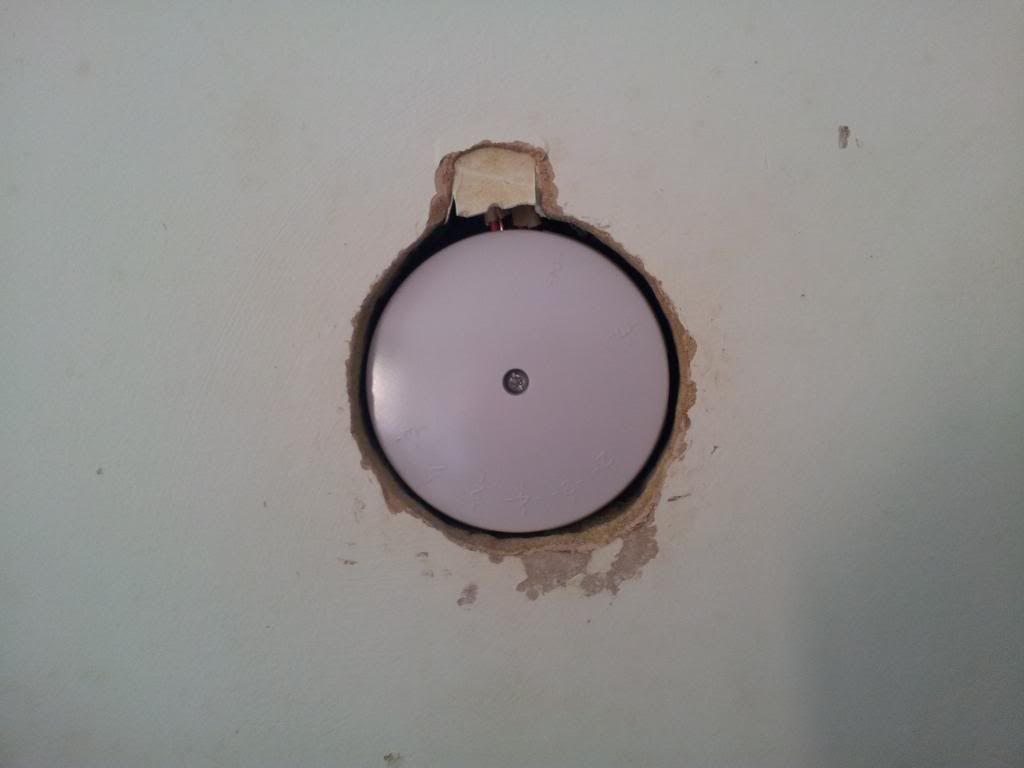
This is with the cover on and I want to plaster over this to hide it and paint the wall.
 
In what way have you made the cables safe? You cannot hide live connections, you must be able to identify that they are present and any joints must be easily accessible for maintenance, inspection and testing.
The only way you would be permitted to bury these cables would be if they are dead and cannot ever be re-energised.
 
In what way have you made the cables safe? You cannot hide live connections, you must be able to identify that they are present and any joints must be easily accessible for maintenance, inspection and testing.
The only way you would be permitted to bury these cables would be if they are dead and cannot ever be re-energised.

I have 2 cables. Each cable has 3 wires per cable, red, black and earth which will be connected to a terminal in the junction box. The junction box has 6 terminals at 20amp. This will make the wires safe will it not? I have no use for these cables any longer and I cannot find where they go to either as I cannot access it. It would mean demolishing part of the wall and maybe the ceiling also just to find where this cable goes so I can disconnect the entire cable and I'm not doing that. I live in a studio apartment also so I can't go upstairs and look under the floor boards as that is someone elses apartment.
 
These wires need disconnecting completely so they are dead.

If this is not possible, I recommend a flushed in metal box, and the wires joined in this, with a blanking plate over it. Metal box would need earth connection.

You can't bury screw connections. And you can't have concealed cables in a wall less than 50 mm deep from the surface if there's no obvious electrical accessory visible. (There are some exceptions, but I doubt they apply here.)

The problem with the above is that no one would know the cable is there, and could get drilled through.
 
Do the cables definitely go upwards?

One other option may be to cut a 4 inch square hole in the ceiling, pull the cables up, and join in a maintenance free junction box.
 
I see you have now added photos, albeit by editing your original post (that's why you didn't get any further replies).

As said, you can't have the junction box buried in the wall.

There MAY well be a way of disconnecting the wiring from the supply without disruption.

Best get this post transferred to the electrics forum where it can be discussed in full.
 
I have 2 cables. Each cable has 3 wires per cable, red, black and earth which will be connected to a terminal in the junction box. The junction box has 6 terminals at 20amp. This will make the wires safe will it not?
No, not if you are plastering over the junction box, this is not compliant to the wiring regulations as the cables are not identified in a permitted safe zone, so do not attempt to hide this termination.
I have no use for these cables any longer and I cannot find where they go to either as I cannot access it. It would mean demolishing part of the wall and maybe the ceiling also just to find where this cable goes so I can disconnect the entire cable and I'm not doing that. I live in a studio apartment also so I can't go upstairs and look under the floor boards as that is someone elses apartment.
It maybe that the power source to these cables are within a switch or another light fitting or even a fused connection unit.
Again, you cannot bury that junction box, it is not permitted!
The alternative would be to install backbox and a visible blank plate.
 
Apart from you MUST NOT bury junction boxes in plaster, you've also failed to continue the cable sheath into the junction box, and if you've connected the two earth wires to separate terminals you have broken the earth connection and something downstream of that point may be relying on that earth (even if it shouldn't be).
 
Apart from you MUST NOT bury junction boxes in plaster, you've also failed to continue the cable sheath into the junction box, and if you've connected the two earth wires to separate terminals you have broken the earth connection and something downstream of that point may be relying on that earth (even if it shouldn't be).

Where has he connected the two earth wires to two separate terminals?

In the pictures I can see, the wires aren't connected to the junction box. And the next picture has the lid on the junction box - so a bit hard to tell!
 
Where has he connected the two earth wires to two separate terminals?

In the pictures I can see, the wires aren't connected to the junction box. And the next picture has the lid on the junction box - so a bit hard to tell!

It is impossible to tell, but "Each cable has 3 wires per cable," and a 6 terminal junction box suggests he thinks that if he keeps all the wires separate it'll be safe.
 
Not necessarily, perhaps he got it by mistake. In the right circumstances a six terminal would be fine.

The more usual 20 amp junction box would have four terminals anyway, so he'd still have one spare terminal.
 

If you need to find a tradesperson to get your job done, please try our local search below, or if you are doing it yourself you can find suppliers local to you.

Select the supplier or trade you require, enter your location to begin your search.


Are you a trade or supplier? You can create your listing free at DIYnot Local

 
Back
Top