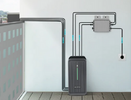
Plug in balcony solar UK , just a Lidl question

Joined
23 Mar 2021
Messages
87
Reaction score
1
Country
United Kingdom
I'm very interested in these new " balcony solar " panels that I hear Lidl are going to be selling from June , I've done my research on them and the ones currently for sale "to" the UK market require a new ring circuit to be installed , am I right in thinking that this is unavoidable or are the ones that are going to be specifically produced for UK sales going to be different ?, I don't think that supermarkets selling them over the counter is very responsible if they need a new circuit installing because lets face it people are just going to plug them in and burn their houses down , I'm tempted to buy one , however if the ones specifically created for the UK market are going to bypass this somehow I'll wait until later on in the year
 
People will buy them, plug them into circuits never designed for such things, and hope for the best.

Later when problems have occurred, the usual 'think of the children' brigade will get all busted up over them and demand that 'they' do something about it.
 
People will take allsorts of chances to make money on solar and battery charging. The money doesn't seem that big either.
A weird obsession with turning a profit on electric usage.
 
Oh, what a tangled web you weave. We have been talking about plug-in solar since March, after Ed Miliband announced they were to be permitted.

There are two main points, one is the regulations, as it stands BS 1363 does not permit any generator to be plugged in. There are other regulations like G98 and BS 7671 which also seem to cause problems, but what we are really interested in is not the regulations but second point, which is why they can produce a danger.

There are other points, like how they are integrated with the grid. The idea is that tenants can use solar. Homeowners can install solar under existing rules without too much of a problem. But to use solar without installing it, so it can be simply unplugged and taken with one to your new home, needs a lot of changes.

At the moment to get payment for export, a G98 or G99 form need completing which is linked to the property, this clearly will not work if the solar panels are portable.

So the hurdle is how to ensure all rental homes can record export and well as import, so they will all need smart meters, and at the moment the smart meter can be refused by the tenant, that will need to change.

Also, the socket will need to be fed by a bidirectional RCD/RCBO etc. As it stands even in the trade, we have a problem identifying which RCD/RCBO are bidirectional.

So the rules would have to change so that all sockets likely to be used by a solar array are supplied by a bidirectional RCD/RCBO.

If you look at this forum, there are many threads talking about what is going to happen.

We are seeing silly websites like this one where they claim to tell you all about it, then say how they are not electricians or legal experts and have not got a clue if what they are saying is right or wrong. Why they wrote the website not a clue? The same goes for Youtube videos, they either admit what they have done does not comply with regulations or say they haven't a clue if it breaks regulations.

What we need to remember is regulations are not law, but they are referred to in laws, so it hard to say if we can break regulations.

Using a battery pack as an EPS with solar panels connected is not against the regulations, only back feeding into the grid is not allowed.
 
Last edited:
People will buy them, plug them into circuits never designed for such things, and hope for the best.

Later when problems have occurred, the usual 'think of the children' brigade will get all busted up over them and demand that 'they' do something about it.
To be fair I'm more concerned about the demand on the fire brigade
 
It really isn't.
No one will be paid for exporting from some plug in affair, not least because the output of such things will be so low as to be meaningless.
My house back-ground use around 200 watts, above that it will cause export at most times of the day. As we go from 200 to 800 watts, the amount exported will increase to the point where half of what is produced will be exported.

This time of year, we will produce between 6 am and 9 pm, but it will be 10 am to 5 pm to get reasonable output, so 7 hours at 25p per kWh with an 800 watt panel is around £1.5 per day. This will reduce in winter, so looking at a Year then around £250, if half of this is exported for nothing then £125 a year, is it worth it?

To my mind no, not worth it if half you produce is given away.
 
I've done my research on them and the ones currently for sale "to" the UK market require a new ring circuit to be installed
Sorry, just twigged as to reason why someone would say this. If we were to get a battery pack something like this.
1779660735615.png
Then you could set up a radial or ring final supplied from a unit like this to power items direct from the battery pack. And either charge the battery from solar or mains, so that it acted as an EPS the problem using an existing radial or ring final is the unit will not power over a set load, so you would need one set of sockets powered from the battery, and once set for high-powered items.

This has always been permitted, it does not require any G98 or G99 or DNO permission, could even have a split tariff and charge the battery overnight on cheap rate.

Ideal is to have a battery pack which can deliver over 3 kW, so any plug in item can use it.

My battery pack to start with was 3.2 kWh, it could be charged at 2 kW and could discharge at 3 kW, the problem was with any back-ground use items using 3 kW would still draw some power from the grid, and my solar panels were 6 kW with a 5 kW inverter, so with a part charged battery I was only charging it at 2 kW and the rest was going into the grid, so I doubled up on battery size, it is not that often that I am producing over 4 kW, and not using most of the extra kW in-house, so now I can store nearly all I produce, and I can draw 5 kW (limited by size of inverter) so rare (when I have a shower) that I am drawing more than the battery can provide.

So the difference between a pro install and a DIY install is the G98 or G99 allowing one to be paid for export, and use the existing wiring in the home. With a parallel ring final method you don't need a registered installer, but you can only self use the power you can't export it.
 
This website claims to explain the Lidi plug in solar There are some errors, the main one is they seem to have mixed up unidirectional and bidirectional RCD/RCBOs with type AC and type A, OK in the main we should not today use type AC, but my solar inverter instructions tell me with that inverter I can use type AC.

So important thing is being bidirectional but being double pole switching and type A or better is also a good thing.

It also fails to say German equivalent to our consumer unit the MCB/RCBO is twice the width of ours, so they do not use the same units as us, as their plugs are not polarised, so all that is the same between the two systems is the voltage.

In Germany the rental sector is far bigger than ours, so very few people in Germany can install solar. And the German system is still not really plug and play, you still need to register that you are using the system, and tell them when you move home.

I can see when you first buy plug in solar you reading the instructions and completing the form and sending it to the DNO, but when you move home, then likely you will forget.

The only way I can see it working safely is for during the 5 yearly EICR the electrician has to put a sticker on the consumer units saying either "Not suitable for solar" or "Plug in solar ready" with the latter the DNO would already have been informed and the second MPAN (Meter Point Administration Number) issued. In which case you would be paid for export.

Some RCBOs do today have a icon saying bidirectional but this is not universal across diffrent makes, so one has to down load the data sheet which one hopes will say something like this:-
1779699568629.png
But the problems of data sheets not stating if bidirectional has been talked about here, and we are left lacking information as to if suitable or not. Which is far from ideal.

As to @Neil Carroll the question has to be, owner occupied or rental? If owner occupied there is nothing to stop solar being installed, be it a fused connection unit (FCU) or direct into the consumer unit (CU) as to if an electrician is required, we need to define electrician, the old definition was "A person who possesses sufficient technical knowledge, relevant practical skills and
experience for the nature of the electrical work undertaken and is able at all times to prevent danger and, where appropriate, injury to him/herself and others." so one could regard oneself as an electrician? But to get the G98 or G99 certificate, I am not sure if it requires membership to some scheme. No way at my age was I crawling on the roof, so I employed a specialist firm, who did it all for me. The certificates allow you to get the MPAN number and be paid for export, so for an owner-occupier it would be daft not to install.

For a tenant which is what plug and play is designed for, he needs to know if the RCD/RCBO is suitable, and he will not be allowed to remove the cover from the consumer unit, so only way is to require either CU or sockets to be marked as suitable for plug and play solar, if done during the EICR then that will take 5 years.

This
1779785349355.png
Is likely AI generated and unlikely to find it in real life.

 
Last edited:

If you need to find a tradesperson to get your job done, please try our local search below, or if you are doing it yourself you can find suppliers local to you.

Select the supplier or trade you require, enter your location to begin your search.


Are you a trade or supplier? You can create your listing free at DIYnot Local

 
Back
Top