
You are using an out of date browser. It may not display this or other websites correctly.
You should upgrade or use an alternative browser.
You should upgrade or use an alternative browser.
Plug in solar
- Thread starter UKMICKY
- Start date

That is the thing with rules - always try to fully understand them and see if the intention can be circumvented whilst leaving the rules intact as written completely safely in place. LOL.
I have a sneaking suspicion that someone like Morq could make a living out of that if decided to, Legal and Business/Political experts often do that too?
I have a sneaking suspicion that someone like Morq could make a living out of that if decided to, Legal and Business/Political experts often do that too?


Millions used across Europe might say differently. If it was a gimmick I think that would have been proved by now.
Germany has long been a leader in the plug-in solar drive, with more than one million systems installed between 2022 and 2025. The boom has been attributed to government incentives that reward plug-in solar buyers with feed-in tariffs, giving them a fixed price for every unit of electricity that is sent to the grid.
Would our government do the same, i wonder?
The UK’s Energy Savings Trust says that, without considering export payments, a London home with rooftop solar could make annual savings of £650 (€750) if inhabitants are home all day. This drops to £530 (€611) if they’re out until 6pm on most days.
EuroNews

- Joined
- 22 Jan 2007
- Messages
- 24,658
- Reaction score
- 3,725
- Country

The export tariffs are still there but plug in solar can't be exported, unless you are already on an export tariff.Would our government do the same, i wonder?
I think batteries and export will come sooner rather than later, we can only wait for now.
The export tariffs are still there but plug in solar can't be exported, unless you are already on an export tariff.
I think batteries and export will come sooner rather than later, we can only wait for now.
Is it worth the expense just to provide additional power to home appliances when a solar panel will provide better supply long term for the whole house?
- Joined
- 22 Jan 2007
- Messages
- 24,658
- Reaction score
- 3,725
- Country
Depends on usage really, if someone is home most of the day then you could power anything with it. If they are out all day then it will still power things while you are out, like fridge/freezers, but you'd really need to do your sums on potential savings.Is it worth the expense just to provide additional power to home appliances when a solar panel will provide better supply long term for the whole house?
Well I think we are pretty much all in agreement with "Will it save money? - Yes probably!" is it worth in financially and is it worth it to the environment (could do more harm than good in some, if not many, instances?).
I would prefer some time to let it evolve a little (12 months, 2 years, 6 months ? I do not know) then we make make some half reasonable comparisons then check again in 5 years/10 years again?
He who hesitates is lost versus look before you leap !!!
I would prefer some time to let it evolve a little (12 months, 2 years, 6 months ? I do not know) then we make make some half reasonable comparisons then check again in 5 years/10 years again?
He who hesitates is lost versus look before you leap !!!

- Joined
- 27 Jan 2008
- Messages
- 29,701
- Reaction score
- 3,676
- Location
- Llanfair Caereinion, Nr Welshpool
- Country
Two things have been repeated.
But with only 800 watt, and no batteries, moving from 26p to 32.277p during most of the day even if much cheaper overnight would not help.
But using a non grid-tied battery and solar, this may offer a lot more, in the main the non grid-tied battery packs do not charge at a set time from the grid, but adding a simple time clock can get around that, the problem is distrubuting the power from the battery around the house, this is down to the house design.
So if I look at my old house.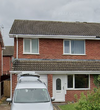 The low extended roof over garage and living room is idea for mounting solar panels, low down for access, but high enough so cars in the drive do not shade it.
Inside the house that living room on the right has no doors, so running a cable with sockets on it would be easy, and one partition wall and into the kitchen, so it would be very easy to supply living room and kitchen from a battery.
Now this house the wall between middle and upper floor may take panels, but the route to supply kitchen is hard, likely around side of house, no good route though the house, so to fit a battery pack to feed the house not so easy, and this is what needs to be considered with a non grid tie battery pack, can you use the energy it provides, in a way which means going to a split tariff will pay?
It will not pay in my house as
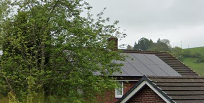 I already have solar panels, they are south-west facing, so I catch the evening sun better, which is good as dusk until 00:30 is longer than 05:30 to dawn, so it better lines up with off-peak.
But what I am saying, is for those without any solar at the moment, looking for a DIY method to legally have solar, in many cases the non grid tied battery is a better method to the plug-in solar option.
#253 of this thread we see someone who although not quite legal has done basically what is legally allowed, and he can only use half of the solar produced. Together will the overpriced solar kits, where you can buy a solar kit designed for the likes of a caravan with battery for same price, where you can use all the solar produces, and no 800 watt limit, so it can totally power a kettle, or washing machine etc, it means very few will be better off with plug-in to a stand-alone battery.
Basic legal plug-in solar is not worth it. The stand-alone battery is in the main better for the same price, and if the general public realise this, then plug-in will not sell, so the price will not drop.
The idea was if legal people would select the legal route, and give the government free electric, and tell the DNO what they have done, but batteries not included has killed the idea. So we will get homes with caravan type battery solar, with extension leads running all over the house, and no free power for the government, and the DNO will not have a clue as to what the take-up of solar is.
It is not part of the installation if not permanent, i.e. hard wired.Strictly speaking, yes, only installation and permanent decommissioning needs notification. Not sure if 10 years is stretching that to breaking point, but those are the rules.
Are you sure of that, as the G98 for plug-in seems to be the same one used for installed systems, the requirement is that you have a smart meter so without a smart meter no export payment, but not seen anything to say plug in not paid for export.The export tariffs are still there but plug in solar can't be exported, unless you are already on an export tariff.
This is the problem, we in essence have four tariffs, to consider, the standard tariff of I think today around 26p/kWh 24/7. The export tariff of 12p/kWh at the moment, the off-peak tariff of around 8.625p/kWh and the peak tariff of around 32.277p/kWh and once we have solar and battery of a reasonable size, the move to an off-peak tariff pays.Is it worth the expense just to provide additional power to home appliances when a solar panel will provide better supply long term for the whole house?
But with only 800 watt, and no batteries, moving from 26p to 32.277p during most of the day even if much cheaper overnight would not help.
But using a non grid-tied battery and solar, this may offer a lot more, in the main the non grid-tied battery packs do not charge at a set time from the grid, but adding a simple time clock can get around that, the problem is distrubuting the power from the battery around the house, this is down to the house design.
So if I look at my old house.
The low extended roof over garage and living room is idea for mounting solar panels, low down for access, but high enough so cars in the drive do not shade it.Inside the house that living room on the right has no doors, so running a cable with sockets on it would be easy, and one partition wall and into the kitchen, so it would be very easy to supply living room and kitchen from a battery.
Now this house
the wall between middle and upper floor may take panels, but the route to supply kitchen is hard, likely around side of house, no good route though the house, so to fit a battery pack to feed the house not so easy, and this is what needs to be considered with a non grid tie battery pack, can you use the energy it provides, in a way which means going to a split tariff will pay?It will not pay in my house as
But what I am saying, is for those without any solar at the moment, looking for a DIY method to legally have solar, in many cases the non grid tied battery is a better method to the plug-in solar option.
#253 of this thread we see someone who although not quite legal has done basically what is legally allowed, and he can only use half of the solar produced. Together will the overpriced solar kits, where you can buy a solar kit designed for the likes of a caravan with battery for same price, where you can use all the solar produces, and no 800 watt limit, so it can totally power a kettle, or washing machine etc, it means very few will be better off with plug-in to a stand-alone battery.
Basic legal plug-in solar is not worth it. The stand-alone battery is in the main better for the same price, and if the general public realise this, then plug-in will not sell, so the price will not drop.
The idea was if legal people would select the legal route, and give the government free electric, and tell the DNO what they have done, but batteries not included has killed the idea. So we will get homes with caravan type battery solar, with extension leads running all over the house, and no free power for the government, and the DNO will not have a clue as to what the take-up of solar is.
- Joined
- 22 Jan 2007
- Messages
- 24,658
- Reaction score
- 3,725
- Country
Not according to G98.It is not part of the installation if not permanent, i.e. hard wired.
You can't get an export tariff unless it's professionally installed, so you won't get paid. Unless you already have one with a certified solar installation.Are you sure of that, as the G98 for plug-in seems to be the same one used for installed systems, the requirement is that you have a smart meter so without a smart meter no export payment, but not seen anything to say plug in not paid for export
- Joined
- 22 Jan 2007
- Messages
- 24,658
- Reaction score
- 3,725
- Country
Just to clarify, it isn't part an electrical installation, rather the whole plug in solar kit is installed in a property.Not according to G98.
- Joined
- 27 Jan 2008
- Messages
- 29,701
- Reaction score
- 3,676
- Location
- Llanfair Caereinion, Nr Welshpool
- Country
Do you trust them? Those numbers are useless without saying size of solar array, and batteries. September to dateThe UK’s Energy Savings Trust says that, without considering export payments, a London home with rooftop solar could make annual savings of £650 (€750) if inhabitants are home all day. This drops to £530 (€611) if they’re out until 6pm on most days.
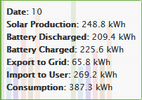 until March
 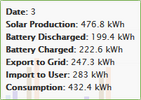 so for 4 months I use batteries to move power from off-peak to peak times, but best month this year
 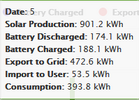 shows if I want to self use the power around 3 kW would be a better size. Maybe smaller, so 2 kW into a battery pack, and it is unlikely one would stop saving solar produced very often because battery was full.
- Joined
- 27 Jan 2008
- Messages
- 29,701
- Reaction score
- 3,676
- Location
- Llanfair Caereinion, Nr Welshpool
- Country
Having read where an electrician installed his own solar panels and was not on the installers register, it seems they can't stop you getting export tariff just because not installed by an electrician who has done the course and got the bits of paper.You can't get an export tariff unless it's professionally installed
He did it seems to have a bit of a fight on his hands, and it was not accepted straight away. But he proved they do have to accept applications from non-registered people. Seem to remember it was on one of the hundreds of efixx videos.
- Joined
- 22 Jan 2007
- Messages
- 24,658
- Reaction score
- 3,725
- Country
Yes, you don't have to be registered at all, but it is beyond the simple plug in DIY capabilities.Having read where an electrician installed his own solar panels and was not on the installers register, it seems they can't stop you getting export tariff just because not installed by an electrician who has done the course and got the bits of paper.
He did it seems to have a bit of a fight on his hands, and it was not accepted straight away. But he proved they do have to accept applications from non-registered people. Seem to remember it was on one of the hundreds of efixx videos.

- Joined
- 18 Apr 2022
- Messages
- 7,526
- Reaction score
- 1,160
- Country
Unlike in Germany, UK domestic plug sockets aren’t generally designed for back-fed generation,
Generally designed for back-fed generation. | Not generally designed for back-fed generation.


DIYnot Local
Staff member
If you need to find a tradesperson to get your job done, please try our local search below, or if you are doing it yourself you can find suppliers local to you.
Select the supplier or trade you require, enter your location to begin your search.
Please select a service and enter a location to continue...
Are you a trade or supplier? You can create your listing free at DIYnot Local
