• Looking for a smarter way to manage your heating this winter? We’ve been testing the new Aqara Radiator Thermostat W600 to see how quiet, accurate and easy it is to use around the home. Click here read our review.

premix and co levels

Joined
21 Aug 2009
Messages
3
Reaction score
0
Location
London
Country
United Kingdom
can anyone explain why premix produces more co? valliant lists 250ppm of co as acceptable!!!

 
250ppm would have been ok on a naturally aerated burner if the ratio was under 0.0080 or 0.0040 after a strip and clean.

Ive not seen a premix anywhere near 250ppm if running ok though. Most have a high reading if the air/gas mix is out or a flue problem.
 
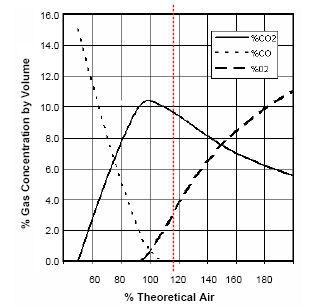
Excess air (extra air not utilised during combustion) is reduced considerably (to lower NOX emmisions and increase combustion efficiency slightly) with fully pre-mixed combustion and the gas/air mix is generally set around the red line. As a result combustion is not as complete as it could be.

Conventional burners have far more excess air and typically operate way to the right of the red line...with perhaps at least 80% extra air so combustion is cleaner and CO lower. The long flame burners also allow a more complete combustion process.

Fully pre-mix tend to produce no more than 150 ppm CO, conventional burners generally no more than 50 ppm CO. Over these limits and there's normally something wrong.

 
...valliant lists 250ppm of co as acceptable!!!
That doesn't mean they actually produce that. Most steamers I install produce less than 10 ppm in heating mode and less than 50 ppm on full blast DHW.
If I remember the tables correctly, breathing less than 30 ppm (for a limited amount of time) is not dangerous, so blowing these values into the open air is hardly going to bring the roof down.
 
All the ecotecs I have fitted have produced around 120-130 ppm co when on full for HW and co2 is spot on at 9%.

This is very high when compared to others such as the Baxi duotec which seems to produce around 60ppm and the ATAGS that produce around 20ppm :roll:
 
You will find that the Gianonni Heat Exchangered Boilers (Stainless Steel) will produce more CO than their Aluiminnium counterparts, I personally blame it on a slightly more rapid flame chilling action of the former types
However nothing wrong with either :wink:
 

If you need to find a tradesperson to get your job done, please try our local search below, or if you are doing it yourself you can find suppliers local to you.

Select the supplier or trade you require, enter your location to begin your search.


Are you a trade or supplier? You can create your listing free at DIYnot Local

 
Back
Top