• Looking for a smarter way to manage your heating this winter? We’ve been testing the new Aqara Radiator Thermostat W600 to see how quiet, accurate and easy it is to use around the home. Click here read our review.

Supporting wall or not

Joined
24 Feb 2014
Messages
243
Reaction score
2
Location
London
Country
United Kingdom
I've got a builder coming in a week to determine if a wall is a supporting wall or not, but just thought I'd ask here first to get some opinion (i'm impatient like that)

The wall is hollow when tapped. In the flat above there is a wall in the same position which appears to be solid when tapped. In the cellar below, there is NOT a wall in the same position.

What do you reckon?
 
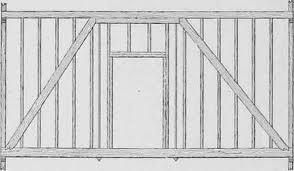
Hollow sounding walls used to be indicative of stud partitioning.

However, since dot and dab has become popular, this is no longer the case.

If the wall does not carry on down to a footing then there is a higher chance that it is not load bearing. However it may be lending mid-span support to some floor beams or joists.

Only a visual inspection will tell.
 
However it may be lending mid-span support to some floor beams or joists.

Yes, there may be a beam below the wall, within the thickness of the floor.
Be interesting to know if it is a purpose-built block or a conversion.
 
Very interesting. The picture was useful, so was the dot and dab - which I've just read about.

It's an Edwardian house converted into 4 flats.

I'll post my results next week.

Thanks
 
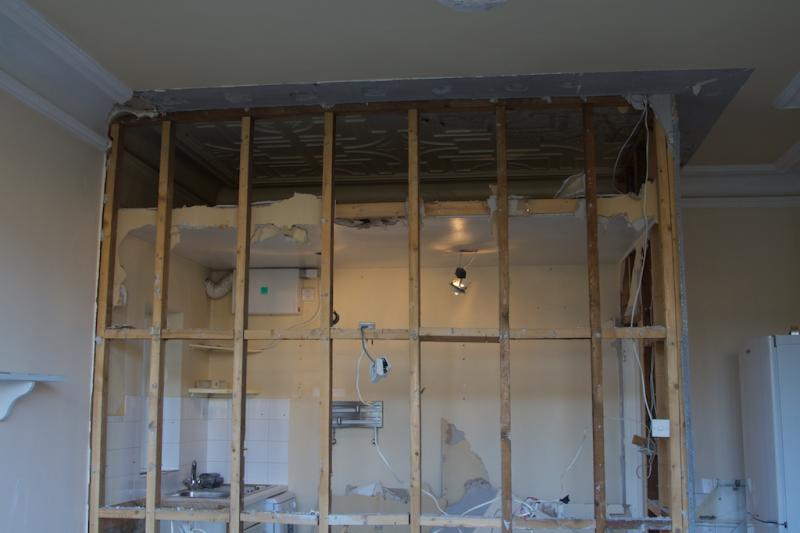
Ok so here is the wall, with the plasterboard removed.


Now from the picture it is pretty obvious that the partition was put up at a later date to the original building construction, as you can see where the old coving goes around the room.

My next question is, is it coincidence there is a solid wall above in the same position? Or maybe the brick wall was always there and they just copied the layout for the remove below when the flats were converted.

The house was converted to 4 flats in 1979, which I assume is when the kitchen partition was built. Is there any reason to build the ground floor partition in a wood stud, followed by a brick wall above it in the first floor?
 
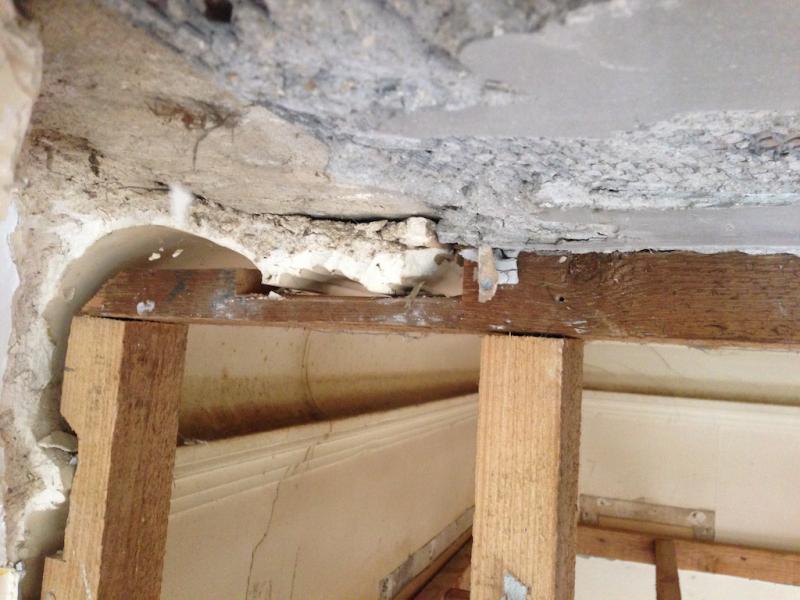
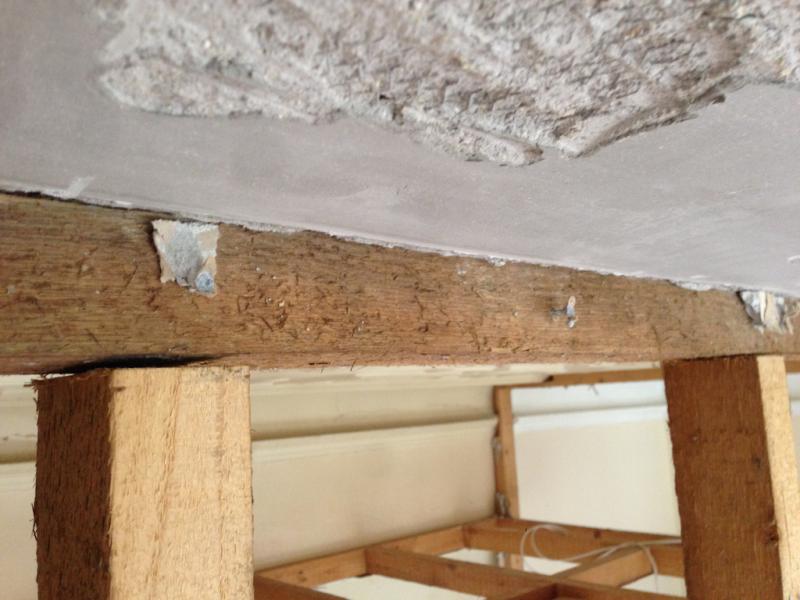
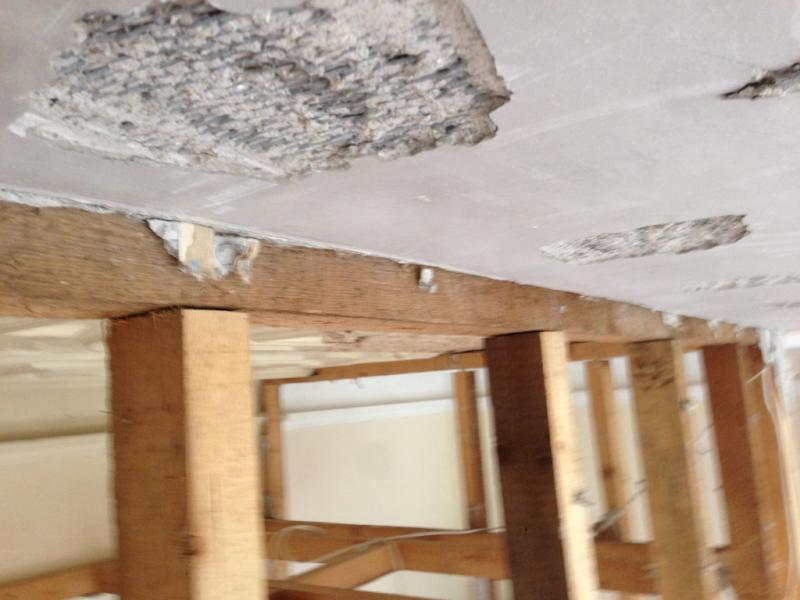
Well, looking right at the top at the ceiling, the vertical parts of the frame are not even touching the horizontal wood attached to the joist....

... so I'm now certain it can't be supporting any weight, otherwise there wouldn't be an air gap!

 
What do you mean by: "to build the ground ... brick wall above it"?

Careful measurements should be taken at the floor above to determine with certainty, that no other wall sits above the lower studding or even sits near to it.
Its most unlikely, but check.

Why have you damaged the ceiling plaster and the coving? The studding will come down with a minimum effort.
 
Typo, i meant to say "Is there any reason to build the ground floor partition in a wood stud, followed by a brick wall above it in the first floor"

That's my point. On my level, ground floor, I have the stud wall. Above it in the first floor, a wall sits above. Below the ground floor in the cellar is empty.

The coving used to go around the room, but when the partition was put in the coving was redirected around the new stud wall - and hence a chunk was cut out of it.

The ceiling plaster came off attached to the coving.

Anyway, no matter as most of the coving around the room has seen better days - so it's all coming down and I'm sound proofing and re-plastering the ceiling.

So anyway,.... to the point. There is a solid wall above that - and it's probably been there for 35 years, and it hasn't managed to compress that 2 mm gap between the pieces of wood.

Thin air doesn't hold up a brick wall.
 

If you need to find a tradesperson to get your job done, please try our local search below, or if you are doing it yourself you can find suppliers local to you.

Select the supplier or trade you require, enter your location to begin your search.


Are you a trade or supplier? You can create your listing free at DIYnot Local

 
Back
Top