Uk 230v and leaving the EU

The CE mark isn't a "standard" other than meaning Chinese Export
Items manufactured to BSI carry the number of the standard

You're watching too much AvE. Conformité Européene.

Oh, yes. Of course - we won't be able to use metric any more, will we?

Hadn't thought of that.

Bugger, it's going to cost a fortune in tape measures.

But as JW2 rightly pointed out, reducing power doesn't necessarily reduce energy demand.

Most high demand applications run on 415 and up. Not an electrician by any measure but I can only imagine if voltage was reduced, for high demand services current draw would be higher and use in effect more energy?
 
If voltage is reduced, it just takes longer to boil the same volume of water. So no energy saved there then.

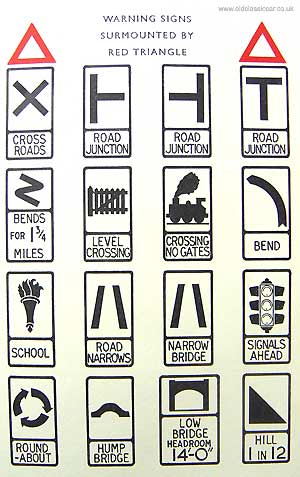
I heard that we are going to use proper road signs in future
roadsign1.jpg

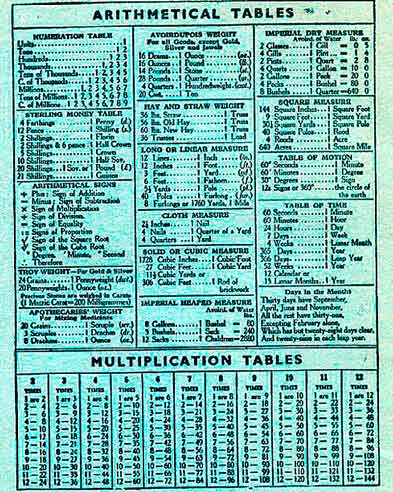
and proper measurements too. I'm looking forward to going to buy a nail of muslin from the local habadashery shop
tables-back-book.jpg
 
I heard that we are going to use proper road signs in future
roadsign1.jpg

That's nowt to do with Europe, either!

The old road signs were gradually replaced using a design by Margaret Calvert, starting in 1958 with the new signs for the Preston bypass (later to become part of the M6).

The idea of the new design was to make it very easy to read and comprehend at motorway speeds.

Later it was decided to use the new signage on all road, not just motorways.

Look familiar?

https://www.paimages.co.uk/image-details/2.1730406
 
Last edited:
More importantly, what has/will happen to the Euro rules on higher-powered toasters, kettles and hairdryers. Vacuum cleaners are already limited in their max power.
The new rules were meant to be imposed in the autumn, but the EU held back on it for fears that it might encourage a BREXIT vote.
Do please show us the rules you think exist that ban powerful kettles.

To make your life easier, here is a link to one of the infinite number of places where they don't exist. Art. 15.5a


The Ecodesign Directive (Art. 15.5a) says ecodesign measures must have “no significant negative impact on the functionality of the product, from the perspective of the user”.

Of course, that message is too reasonable to make headlines in the eurosceptic press.
 
While this holds true for switch mode power supplies, which are probably slightly more commonplace today than they were back then, surely the majority of high power loads (heaters, kettles, etc) are resistive and, as such, reducing the voltage to 230v would actually cause an overall drop in network current?
Initially, yes. But as pointed out, it would mean the (for example) kettles would take a little longer to boil, heaters would run with a slightly higher duty cycle etc - so after a delay, a lot of these loads will, in aggregate, take the same amount of power but at a higher (aggregate) current. From the DNO PoV, if they reduce the voltage, then for a given amount of energy delivered, their losses will be higher as the I²R losses in the network will be higher - they have an incentive to keep the voltage as high as possible (without exceeding the upper limit).
Embedded generation, especially all those domestic roofs covered in solar PV panels, upsets that since on a nice sunny day, the power flows reduce (or could locally reverse) and thus the volt drops change. So there have been cases where they've had to turn the substations down a tap or two to avoid the upper voltage limit on sunny days.

The DNOs have in fact been experimenting with changing the supply voltage as a means of load management. So as well as changing taps on main substations to regulate voltage, they have been running trials to see the effect of doing this to change demand - and see if end users notice ! As above, in the short term a voltage reduction will reduce demand - dropping from 240 to 230V gives nearly a 10% reduction in power for a resistive load.
 
The DNOs .... have been running trials to see the effect of doing this [reducing supply voltage] to change demand - and see if end users notice !
The human end-users might well not notice, but the thermostats in their kettles, immersion heaters and spacing heating etc. certainly will. Hence, as has been discussed, the energy consumed by these 'large' loads will not change and, as you say, the increased 'on time' of these sort of loads in each premises would mean that the aggregate current across the network (or part of it) would presumably increase.

Kind Regards, John
 
Interesting about the trials. At home, my voltage was always centred on 240v, varying by only 1 or 2. I had some commercial premises about 10 miles away, on a small industrial estate where the 3ph supply was put in to the building during refurb about 20 years ago. For some reason the DNO was testing not long ago, and I had unlocked the building and was hanging around. When the voltage was tested, I was surprised that each phase was near enough 230v, and between, IIRC, was 400v. When I commented the engineer said something (unconvincing) about the standard having changed. It was not volt drop due to load, I remember estimating max load during build, which affected connection cost, and at the time of test our heating and almost all our equipment was off (outside normal hours) so load would have been very low.
 
I had some commercial premises about 10 miles away, on a small industrial estate where the 3ph supply was put in to the building during refurb about 20 years ago. For some reason the DNO was testing not long ago, and I had unlocked the building and was hanging around. When the voltage was tested, I was surprised that each phase was near enough 230v, and between, IIRC, was 400v.
It' surprising just how much the voltage can vary. Our UPS at work provides voltage measurements which I've been logging for some time, and the results are interesting. Firstly, our voltage had a bit of a step change some time ago :
voltage1.png


And this is how it varies during the week.
voltage_1.png

The line indicates the average, the shaded area shows the high and low values during each period. The first graph is aggregates to one day values, the second graph to 1/2 hour values.
 
Our UPS at work provides voltage measurements which I've been logging for some time, and the results are interesting.
Yes, very interesting.

At some point between your first and second graphs, you seem to have reconfigured the output voltage of your UPS from ~240V to ~230V. Why was this? I also wonder why there was a reduction of about 1V in the UPS output when there was an ~8V 'step reduction' of supply voltage?

Kind Regards, John
 
...domestic roofs covered in solar PV panels, upsets that since on a nice sunny day, the power flows reduce (or could locally reverse) and thus the volt drops change. So there have been cases where they've had to turn the substations down a tap or two to avoid the upper voltage limit on sunny days.
Now that might be relevant. The premises are on the South coast, in a mainly residential/retired area, and I've noticed there are a great many solar panels around.

I just had a look on goggle earth, and the adjacent warehouse units have numbers of black rectangles on their roofs, though each block is about the size of a transit, about four times the size of each of the individual solar panels I can see on the bungalows around.
 
At some point between your first and second graphs, you seem to have reconfigured the output voltage of your UPS from ~240V to ~230V. Why was this?
Different UPS. What I clipped off from the first graph is the old UPS going into bypass as another converter module failed. It's since been replaced with a different unit (based on what we could buy cheap ;) - if you've ever bought UPSs in the 8-10kW range you'll know that the price is somewhat more than for the little "desktop" units.
I also wonder why there was a reduction of about 1V in the UPS output when there was an ~8V 'step reduction' of supply voltage?
Good question, no idea. However, the unit is (was) a double conversion unit so should hold the output voltage constant over a wide range of inputs - but there was always a small variation. I can only guess that with the reduction in input voltage, the DC bus voltage dropped, and the output followed suit as the voltage regulation in the converters isn't perfect. In reality, the regulations doesn't need to be perfect, everything running off it is designed for the far wider variations as seen on normal mains.
It's also possible that temperature variations could affect it - we don't have expensive "cold storage" conditions in our server room, it's all ambient air cooling. I do know that there is a variation in UPS load with temperature - you might think that those little fans in the servers take very little power, but when you add up a lot of them, I can see a correlation between load/current reported by the UPS and the temperature of the cooling air fed to the servers. Believe it or not, I think this effect accounts for something like 3-4% of load - as in load can increase by 3-4% when the servers are running with warm air vs cold air.
 

If you need to find a tradesperson to get your job done, please try our local search below, or if you are doing it yourself you can find suppliers local to you.

Select the supplier or trade you require, enter your location to begin your search.


Are you a trade or supplier? You can create your listing free at DIYnot Local

 
Back
Top