Nooo!
I went back to a house where I did a maintenance job and noticed RP on the lighting circuit that I'd worked on a few days prior.
Did a Zs at a socket, that was RP too.
Looked at the meter, I saw it was a new swap.
I checked polarity on the consumer's side of the isolation switch. That was RP.
I had the job of ringing it in to the DNO.
Unfortunately, the person lost their job.
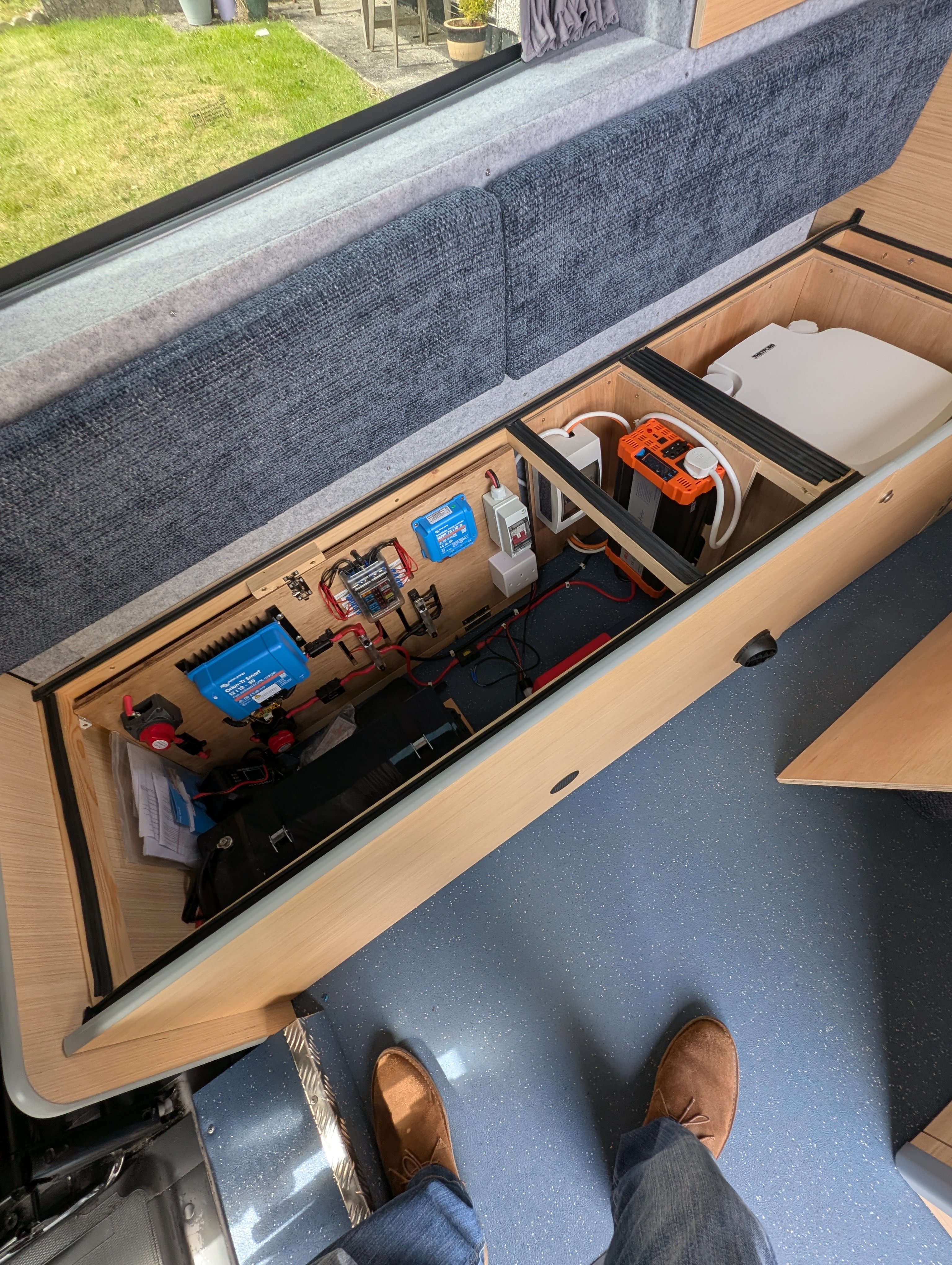
I did the 12v electrics on my camper, quite involved but with the help of wiring diagrams and youtube it turned out well. On the 240 v side I fitted a socket on the exterior for campsite plug in and ran a cable back to the electric area, also fitted an inverter for connecting to to a double socket I'd wired in. I was nervous about connecting the consumer unit so I got a sparky mate to come and connect the mains consumer unit and the inverter.
He wired them up and said all good. The consumer unit was from a supplier who rated it as suitable for a campervan, it had a rcd and two single pole mcb's. After that, I read online that the mcb's should be double pole, never single pole.
I did quite a lot of digging and the reason is that apparently, on camp sites, it's not unusual for the live and neutral to be wrongly connected at the site end, more so in places like Spain. Apparently the danger is that if you swich off an mcb to work on the circuit, if it's cross wired at the site end, you may only be switching off the neutral and still have a live present. I can't imagine doing any work without pulling the socket off outside so everything is dead).
I mentioned it to the sparks when I saw him asking if I should be concerned and he just sort of glazed over and said don't worry.
What intrigued me was several things, firstly, how things would still work if the L & N were the wrong way round, and what exactly does the N do?
The sparks is well qualified and certified and all that but of course his main work is domestic or industrial electrics as opposed to campervans.