• Looking for a smarter way to manage your heating this winter? We’ve been testing the new Aqara Radiator Thermostat W600 to see how quiet, accurate and easy it is to use around the home. Click here read our review.

What is this joist doing?

Joined
9 May 2023
Messages
13
Reaction score
0
Country
United Kingdom
Hello all,

I'm in the process of removing an Artex (no Asbestos) kitchen ceiling, and widening access in a load bearing wall between the kitchen and dining room.

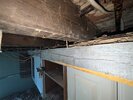
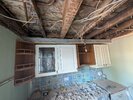
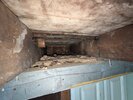
As I was stripping everything back, I encountered this odd joist running perpendicular to the others, and seemingly supporting nothing - bits of wood and plaster have been wedged between this lower joist and the others. In places, it isn't making contact with the other joists at all.

The issue I now have is that this particular joist, which I was not expecting to see (it was previously covered by plasterboard), obstructs the lintel I intend to install to widen the doorway.

So all things considered, it doesn't look like it is supporting anything. Would removing it be crazy?
 

Attachments

  • PXL_20250808_150552895.jpg
    PXL_20250808_150552895.jpg
    410.9 KB · Views: 118
  • PXL_20250808_150639505.jpg
    PXL_20250808_150639505.jpg
    385.8 KB · Views: 126
  • PXL_20250808_150702558.jpg
    PXL_20250808_150702558.jpg
    357.5 KB · Views: 116
Hello all,

I'm in the process of removing an Artex (no Asbestos) kitchen ceiling, and widening access in a load bearing wall between the kitchen and dining room.

As I was stripping everything back, I encountered this odd joist running perpendicular to the others, and seemingly supporting nothing - bits of wood and plaster have been wedged between this lower joist and the others. In places, it isn't making contact with the other joists at all.

The issue I now have is that this particular joist, which I was not expecting to see (it was previously covered by plasterboard), obstructs the lintel I intend to install to widen the doorway.

So all things considered, it doesn't look like it is supporting anything. Would removing it be crazy?
The images suggest that the kitchen ceiling material was (trapped) in place when the 'purlin' beam was installed. I'm not sure what it does other than being a décor item. Is it painted?
 
Thanks for the quick reply. It seems to have been painted silver, but was later clad in plasterboard - presumably to cover it up and close the gap between it and the kitchen wall units.

I'm also believed it was decorative, but wanted to proceed with caution - in the process of renovating this house, I have found some absolute shockers.

The fact it has a bearing in the walls on either end also made me hesitate.
 
It may well have been installed to reduce bounce in the floor above, I very much doubt you'dput it into the walls if t'were purely decorative
 
Ah, that makes sense. In which case, is there something I can replace it with, which doesn't obstruct the lintel?
 
It may well have been installed to reduce bounce in the floor above,
You don't go to the trouble to install a beam to support joists - and then leave the lath and plaster ceiling in place.
I very much doubt you'dput it into the walls if t'were purely decorative
It's more likely a remnant from a faux decor exposed beam type ceiling.
 
you would try to remove bounce in the floor above by placing it in the middle, not near one end.
 
No, it doesn't make any sense really. See above.

Well, after reading the comment from @stevie888, we tested the theory by stomping about in the bathroom above - and there was indeed quite a lot of bounce in the joists. But the placement is wrong, if that is what they were seeking to remedy.

Having said that, why would they go to the trouble of having bearings in the brick wall at either end, if it's purely decorative?
 
Is it even supported by the walls at its ends? I doubt it is, it looks like it just butts up to the plaster but impossible to tell from the photos. It's not supporting anything if it's not supported!

It looks like a bit of scrap they nailed or screwed up to the ceiling just to board over and close the annoying gap above the wall units.

It really should have been flush with the front of the units. I'm going to guess that they put it in front of them because the units had already been fitted so they couldn't nail upwards above them as the units were blocking it.

If the floor above is too bouncy then some noggins would help to make it more rigid.

You should check whatever's been leaking into the floorboards above too.
 
If it really does extend into the walls then it must have been slid in through a hole through the wall from outside, but I doubt it is. Needs a dig into the plaster to find out, I'm betting the plaster covers its ends and they don't go beyond the original plaster.
 
The three lengths of chiselled-off corners make me wonder if they were thinking of painting it black for the country kitchen look then changed their mind and boarded over it.
 
Thank you all for your comments, they've been helpful! I'm going to get rid of it, add some noggins to actually reduce bounce, and eventually replace the kitchen units, placing them in such a way as to eliminate that silly gap.
 

If you need to find a tradesperson to get your job done, please try our local search below, or if you are doing it yourself you can find suppliers local to you.

Select the supplier or trade you require, enter your location to begin your search.


Are you a trade or supplier? You can create your listing free at DIYnot Local

 
Back
Top