Wiring problem ??

Status
Not open for further replies.
One thing I've never understood is how on earth Americans have come to use the expression "I could care less" in situations in which we would say "I couldn't care less"!
It is because they do not think about what they are saying.

I thought you accepted such things and did not mind because you knew what they really meant, thinking of it as desirable evolution.

Lots of people don't know nuffink and when in the majority it becomes accepted - by some.
 
It is because they do not think about what they are saying. I thought you accepted such things and did not mind because you knew what they really meant, thinking of it as desirable evolution.
I do accept that such is the American idiom, and do not 'mind', and I do understand what American's mean when they say it - I am merely, as I implied, curious to know how such a strange idiom ever evolved, since the words appear to say the opposite of what they are used to mean!

If an English person used that expression, I might stop and wonder exactly what they meant!

Kind Regards, John
 
Nope. My upbringing is such that mybrain will strictly apply Boolean logic in interpreting 'multiple negatives'
"Shall we go for a walk?"
"Oh, is it not still raining?"
"No".

Is it raining?


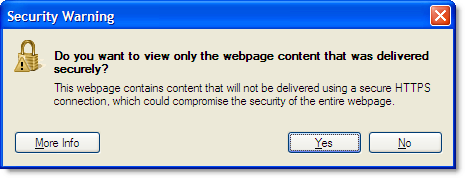
"Tick this box if you do not want us to not stop sending you unwelcome rubbish e-mails"
ie8securitywarning.png
 
Americans say such things.
That's another thing about EFLI's apparent dislike of evolution of language. Not only does a language evolve in an overall sense, but it also evolves (and hence 'diversifies') 'locally'. Even within the UK, regional language (as well as accent) varies considerably, and that becomes more dramatically so when one looks outside of the UK to other countries speaking a language which has evolved from the 'English English' of a long time ago.

American grammar, vocabulary, spelling, idioms and much more differ considerably from that in 'English English' (I say that, rather than 'UK English' because, for example, there are words and word constructions used by, say, Scots which are totally foreign to me (even if/when I can understand the accent).

In my neck of the woods, academic linguists have taken a great interest in Milton Keynes. For the first few decades of its existence, they observed and studied in depth the gradual development/evolution of a brand new 'regional' accent, but more recently they have taken more interest in the gradual evolution of the actual language in that circumscribed area.

I wonder if EFLI objects to this 'regional diversification' of language as he does of 'evolution' of language within one locality over time?

Kind Regards, John
 
Apparently, it is us that changed our language, not the Americans theirs.

They used the language we used at that time, but ours has since changed.
 
That's another thing about EFLI's apparent dislike of evolution of language. Not only does a language evolve in an overall sense, but it also evolves (and hence 'diversifies') 'locally'.
That presumably means there are localised mistakes.

I wonder if EFLI objects to this 'regional diversification' of language as he does of 'evolution' of language within one locality over time?
Dialect, to which I have no objection, is different than we have discussed which is solely due to uncorrected mistakes becoming so commonplace. People - the media - whose only job is speaking are unable to do it properly because of similar ignorance.

You don't accept my giraffe example because it is so outrageous no one would make that error but how long might it be before constituency and consistency become the same or transposed.


I started to write earlier about something Nicky Campbell said this morning.
He told a caller that he would call him back because the line was not terribly good. In fact it was terrible.

I wondered if he thought terribly good was the opposite of terribly bad but sadly I see I am too late and already in the dictionary terribly is said to mean very.
This is the utter nonsense to which I object.
 
That presumably means there are localised mistakes. ... Dialect, to which I have no objection, is different than we have discussed which is solely due to uncorrected mistakes becoming so commonplace.
I'm not sure how you think dialects arise ('evolve' from the 'base language') other than by the perpetuation of 'uncorrected mistakes' to such an extent that they become so commonplace that they are accepted as being part of that ('evolving') dialect.
.... I wondered if he thought terribly good was the opposite of terribly bad but sadly I see I am too late and already in the dictionary terribly is said to mean very. This is the utter nonsense to which I object.
It may be utter nonsense, but this is but one of a whole series of adverbs (and corresponding adjectives) whose usage has changed/evolved in an 'incorrect' manner seemingly because people have felt that the English language does not have a wide enough range of words and/or 'strong enough' words available.....

.... terrible, horrible, awful, incredible, amazing, exceptional, extreme, extraordinary, remarkable, especial, acute etc. etc. (and, correspondingly, the adverbs ... terribly, horribly, awfully, incredibly, amazingly, exceptionally, extremely, extraordinarily, remarkably, especially, acutely etc. etc.). All of those adverbs (and many more) are used to mean "very", and, in a good few cases (like the one you found) that meaning has already crept into dictionaries. There is a similar plethora of words being used to mean "not very".

Kind Regards, John
 
I'm not sure how you think dialects arise ('evolve' from the 'base language') other than by the perpetuation of 'uncorrected mistakes' to such an extent that they become so commonplace that they are accepted as being part of that ('evolving') dialect.
I think that dialect is more probably left over from previous versions of the language or other languages (and not achieved nationwide usage).
Different words or phrases used for things are not the same as accepting the babbling of the stupid.

It may be utter nonsense, but this is but one of a whole series of adverbs (and corresponding adjectives) whose usage has changed/evolved in an 'incorrect' manner seemingly because people have felt that the English language does not have a wide enough range of words and/or 'strong enough' words available.....
Rubbish. How can using words which actually mean the opposite be a result of that.
Did someone one day get fed up using "very" and decide "terribly" would be a good alternative?

You will presumably embrace the use of "so" to start every sentence, "like he was..." to mean "he said" and other such unthinking, meaningless drivel.

Therefore you must accept that ignorant mistakes are as valid as detailed knowledge when teaching English.
 
I think that dialect is more probably left over from previous versions of the language or other languages (and not achieved nationwide usage).
I presume that you do not think that all the (essentially very similar) variants/dialects of English arose spontaneously and independently 'from scratch' - since that would be a ridiculous suggestion. They have clearly all 'evolved' from some ancient 'core language'. That being the case, the development of all variants/dialects (well, at least all but one of them) must have been initially the result of what you would call 'incorrect' use of the current language.
Rubbish. How can using words which actually mean the opposite be a result of that.
I'm not suggesting that it is. In what you wrote originally, you seemed to be implying that "terrible" was an acceptable word for "bad" or "very/extremely bad". However, although dictionaries have now succumbed to that new meaning (with, I imagine, your disapproval) what aspect of the telephone line to which you referred was in any sense related to terror?
Did someone one day get fed up using "very" and decide "terribly" would be a good alternative?
As I said, I don't think that, in most cases, it was anything to do with people having got fed up with "very" - rather, they perceived the need for a wider range of degrees of "very" than was available in existing words. One problem is that different people have different perceptions of the 'ordering' of the list of words they now use - but I think most would say that words like "terribly", "awfully", "incredibly", "extremely" etc. are probably 'stronger' than just "very".

Maybe you're exceptional, but I would be very surprised if you do not, at least sometimes, use words like "terribly", "awfully", "incredibly", "extremely" etc. when you do not really intend to imply anything to do with terror, awe, non-credibility, true 'extremes' etc.
You will presumably embrace the use of "so" to start every sentence, "like he was..." to mean "he said" and other such unthinking, meaningless drivel.
Not at all. Not the least because, in general, I am very 'conservative' and resistant to any change, I hate all such things. However, I accept that in a few decades time (when few of us will be around!) some of these things may well have come to be regarded as the currently 'correct' language.

As I always say, if you turn the clocks back a hundred or five years, there were undoubtedly people like you who were passionately opposing some of the (then) 'incorrect' uses of language which, with the fullness of time, have come to be what you and I would now regard as the 'correct' use of the English language. Like it or not, a lot of what we now regard as 'correct' would have been regarded as incorrect (and maybe despicable!) by Chaucer, Shakespeare, Dickens or even our grandparents.

Kind Regards, John

 
I presume that you do not think that all the (essentially very similar) variants/dialects of English arose spontaneously and independently 'from scratch' - since that would be a ridiculous suggestion. They have clearly all 'evolved' from some ancient 'core language'. That being the case, the development of all variants/dialects (well, at least all but one of them) must have been initially the result of what you would call 'incorrect' use of the current language.
So what?

I'm not suggesting that it is. In what you wrote originally, you seemed to be implying that "terrible" was an acceptable word for "bad" or "very/extremely bad". However, although dictionaries have now succumbed to that new meaning (with, I imagine, your disapproval) what aspect of the telephone line to which you referred was in any sense related to terror?
You are just going back further than I was. I am using terrible to mean terrible - either way, nothing to do with good.

Looking at the definition now:
upload_2018-5-17_14-11-38.png

Which of the synonyms could be used in the same way as "not terribly good"?
Possibly awful and, at a push, dreadful but "not horribly good" would definitely be daft. A few more years needed, I suppose.


As I said, I don't think that, in most cases, it was anything to do with people having got fed up with "very" - rather, they perceived the need for a wider range of degrees of "very" than was available in existing words. One problem is that different people have different perceptions of the 'ordering' of the list of words they now use - but I think most would say that words like "terribly", "awfully", "incredibly", "extremely" etc. are probably 'stronger' than just "very".
very, very ...???
Don't forget I am not questioning a proper usuage (today) of these words but where one of them was linked to a word of the opposite meaning.
Had he said that the line was "terribly bad" that would be fair enough but he said "not terribly good" which is stupid.

As usual, though, you are countering an argument with examples which do not actually apply.

Maybe you're exceptional, but I would be very surprised if you do not, at least sometimes, use words like "terribly", "awfully", "incredibly", "extremely" etc. when you do not really intend to imply anything to do with terror, awe, non-credibility, true 'extremes' etc.
I probably do - but in the accepted correct meaning today.
I wouln't say such things as "terribly good" or "incredibly believable".

As I always say, if you turn the clocks back a hundred or five years, there were undoubtedly people like you who were passionately opposing some of the (then) 'incorrect' uses of language which, with the fullness of time, have come to be what you and I would now regard as the 'correct' use of the English language. Like it or not, a lot of what we now regard as 'correct' would have been regarded as incorrect (and maybe despicable!) by Chaucer, Shakespeare, Dickens or even our grandparents.
Yes but you seem to think that was desirable.
If we still spoke like Chaucer that would be fine; we would not know anything different.
 
So (grammatically correct, I think!) any changes in language, whether the development of regional dialects, or changes over time, have to be the result of eventual acceptance of what, initially, you would have called 'incorrect' use of the language of the time.
You are just going back further than I was. I am using terrible to mean terrible - either way, nothing to do with good. Looking at the definition now: ....
We are, of course, primarily talking about the adverb ("terribly") - and the problem there is that (presumably to your displeasure) most current dictionaries now seem to give the primary meaning as "very" - so presumably would accept "terribly good" as correct.

... and we haven't even talked about "terrific" - which, of course, is essentially the opposite of "terrible"!.
Don't forget I am not questioning a proper usuage (today) of these words but where one of them was linked to a word of the opposite meaning. Had he said that the line was "terribly bad" that would be fair enough but he said "not terribly good" which is stupid.
As above, if you accept dictionaries as indicating "proper usage (today)", and if you are not questionning that, then I think you would have to accept that "not terribly good" is probably 'correct' (dictionary-wise), rather than stupid.
I probably do - but in the accepted correct meaning today. I wouln't say such things as "terribly good" or "incredibly believable".
Fair enough - but a lot of people (I nearly typed "an awful lot" :-) ) do.
Yes but you seem to think that was desirable. If we still spoke like Chaucer that would be fine; we would not know anything different.
That's a difficult one. As I said, I am inclined to be generally 'opposed to change' (in anything) - so, in that sense, I might be inclined to say that (theoretically largely 'unnecessary') evolution of language was undesirable. However evolution of languages has been going on ever since they first arose, so it would be a bit daft to feel that I should 'oppose' it. More generally, even if my inclination is to 'resist change', I am very conscious of the fact that a substantial proportion of the 'changes' (in the world) that have arisen since my adolescence (in the 60s) have been positive/beneficial ones, so I would not want most of those changes to be 'undone'.

Kind Regards, John
 
"Terribly" used to be used meaning "very". In the 30's....

"He's terribly good at that sort of thing, you know!"

Same with "awful".
 

If you need to find a tradesperson to get your job done, please try our local search below, or if you are doing it yourself you can find suppliers local to you.

Select the supplier or trade you require, enter your location to begin your search.


Are you a trade or supplier? You can create your listing free at DIYnot Local

 
Status
Not open for further replies.
Back
Top