• Looking for a smarter way to manage your heating this winter? We’ve been testing the new Aqara Radiator Thermostat W600 to see how quiet, accurate and easy it is to use around the home. Click here read our review.

Economy 7

Some confusion here regarding the "contactor" shown, it is a radio tele switch which ok, contains a contactor to switch on off peak heaters, and this also switches the meter over to off peak tariff, not the other way round, these have been around since the 80s, a new E7 set up would only have one meter with a built in teleswitch and contactor, I am not up to speed with smart metering so cannot comment
 
Yes, I'd overlooked the fact that the contactor might be activated by unmetered electricity (as used to be the case with time switches). However, as I recently wrote, even if the customer were paying, it would probably be no more than a couple of quid per year.

Kind Regards, John
The control wires can run through a timer/on-off switch, so in summer the contactor is inoperative no matter who pays the bill.
 
Last edited:
Some confusion here regarding the "contactor" shown, it is a radio tele switch which ok, contains a contactor to switch on off peak heaters, and this also switches the meter over to off peak tariff, not the other way round, these have been around since the 80s, a new E7 set up would only have one meter with a built in teleswitch and contactor, I am not up to speed with smart metering so cannot comment
Thanks for the correction. I am aware of both methods and historically knew which version this one is .
I'd not thought to re-check before posting as there is some comment in a concurrent thread (https://www.diynot.com/diy/threads/3-phase-supply-help.506879/).
 
Last edited:
The control wires can be in a timer/on-off switch, so in summer the contactor is inoperative no matter who pays the bill.
Sure can. Summer/winter switches are common in big systems. But you will still require hot water.
 
I know at one point there was an extra wire to storage heaters that told them when to come on, however the storage heater idea does not really work, there are systems that do, brother-in-laws house had two huge very well insulated water tanks, these had a huge advantage over the simple storage heater, one they would not release heat when not required,
What size of house? How big were the tanks in litres. An option is Economy 7 heating a large thermal store cylinder overnight, which will serve DHW and UFH. The rate is then approx 40% less.
 
The control wires can run through a timer/on-off switch, so in summer the contactor is inoperative no matter who pays the bill.
Yes, you could do that. I'm not sure why you'd want a timer, but you could certainly have an on-off switch). However, if it's going to cost less than £1 per year, even if run 365 days per year, it would take a few years to even recover the cost of the switch and its installation!

Kind Regards, John
 
What size of house? How big were the tanks in litres. An option is Economy 7 heating a large thermal store cylinder overnight, which will serve DHW and UFH. The rate is then approx 40% less.
One doesn't necessarily need a particularly "large" thermal store, at least for DHW.

I have a very large house, but a single (extremely well lagged) 140 litre hot water cylinder is usually more than enough for our DHW needs (there still being some very hot water still available at the end of the following day). We do have second similar cylinder available, but only usually have to put that into action very occasionally, if/when we have 'a house full of guests'.

Kind Regards, John
 
What size of house? How big were the tanks in litres. An option is Economy 7 heating a large thermal store cylinder overnight, which will serve DHW and UFH. The rate is then approx 40% less.
ae235
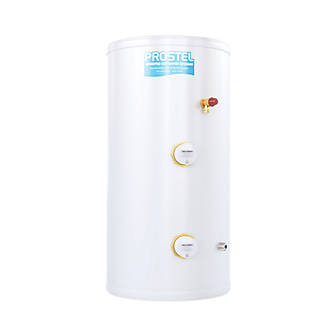
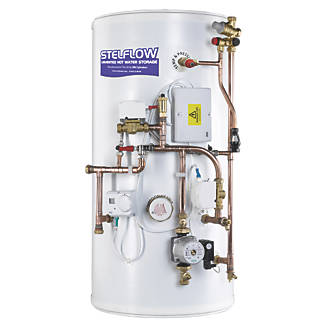
There are two basic types, vented and unvented, the latter needs to be serviced more often, he had two I think around 300 litres each, with all the bits looked more like this
ae235
product Diameter 545 mm product Height 1980 mm you are looking at around £2000+ for a system like this plus fitting, in the main they are used when people want to also use wood burners, the major problem with all fires burning unprocessed wood or coal is particular emissions, to stop this either you burn charcoal or coke or run the wood burner at a set rate so neither is a lot of heat wasted up the flue nor does it produce particular emissions. So wood burner used once a day and the heat is stored and distributed when required.

This is really the same as using off peak power, it's a way to store heat until required. However those who use wood burners are either a bunch of thieves stealing wood from anywhere they can find it, or save the earth nuts, and even if the money it costs to fit the wood burner will take 50 years to get back, they will still fit them so show off to visitors how ecological friendly they are.

£2000 will buy a lot of electricity, so in real terms can't see one of these paying for its self in a flat, in a 5 bedroom house with solar panels on roof and wood burner in main room these may be an option, but in a flat just a pipe dream.
 
Why would you want to do that?
He seems to want to save the cost (whether to him or the supplier - I suspect around 50p/year) of powering the contactor coil during off-peak hours at times of the year when the storage heaters will be turned off, anyway.

Kind Regards, Jhn
 
There are two basic types, vented and unvented, the latter needs to be serviced more often, he had two I think around 300 litres each, with all the bits looked more like this .... you are looking at around £2000+ for a system like this plus fitting .... £2000 will buy a lot of electricity ....
As I recently wrote, for DHW alone, anything approaching that would be totally unnecessary - my <£200 140 litre hot water cylinder (with lots and lots of lagging - far more than the products you illustrate) is more than enough for us virtually all of the time.

As per my graphs above, in this recent very hot weather it has needed little more than a 30-minute 'top up' each night (i.e. about 1.5 kWh) - but if the cylinder ends up full of 'cold water' (i.e. during periods of high use in a cold winter), it can take around 4 hours (i.e. about 12 kWh).

Kind Regards, John
 
He seems to want to save the cost (whether to him or the supplier - I suspect around 50p/year) of powering the contactor coil during off-peak hours at times of the year when the storage heaters will be turned off, anyway.

Mine used to make a fair old "bang" when it engaged also. Was quite alarming at first but you did get a clear indication of when it was off-peak! ISTR the timings did used to go a bit off around BST changes - although I can't remember specifically, I'm sure it sometimes shifted a week earlier, but I'm struggling to see why it would do now!
 

If you need to find a tradesperson to get your job done, please try our local search below, or if you are doing it yourself you can find suppliers local to you.

Select the supplier or trade you require, enter your location to begin your search.


Are you a trade or supplier? You can create your listing free at DIYnot Local

 
Back
Top